THE ADVENTURE COLLECTIVE® · Independent discovery and booking for outdoor travel

Spend a full day exploring Phnom Kulen’s jungle trails, carved riverbed of Shiva lingas, a reclining Buddha, and a swim-ready waterfall. This practical day tour from Siem Reap pairs cultural history with hands-on nature and short hikes.
Spend a full day exploring Phnom Kulen’s jungle trails, carved riverbed of Shiva lingas, a reclining Buddha, and a swim-ready waterfall. This practical day tour from Siem Reap pairs cultural history with hands-on nature and short hikes.
You step out of the van and the air changes: heat softens into a leafy hush, and the mountain’s orange rock faces throw back sunlight like a low, bright drum. Trails thread into a low forest where the river ahead seems to hum — not loud, but insistent — calling visitors toward carved stone and a tumbling fall.
Verified experiences and guided adventures in the surrounding area.
Operated by Pitt Angkor Tour · Phnom Kulen, Siem Reap Province
You step out of the van and the air changes: heat softens into a leafy hush, and the mountain’s orange rock faces throw back sunlight like a low, bright drum. Trails thread into a low forest where the river ahead seems to hum — not loud, but insistent — calling visitors toward carved stone and a tumbling fall.
Phnom Kulen is an upland plateau that played a quiet but meaningful role in Angkor-period ritual. The River of a Thousand Lingas bears hundreds of shallow carved Shiva symbols and ancient inscriptions cut into the sandstone riverbed, a deliberate act of devotion and hydraulic design. The reclining Buddha at Preah Ang Thom is a later, large-scale Buddhist carving that turned this place into a living pilgrimage site.
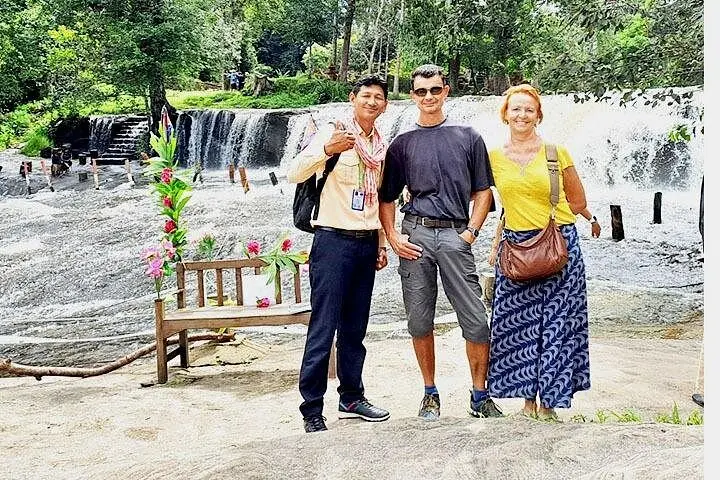
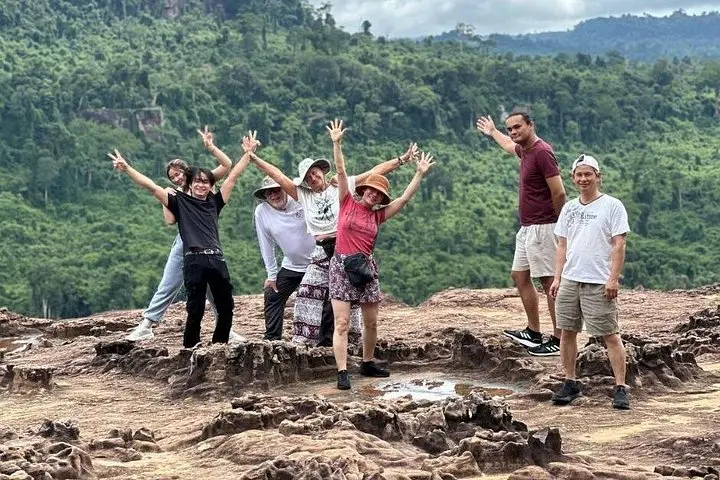
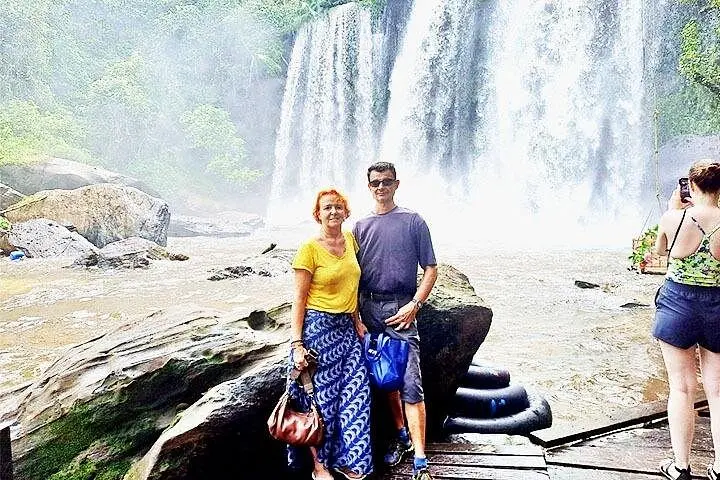
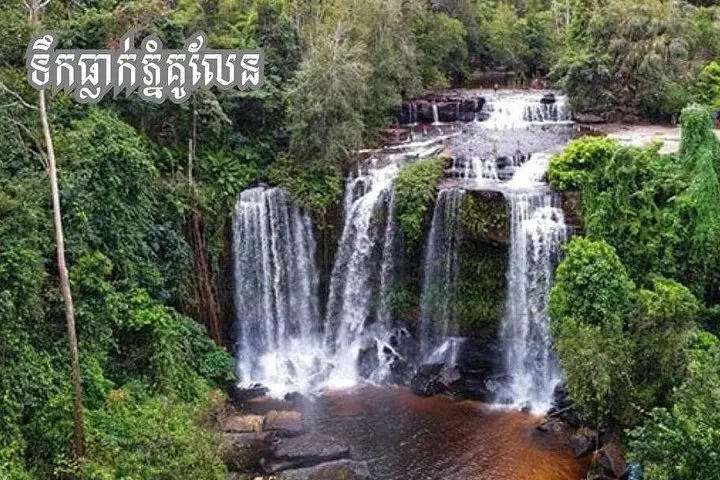
Geology here is blunt and tactile: exposed sandstone, smoothed orange slabs, and patches of dense dipterocarp forest. Culture is present in modest shrines, local vendors, and the way guides point out names and stories rather than monumentality. Nature has agency — the river’s current seems to dare you to step in, the waterfall pushes cool breath across your face.
Practically: expect a full day (about 9–10 hours) with short jungle walks, slippery rock near the falls, and swimming in seasonal pools. Wear grippy shoes, bring swimwear and quick-dry layers, and carry a liter or more of water. Modest clothing is respectful at sacred sites; pack insect repellent and a small first-aid kit. Start early (pickups around 7:30–8:00) to avoid midday heat and larger crowds. Cash is useful for small donations and snacks. Follow local guidance on where to swim and never step on the carved lingas — they’re fragile and sacred.
The tour runs about 9–10 hours with hotel pickup generally between 7:30–8:00 a.m. and return in the late afternoon.
Admissions are often not included; check your booking details and bring cash for any park or site fees.
Swimming is seasonal—during the rainy season currents can be strong and some areas closed; follow your guide’s advice and avoid swimming after heavy rains.
Some viewpoints and the main waterfall area require short, uneven walks; parts of the site are wheelchair-accessible but many trails are not recommended for limited mobility.
Pitt Angkor Tour operates guided outdoor trips and adventures with an emphasis on safety, stewardship, and memorable experiences.
You step out of the van and the air changes: heat softens into a leafy hush, and the mountain’s orange rock faces throw back sunlight like a low, bright drum. Trails thread into a low forest where the river ahead seems to hum — not loud, but insistent — calling visitors toward carved stone and a tumbling fall.
You step out of the van and the air changes: heat softens into a leafy hush, and the mountain’s orange rock faces throw back sunlight like a low, bright drum. Trails thread into a low forest where the river ahead seems to hum — not loud, but insistent — calling visitors toward carved stone and a tumbling fall.
Phnom Kulen is an upland plateau that played a quiet but meaningful role in Angkor-period ritual. The River of a Thousand Lingas bears hundreds of shallow carved Shiva symbols and ancient inscriptions cut into the sandstone riverbed, a deliberate act of devotion and hydraulic design. The reclining Buddha at Preah Ang Thom is a later, large-scale Buddhist carving that turned this place into a living pilgrimage site.
Geology here is blunt and tactile: exposed sandstone, smoothed orange slabs, and patches of dense dipterocarp forest. Culture is present in modest shrines, local vendors, and the way guides point out names and stories rather than monumentality. Nature has agency — the river’s current seems to dare you to step in, the waterfall pushes cool breath across your face.
Practically: expect a full day (about 9–10 hours) with short jungle walks, slippery rock near the falls, and swimming in seasonal pools. Wear grippy shoes, bring swimwear and quick-dry layers, and carry a liter or more of water. Modest clothing is respectful at sacred sites; pack insect repellent and a small first-aid kit. Start early (pickups around 7:30–8:00) to avoid midday heat and larger crowds. Cash is useful for small donations and snacks. Follow local guidance on where to swim and never step on the carved lingas — they’re fragile and sacred.