THE ADVENTURE COLLECTIVE® · Independent discovery and booking for outdoor travel

Spend a rich day in the Ashanti heartland: receive a Ghanaian name in a private naming ceremony, learn to weave kente, stamp Adinkra fabric, and visit a cocoa farm. This 7‑hour cultural tour blends hands-on craft with local history.
Spend a rich day in the Ashanti heartland: receive a Ghanaian name in a private naming ceremony, learn to weave kente, stamp Adinkra fabric, and visit a cocoa farm. This 7‑hour cultural tour blends hands-on craft with local history.
You arrive on a sun-warmed lane outside Adanwomase, the rhythm of wooden looms clicking like a city in miniature. Village men and women move between stalls of dyed yarn and woven cloth; the air holds fresh cocoa and wood smoke. The day begins with a private traditional naming ceremony, where a local elder pronounces a Ghanaian name, presents a certificate and a tailored piece of cloth — a formal welcome that ties visitors to Ashanti naming customs.
Verified experiences and guided adventures in the surrounding area.
Operated by Bilson Tours Gh · Kumasi, Ashanti Region
You arrive on a sun-warmed lane outside Adanwomase, the rhythm of wooden looms clicking like a city in miniature. Village men and women move between stalls of dyed yarn and woven cloth; the air holds fresh cocoa and wood smoke. The day begins with a private traditional naming ceremony, where a local elder pronounces a Ghanaian name, presents a certificate and a tailored piece of cloth — a formal welcome that ties visitors to Ashanti naming customs.
Adanwomase is part of the Ashanti kingdom, where Kente weaving developed as a class and ceremonial cloth; nearby Ntonso is the long-standing center for Adinkra stamping, a block-print tradition with symbolic motifs. The tour typically includes hands-on time at a kente loom, a guided Adinkra stamping session where you choose symbols and stamp your own fabric, and a walk through a small cocoa farm to see pod-to-bean basics and the seasonal processing steps.
Expect flat village paths, short stairs into homes or workshops, and outdoor work areas that can be hot and dusty. The experience blends culture, craft, and agronomy — looms that ‘‘speak’’ in steady cadence, dye vats that remind you of centuries of practice, and cocoa trees that quietly bear the region’s economic history.
Practical guidance: plan for a 7-hour private tour with lunch, bring sun protection and closed-toe shoes for the farm, and carry small local cash for purchases and tips. Be prepared to share your date of birth for naming records and to follow local photography etiquette during ceremonies. Morning departures beat the heat and give better light for photos and demonstrations.
This particular ceremony is intended for African diasporas, and the provider designs the experience with Ghanaian naming customs for visitors of African heritage.
Yes—participants typically receive a Ghanaian name, a certificate, and a tailored cloth as part of the naming ritual.
The operator lists wheelchair-accessible transportation and surfaces, but some village workshops may have steps—confirm access needs when booking.
The itinerary generally includes an air-conditioned vehicle, bottled water, and lunch; verify pickup point and any special dietary needs when you book.
Bilson Tours Gh operates guided outdoor trips and adventures with an emphasis on safety, stewardship, and memorable experiences.
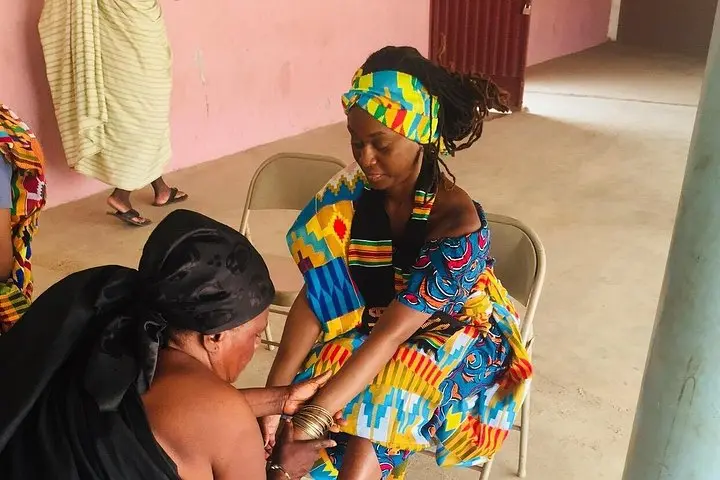
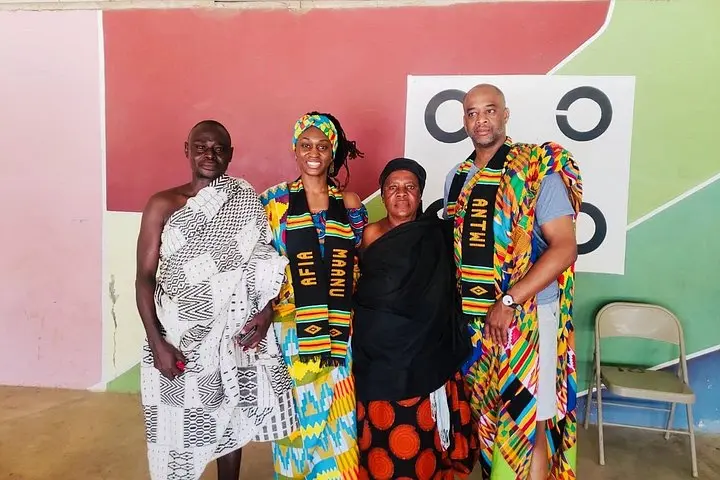
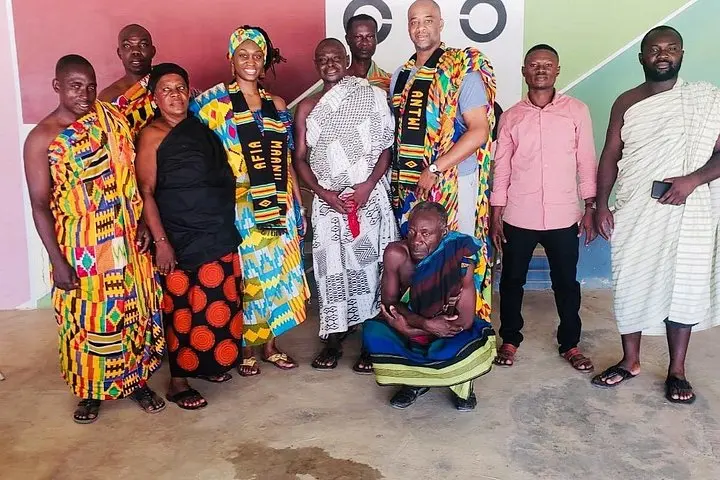
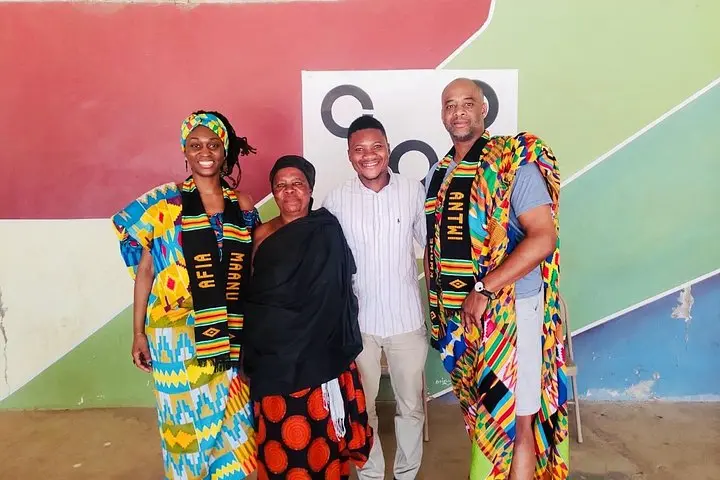
You arrive on a sun-warmed lane outside Adanwomase, the rhythm of wooden looms clicking like a city in miniature. Village men and women move between stalls of dyed yarn and woven cloth; the air holds fresh cocoa and wood smoke. The day begins with a private traditional naming ceremony, where a local elder pronounces a Ghanaian name, presents a certificate and a tailored piece of cloth — a formal welcome that ties visitors to Ashanti naming customs.
You arrive on a sun-warmed lane outside Adanwomase, the rhythm of wooden looms clicking like a city in miniature. Village men and women move between stalls of dyed yarn and woven cloth; the air holds fresh cocoa and wood smoke. The day begins with a private traditional naming ceremony, where a local elder pronounces a Ghanaian name, presents a certificate and a tailored piece of cloth — a formal welcome that ties visitors to Ashanti naming customs.
Adanwomase is part of the Ashanti kingdom, where Kente weaving developed as a class and ceremonial cloth; nearby Ntonso is the long-standing center for Adinkra stamping, a block-print tradition with symbolic motifs. The tour typically includes hands-on time at a kente loom, a guided Adinkra stamping session where you choose symbols and stamp your own fabric, and a walk through a small cocoa farm to see pod-to-bean basics and the seasonal processing steps.
Expect flat village paths, short stairs into homes or workshops, and outdoor work areas that can be hot and dusty. The experience blends culture, craft, and agronomy — looms that ‘‘speak’’ in steady cadence, dye vats that remind you of centuries of practice, and cocoa trees that quietly bear the region’s economic history.
Practical guidance: plan for a 7-hour private tour with lunch, bring sun protection and closed-toe shoes for the farm, and carry small local cash for purchases and tips. Be prepared to share your date of birth for naming records and to follow local photography etiquette during ceremonies. Morning departures beat the heat and give better light for photos and demonstrations.