THE ADVENTURE COLLECTIVE® · Independent discovery and booking for outdoor travel

A guided six‑hour day trip from Prague to Kutná Hora combines Gothic cathedrals, medieval silver‑town history and the haunting Sedlec Ossuary decorated with 40,000 bones. Practical tips and cultural context prepare you for a compact, historically rich outing.
A guided six‑hour day trip from Prague to Kutná Hora combines Gothic cathedrals, medieval silver‑town history and the haunting Sedlec Ossuary decorated with 40,000 bones. Practical tips and cultural context prepare you for a compact, historically rich outing.
A crisp morning on the highway east of Prague dissolves into terraced fields and limestone outcrops, and the bus door opens onto a town that still smells faintly of history. Narrow cobbled lanes lead you toward the high silhouette of St. Barbara’s Cathedral, its flying buttresses throwing sharp shadows while the nearby Sázava tributaries push through reed-lined banks below.
Verified experiences and guided adventures in the surrounding area.
Operated by BEST TOUR · Kutná Hora, Central Bohemian Region
A crisp morning on the highway east of Prague dissolves into terraced fields and limestone outcrops, and the bus door opens onto a town that still smells faintly of history. Narrow cobbled lanes lead you toward the high silhouette of St. Barbara’s Cathedral, its flying buttresses throwing sharp shadows while the nearby Sázava tributaries push through reed-lined banks below.
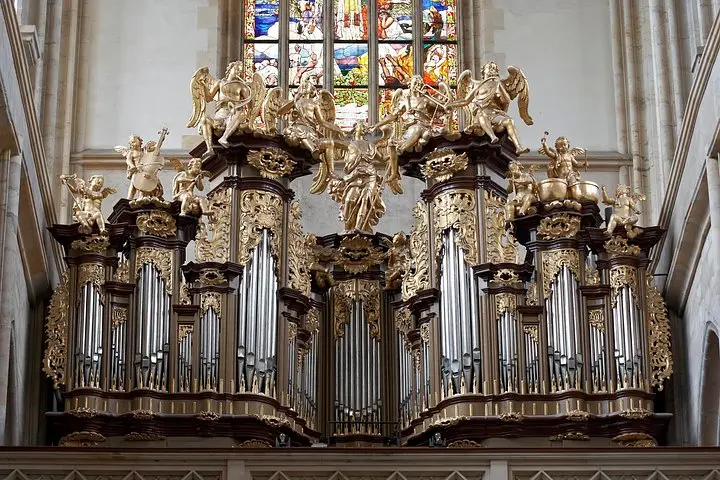
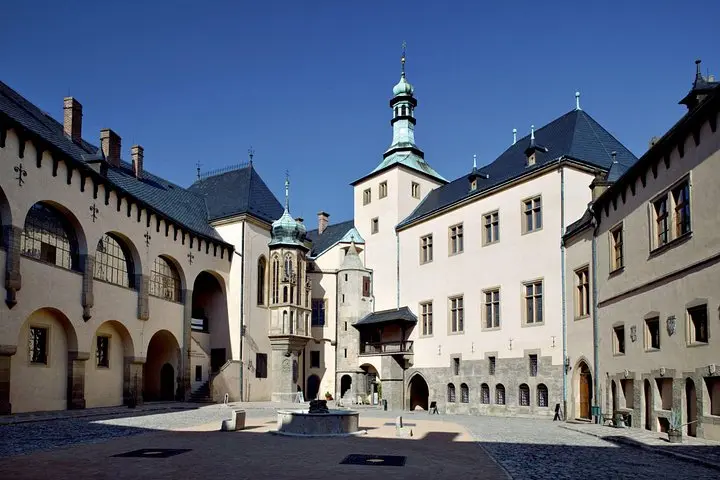
Kutná Hora grew rich on silver in the 13th–16th centuries; the wealth is visible in vaulted chapels, carved choir stalls, and the grand stonework of the Cathedral of the Assumption of Our Lady and Saint John the Baptist. Geologically the area sits on Cenozoic sediments and veins where medieval miners coaxed silver from fissures; that legacy shaped the town’s street plan and civic buildings. Local culture still turns on that mining past—museums, the Italian Court (Vlašský dvůr) and small workshops preserve techniques and stories.
The Sedlec Ossuary, known as the Bone Church, confronts visitors with macabre artistry: more than 40,000 human bones arranged into chandeliers and coats of arms. Note that photography and video are not allowed inside the ossuary—observe respectfully.
Practically: expect a guided 6‑hour excursion with air‑conditioned transport, short guided walks and stairs inside cathedrals, and roughly 2–3 hours of walking total across cobbles. Bring comfortable shoes, a light layer for vaulted interiors, and your printed or mobile ticket; guides often operate bilingually. Allow time for slow steps through the churches and a final coffee in the square to digest both architecture and history before returning to Prague.
No—photography and video recording are prohibited inside the ossuary; follow onsite signage and guide instructions.
Expect roughly 2–3 hours of walking total, mostly on cobblestones and inside cathedrals with stairs; the tour is suitable for most mobility levels.
Yes—this tour includes entrance fees to the cathedrals and ossuary and air‑conditioned vehicle transport; check your booking for pickup details.
Tours may be operated bilingually; confirm language options when booking or request preferences at checkout.
BEST TOUR operates guided outdoor trips and adventures with an emphasis on safety, stewardship, and memorable experiences.
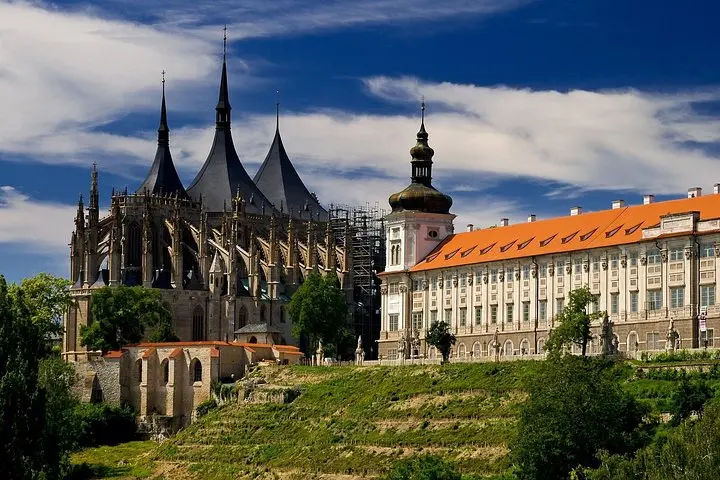
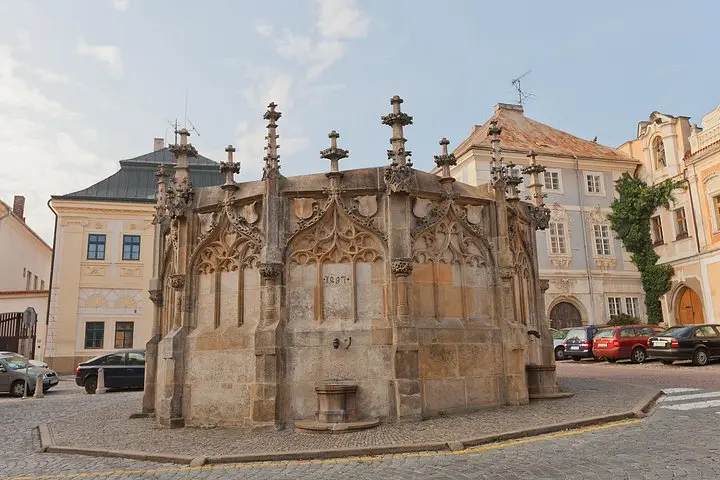
A crisp morning on the highway east of Prague dissolves into terraced fields and limestone outcrops, and the bus door opens onto a town that still smells faintly of history. Narrow cobbled lanes lead you toward the high silhouette of St. Barbara’s Cathedral, its flying buttresses throwing sharp shadows while the nearby Sázava tributaries push through reed-lined banks below.
A crisp morning on the highway east of Prague dissolves into terraced fields and limestone outcrops, and the bus door opens onto a town that still smells faintly of history. Narrow cobbled lanes lead you toward the high silhouette of St. Barbara’s Cathedral, its flying buttresses throwing sharp shadows while the nearby Sázava tributaries push through reed-lined banks below.
Kutná Hora grew rich on silver in the 13th–16th centuries; the wealth is visible in vaulted chapels, carved choir stalls, and the grand stonework of the Cathedral of the Assumption of Our Lady and Saint John the Baptist. Geologically the area sits on Cenozoic sediments and veins where medieval miners coaxed silver from fissures; that legacy shaped the town’s street plan and civic buildings. Local culture still turns on that mining past—museums, the Italian Court (Vlašský dvůr) and small workshops preserve techniques and stories.
The Sedlec Ossuary, known as the Bone Church, confronts visitors with macabre artistry: more than 40,000 human bones arranged into chandeliers and coats of arms. Note that photography and video are not allowed inside the ossuary—observe respectfully.
Practically: expect a guided 6‑hour excursion with air‑conditioned transport, short guided walks and stairs inside cathedrals, and roughly 2–3 hours of walking total across cobbles. Bring comfortable shoes, a light layer for vaulted interiors, and your printed or mobile ticket; guides often operate bilingually. Allow time for slow steps through the churches and a final coffee in the square to digest both architecture and history before returning to Prague.