THE ADVENTURE COLLECTIVE® · Independent discovery and booking for outdoor travel

A three-day alpine trek that climbs Bạch Mộc Lương Tử from Sapa, offering steep ridgelines, highland village culture, and exposed summit views. Prepare for long days, variable weather, and basic overnighting in homestays or huts.
A three-day alpine trek that climbs Bạch Mộc Lương Tử from Sapa, offering steep ridgelines, highland village culture, and exposed summit views. Prepare for long days, variable weather, and basic overnighting in homestays or huts.
Dawn strips the valley bare of fog and the trail ahead climbs into a world of wind-carved rhododendron and granite ribs. By the second morning you’re above the tree line: clouds push past the ridgeline like a slow tide, and the mountain seems to test every step you take.
Verified experiences and guided adventures in the surrounding area.
Dawn strips the valley bare of fog and the trail ahead climbs into a world of wind-carved rhododendron and granite ribs. By the second morning you’re above the tree line: clouds push past the ridgeline like a slow tide, and the mountain seems to test every step you take.
Bạch Mộc Lương Tử sits on the Hoàng Liên Sơn range, a product of tectonic uplift and deep erosion that carved steep valleys and knife-edged ridges. The slopes are dotted with small Hmong and Tày villages whose layered rice terraces and hemp drying racks mark a human history of highland agriculture and seasonal migration. The geology shifts quickly from dense forest to alpine meadow, revealing granite outcrops and scree where the trail grows sharp and exposed.
Expect roughly 25–30 km over three days with 1,500–2,000 m of cumulative elevation gain; trails alternate between packed earth, root tangle and loose rock. Nights are in basic homestays or mountain huts—pack for cold, even in shoulder seasons. Water is usually available from streams but should be treated. Acclimatize in Sapa for a day, start hikes early to avoid afternoon storms, and be prepared for sudden weather swings.
Practical essentials: firm, breathable boots and a waterproof shell; layers for sub-zero summit mornings; trekking poles for steep descents; and a small first-aid kit. Leave no trace—these high meadows recover slowly. With simple preparation, the route delivers expansive views, hard-won summit moments, and an immediate sense of place in Vietnam’s high country.
No—this trek is non-technical hiking, though some steep, exposed sections may require careful footwork; ropes or harnesses are not typically used.
Most itineraries use a mix of basic mountain huts or simple homestays in highland villages; expect shared sleeping spaces and limited hot-water availability.
Spring and autumn offer the most stable weather and clearer views; summer brings heavy rains and winter can have snow and ice on higher slopes.
Carry at least 2 liters daily, treat or filter stream water, and rely on meals provided by guides or homestays—bring lightweight snacks for energy.
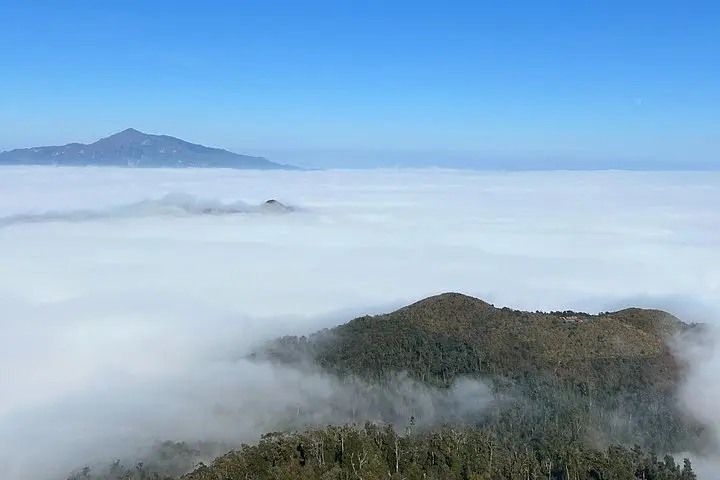
Dawn strips the valley bare of fog and the trail ahead climbs into a world of wind-carved rhododendron and granite ribs. By the second morning you’re above the tree line: clouds push past the ridgeline like a slow tide, and the mountain seems to test every step you take.
Dawn strips the valley bare of fog and the trail ahead climbs into a world of wind-carved rhododendron and granite ribs. By the second morning you’re above the tree line: clouds push past the ridgeline like a slow tide, and the mountain seems to test every step you take.
Bạch Mộc Lương Tử sits on the Hoàng Liên Sơn range, a product of tectonic uplift and deep erosion that carved steep valleys and knife-edged ridges. The slopes are dotted with small Hmong and Tày villages whose layered rice terraces and hemp drying racks mark a human history of highland agriculture and seasonal migration. The geology shifts quickly from dense forest to alpine meadow, revealing granite outcrops and scree where the trail grows sharp and exposed.
Expect roughly 25–30 km over three days with 1,500–2,000 m of cumulative elevation gain; trails alternate between packed earth, root tangle and loose rock. Nights are in basic homestays or mountain huts—pack for cold, even in shoulder seasons. Water is usually available from streams but should be treated. Acclimatize in Sapa for a day, start hikes early to avoid afternoon storms, and be prepared for sudden weather swings.
Practical essentials: firm, breathable boots and a waterproof shell; layers for sub-zero summit mornings; trekking poles for steep descents; and a small first-aid kit. Leave no trace—these high meadows recover slowly. With simple preparation, the route delivers expansive views, hard-won summit moments, and an immediate sense of place in Vietnam’s high country.