THE ADVENTURE COLLECTIVE® · Independent discovery and booking for outdoor travel

Walk Kyoto with a private licensed guide for five hours—through Fushimi Inari’s torii, Gion’s alleys and Nishiki Market—then unwind at Arashi-yu with a foot bath and massage. This customizable cultural walk pairs historical insight with local flavors and a soothing spa finish.
Walk Kyoto with a private licensed guide for five hours—through Fushimi Inari’s torii, Gion’s alleys and Nishiki Market—then unwind at Arashi-yu with a foot bath and massage. This customizable cultural walk pairs historical insight with local flavors and a soothing spa finish.
You step off the subway into a rush of warm air and the low hum of Kyoto life, a licensed guide waiting to cut through the crowd. The tour moves on foot—through vermilion torii that thread uphill at Fushimi Inari, down narrow wooden alleys in Higashiyama, and along the fish-scented stalls of Nishiki Market—before you are led to Arashi-yu for a restorative foot bath and 35-minute massage.
Verified experiences and guided adventures in the surrounding area.
Operated by Japan Guide Agency · Kyoto, Kyoto Prefecture
You step off the subway into a rush of warm air and the low hum of Kyoto life, a licensed guide waiting to cut through the crowd. The tour moves on foot—through vermilion torii that thread uphill at Fushimi Inari, down narrow wooden alleys in Higashiyama, and along the fish-scented stalls of Nishiki Market—before you are led to Arashi-yu for a restorative foot bath and 35-minute massage.
Kyoto was Japan’s imperial capital for over a millennium; its streets fold history into everyday life. Fushimi Inari’s tiled paths and fox statues point to an agricultural past—the shrine honors Inari, god of rice—while castle, temple and palace sites reflect samurai-era power and refined Zen garden traditions.
Geologically the city sits in a low basin ringed by forested hills, so expect short climbs and sloping streets rather than wilderness trails. Culturally, this is intimate urban travel: tea rituals, machiya townhouses, and market vendors reveal living traditions rather than museum pieces.
Practically, this is five hours of guided walking (mostly paved, mixed grades) followed by a one-hour spa break. Plan for 6–8 km of walking depending on your chosen sites, comfortable shoes, bottled water, and small cash for market tastings. Notify the operator of mobility or pregnancy concerns—acupressure-based foot therapy is adjusted for pregnant guests or not recommended in some cases. Use public transport between dispersed sites to save time; your guide builds a custom 2–3 site route so you get depth without hurry.
The guided portion runs about five hours and typically covers 6–8 km depending on chosen sites; expect paved streets and temple steps.
The foot bath is suitable for most, but those who are pregnant should avoid acupressure massage; notify the guide when booking so therapists can modify treatment.
Yes—the private guide builds a custom itinerary; you can select 2–3 sites from the suggested list when reserving.
Many central Kyoto areas are accessible, but narrow lanes and temple steps may limit access—discuss mobility needs with the operator prior to booking.
Japan Guide Agency operates guided outdoor trips and adventures with an emphasis on safety, stewardship, and memorable experiences.
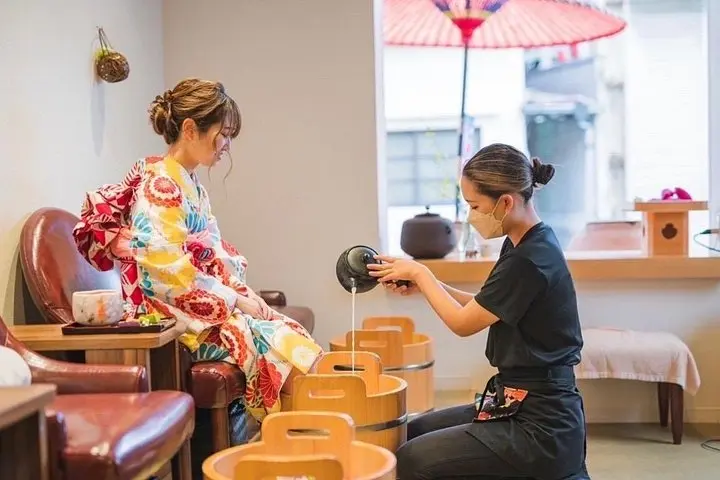
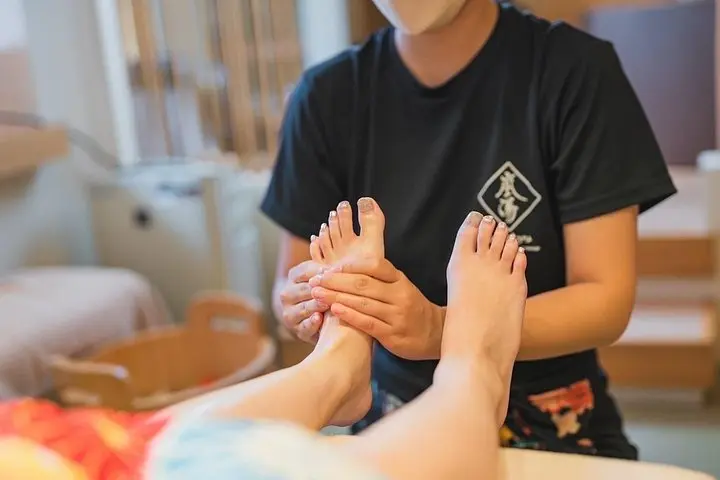
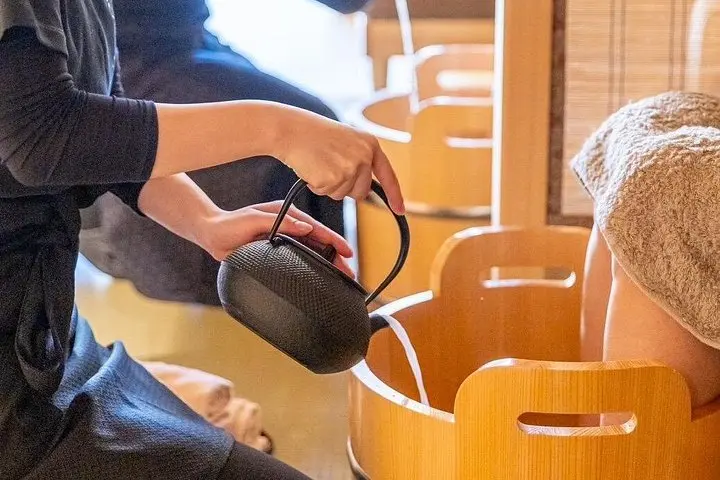
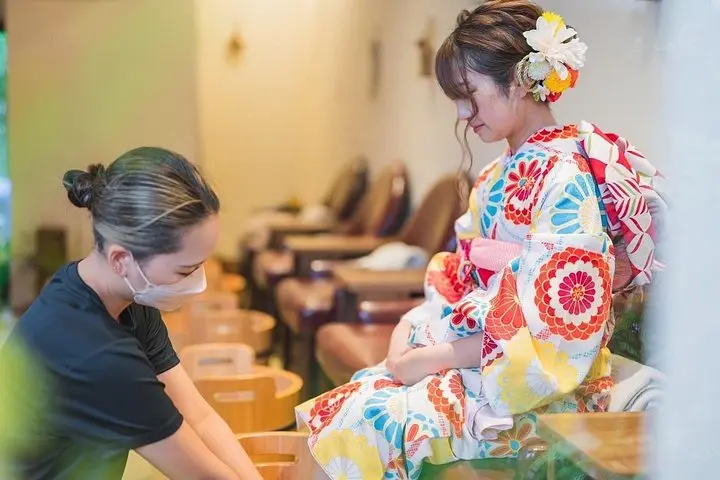
You step off the subway into a rush of warm air and the low hum of Kyoto life, a licensed guide waiting to cut through the crowd. The tour moves on foot—through vermilion torii that thread uphill at Fushimi Inari, down narrow wooden alleys in Higashiyama, and along the fish-scented stalls of Nishiki Market—before you are led to Arashi-yu for a restorative foot bath and 35-minute massage.
You step off the subway into a rush of warm air and the low hum of Kyoto life, a licensed guide waiting to cut through the crowd. The tour moves on foot—through vermilion torii that thread uphill at Fushimi Inari, down narrow wooden alleys in Higashiyama, and along the fish-scented stalls of Nishiki Market—before you are led to Arashi-yu for a restorative foot bath and 35-minute massage.
Kyoto was Japan’s imperial capital for over a millennium; its streets fold history into everyday life. Fushimi Inari’s tiled paths and fox statues point to an agricultural past—the shrine honors Inari, god of rice—while castle, temple and palace sites reflect samurai-era power and refined Zen garden traditions.
Geologically the city sits in a low basin ringed by forested hills, so expect short climbs and sloping streets rather than wilderness trails. Culturally, this is intimate urban travel: tea rituals, machiya townhouses, and market vendors reveal living traditions rather than museum pieces.
Practically, this is five hours of guided walking (mostly paved, mixed grades) followed by a one-hour spa break. Plan for 6–8 km of walking depending on your chosen sites, comfortable shoes, bottled water, and small cash for market tastings. Notify the operator of mobility or pregnancy concerns—acupressure-based foot therapy is adjusted for pregnant guests or not recommended in some cases. Use public transport between dispersed sites to save time; your guide builds a custom 2–3 site route so you get depth without hurry.