THE ADVENTURE COLLECTIVE® · Independent discovery and booking for outdoor travel

Cover Kyoto’s major landmarks on foot and at speed: a guided 10 km city run that mixes sightseeing with Tabata intervals. Start at Nijojo-mae Station and finish near Gion, passing imperial grounds, riverside willows, and shrine gates.
Cover Kyoto’s major landmarks on foot and at speed: a guided 10 km city run that mixes sightseeing with Tabata intervals. Start at Nijojo-mae Station and finish near Gion, passing imperial grounds, riverside willows, and shrine gates.
The morning air along the Kamogawa cuts clean and awake as a small group gathers outside Nijojo-mae Station. Guides run through a brisk warm-up and a short primer on Kyoto’s past before the first strides—cobblestone edges, river paths and temple steps unfolding ahead.
Verified experiences and guided adventures in the surrounding area.
Operated by Kyoto Fitness · Kyoto, Kyoto Prefecture
The morning air along the Kamogawa cuts clean and awake as a small group gathers outside Nijojo-mae Station. Guides run through a brisk warm-up and a short primer on Kyoto’s past before the first strides—cobblestone edges, river paths and temple steps unfolding ahead.
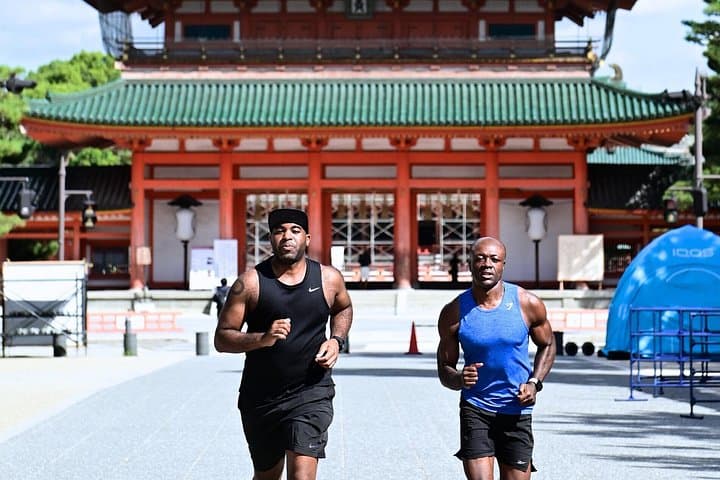
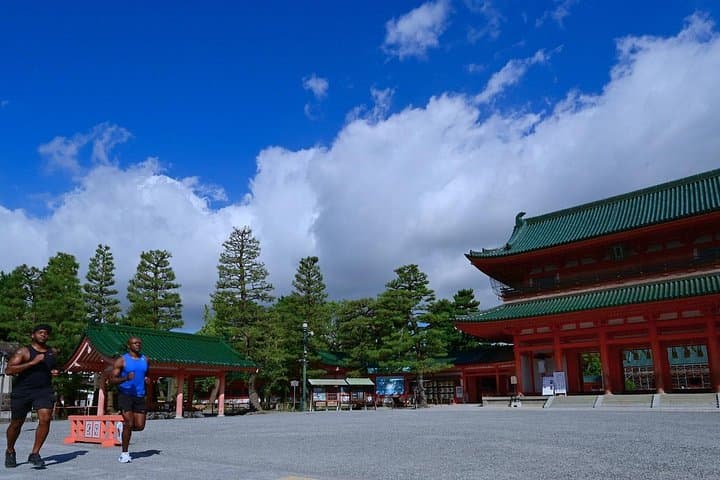
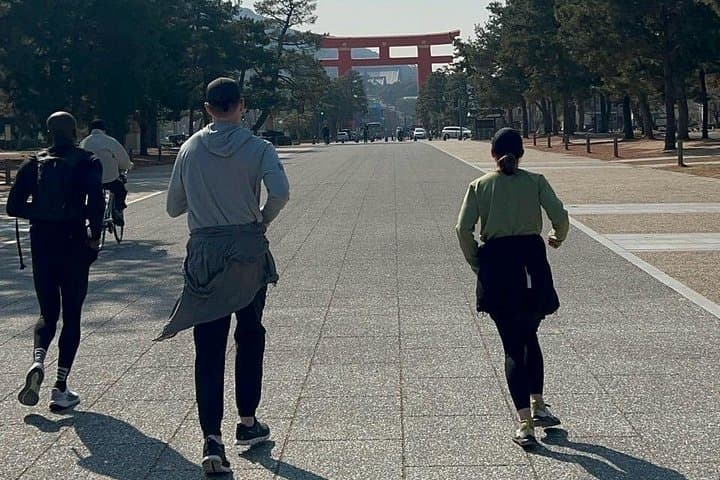
This guided city run threads roughly 10 kilometers through Kyoto’s political and cultural spine. You pass the outer walls of Nijo Castle—built for Tokugawa power in the 17th century—loop past the former Imperial Palace grounds, and cross the Kamogawa where the river seems to dare you to keep pace. Heian Shrine’s broad torii marks the route’s eastern swing; later, Shirakawa’s willow-lined banks and small stone bridges create a quieter, cinematic stretch that funnels into Maruyama Park and Yasaka Shrine before easing into Gion.
Kyoto’s geology is gentle here: flat, volcanic plain with well-maintained urban and riverside pathways. Culture and history are constant companions—shrine gates, merchant machiya, and the occasional geisha alley that hints at centuries of tradition.
Practically: expect paved streets and riverside trails, intermittent steps, and mostly flat elevation. The pace alternates steady jogging with short Tabata-style intervals led by a fitness pro; total duration is about three hours. Bring a refillable water bottle, good road-running shoes, light layers, and a compact towel. Start early to avoid heat and crowds, use public transit for the one-way logistics, and inform guides of any medical limits—this tour is not suited to those with heart, spinal, or pregnancy restrictions.
The route is about 10 kilometers and lasts roughly three hours; pace mixes steady jogging with short Tabata intervals so overall speed is moderate and adjustable.
Meet at Nijojo-mae Station (opposite Nijo Castle); the tour finishes near Gion Shijo Station on the eastern bank of the Kamogawa.
Participants should have a moderate fitness level—beginners who can comfortably jog several kilometers and handle short high-intensity sets can participate, but inform guides of limits.
Public restrooms and convenience stores are available along the route; guides can point out stops and refill options as needed.
Kyoto Fitness operates guided outdoor trips and adventures with an emphasis on safety, stewardship, and memorable experiences.
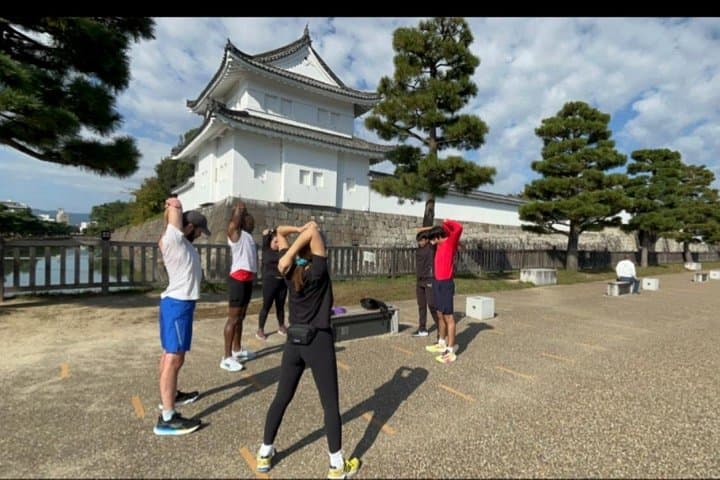
The morning air along the Kamogawa cuts clean and awake as a small group gathers outside Nijojo-mae Station. Guides run through a brisk warm-up and a short primer on Kyoto’s past before the first strides—cobblestone edges, river paths and temple steps unfolding ahead.
The morning air along the Kamogawa cuts clean and awake as a small group gathers outside Nijojo-mae Station. Guides run through a brisk warm-up and a short primer on Kyoto’s past before the first strides—cobblestone edges, river paths and temple steps unfolding ahead.
This guided city run threads roughly 10 kilometers through Kyoto’s political and cultural spine. You pass the outer walls of Nijo Castle—built for Tokugawa power in the 17th century—loop past the former Imperial Palace grounds, and cross the Kamogawa where the river seems to dare you to keep pace. Heian Shrine’s broad torii marks the route’s eastern swing; later, Shirakawa’s willow-lined banks and small stone bridges create a quieter, cinematic stretch that funnels into Maruyama Park and Yasaka Shrine before easing into Gion.
Kyoto’s geology is gentle here: flat, volcanic plain with well-maintained urban and riverside pathways. Culture and history are constant companions—shrine gates, merchant machiya, and the occasional geisha alley that hints at centuries of tradition.
Practically: expect paved streets and riverside trails, intermittent steps, and mostly flat elevation. The pace alternates steady jogging with short Tabata-style intervals led by a fitness pro; total duration is about three hours. Bring a refillable water bottle, good road-running shoes, light layers, and a compact towel. Start early to avoid heat and crowds, use public transit for the one-way logistics, and inform guides of any medical limits—this tour is not suited to those with heart, spinal, or pregnancy restrictions.