THE ADVENTURE COLLECTIVE® · Independent discovery and booking for outdoor travel

Walk Gion’s historic laneways and thread the glowing torii of Fushimi Inari on a guided night tour that blends culture, history and manageable urban hiking. Expect 2–3 hours of uneven stone, temple steps and illuminated scenery with local insights and photos included.
Walk Gion’s historic laneways and thread the glowing torii of Fushimi Inari on a guided night tour that blends culture, history and manageable urban hiking. Expect 2–3 hours of uneven stone, temple steps and illuminated scenery with local insights and photos included.
The lantern light softens the wooden facades of Gion as footsteps click on stone, and farther south a corridor of red torii gates folds into the shadowed incline of Mount Inari.
Verified experiences and guided adventures in the surrounding area.
Operated by OTAKU hopper · Kyoto, Kyoto
The lantern light softens the wooden facades of Gion as footsteps click on stone, and farther south a corridor of red torii gates folds into the shadowed incline of Mount Inari.
This guided evening walk threads two of Kyoto’s most atmospheric precincts: the preserved streets of Gion with their low eaves and teahouses, and Fushimi Inari Taisha, whose vermilion gates carve a pathway through cedar forest up the mountain.
Fushimi Inari dates back to 711 AD and honors Inari, the rice deity, while Gion’s Hanami-koji preserves the late-Edo-period urban fabric that shaped geisha culture. The route moves from cityscape to shrine forest, where volcanic and sedimentary soils give the hills good drainage and the cedar trunks stand like watchful pillars. Local guides point out shrine rituals, the wooden construction techniques of pagodas and subtle etiquette around prayer spaces that visitors should observe.
Practically, expect 1–2 miles of walking over uneven stone, temple steps and some short uphill stretches at Inari. The tour lasts about 2.5 hours and uses public transit between neighborhoods; light on steep climbs but heavy on stairs and narrow lanes. Bring steady footwear, a compact light for darker shrine paths, and layered clothing for cool evenings. Photography is welcomed, but guides advise low flash in residential alleys and respect for people and rituals. Timed for dusk and early night, the experience balances cultural context with clear logistics — meeting at a well-known statue in central Kyoto, small-group pacing, and professional photos included to capture the glow of torii and the hush of Gion’s streets.
Yes — admission fees for temples and shrines visited on the itinerary are included in the tour price.
The tour is family-friendly but requires moderate fitness for stairs and uneven terrain; notify the operator if mobility is limited.
Yes — professional photos are taken during the tour and provided as part of the experience.
Late arrivals cannot join and are not eligible for a refund; arrive on time and review the provided meeting images after booking.
OTAKU hopper operates guided outdoor trips and adventures with an emphasis on safety, stewardship, and memorable experiences.
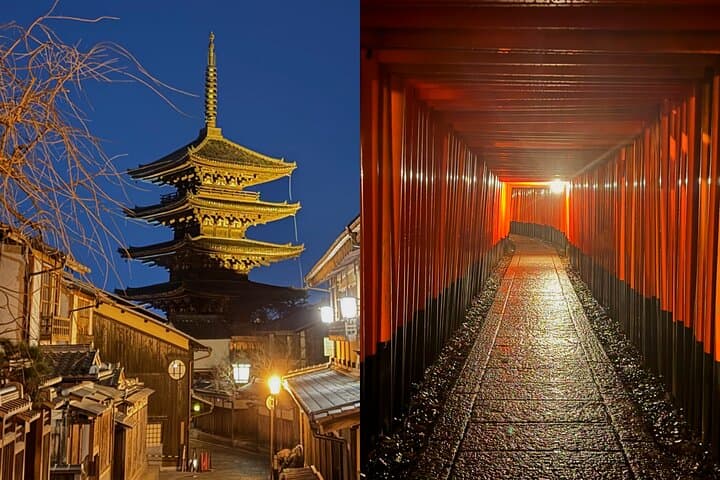



The lantern light softens the wooden facades of Gion as footsteps click on stone, and farther south a corridor of red torii gates folds into the shadowed incline of Mount Inari.
The lantern light softens the wooden facades of Gion as footsteps click on stone, and farther south a corridor of red torii gates folds into the shadowed incline of Mount Inari.
This guided evening walk threads two of Kyoto’s most atmospheric precincts: the preserved streets of Gion with their low eaves and teahouses, and Fushimi Inari Taisha, whose vermilion gates carve a pathway through cedar forest up the mountain.
Fushimi Inari dates back to 711 AD and honors Inari, the rice deity, while Gion’s Hanami-koji preserves the late-Edo-period urban fabric that shaped geisha culture. The route moves from cityscape to shrine forest, where volcanic and sedimentary soils give the hills good drainage and the cedar trunks stand like watchful pillars. Local guides point out shrine rituals, the wooden construction techniques of pagodas and subtle etiquette around prayer spaces that visitors should observe.
Practically, expect 1–2 miles of walking over uneven stone, temple steps and some short uphill stretches at Inari. The tour lasts about 2.5 hours and uses public transit between neighborhoods; light on steep climbs but heavy on stairs and narrow lanes. Bring steady footwear, a compact light for darker shrine paths, and layered clothing for cool evenings. Photography is welcomed, but guides advise low flash in residential alleys and respect for people and rituals. Timed for dusk and early night, the experience balances cultural context with clear logistics — meeting at a well-known statue in central Kyoto, small-group pacing, and professional photos included to capture the glow of torii and the hush of Gion’s streets.