THE ADVENTURE COLLECTIVE® · Independent discovery and booking for outdoor travel

A day-long ascent from Santiago into La Campana National Park that climbs through boldo and oak forests to a granite summit at 1,920m. Expect panoramic views of both the Andes and the Pacific, plus a challenging final push over fractured rock.
A day-long ascent from Santiago into La Campana National Park that climbs through boldo and oak forests to a granite summit at 1,920m. Expect panoramic views of both the Andes and the Pacific, plus a challenging final push over fractured rock.
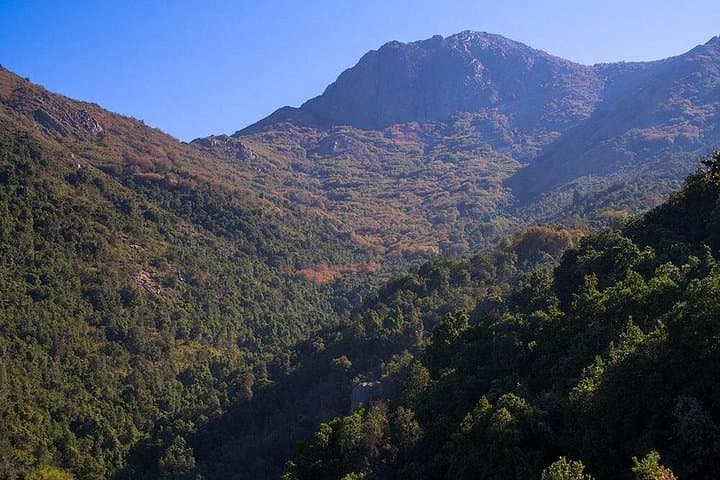
The bus eases out of Santiago before dawn and the cityscape dissolves into groves and low coastal ridges. By the time the van drops you at the park entrance near Olmué, the air already smells of damp earth and boldo leaves; the trailhead hums with the kind of quiet that only mountains keep. You follow the Andinista path into a forest of boldos, litres and canelos, the trunks mottled with lichen, and the silhouettes of Nothofagus oaks appearing as you climb.
Verified experiences and guided adventures in the surrounding area.
Operated by Coigue Expeditions · Olmué, Valparaíso Region
The bus eases out of Santiago before dawn and the cityscape dissolves into groves and low coastal ridges. By the time the van drops you at the park entrance near Olmué, the air already smells of damp earth and boldo leaves; the trailhead hums with the kind of quiet that only mountains keep. You follow the Andinista path into a forest of boldos, litres and canelos, the trunks mottled with lichen, and the silhouettes of Nothofagus oaks appearing as you climb.
This route retraces a nineteenth-century curiosity: Charles Darwin passed through Chilean coastal ranges during the Beagle voyage, and La Campana’s slopes were a living laboratory of endemic trees and granite outcrops. The geology is blunt and direct — an old batholith of granite that weathers into steep slabs and boulder fields near the summit. The walk crosses multiple life zones: a lower sclerophyll scrub that hints at the Pacific, a mid-elevation evergreen belt, and cold-tolerant oaks higher up, where an abandoned quartz mine sits at about 1,260m (4,150 ft).
Culturally, the park links coastal Valparaíso’s maritime history to inland agricultural valleys; small towns like Olmué serve as gateways with simple empanada shops and cafés where guides fuel up before setting out. Locally protected species include belloto del norte (Beilschmiedia) and patches of canelo, both of which conservation groups monitor because grazing and fire historically reduced their range.
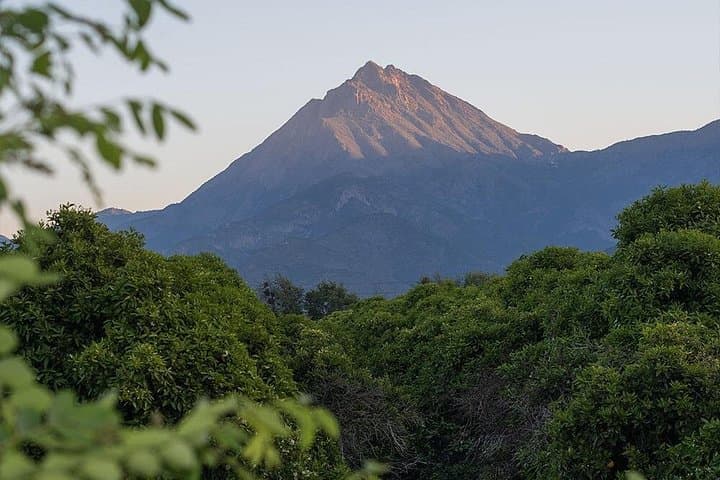
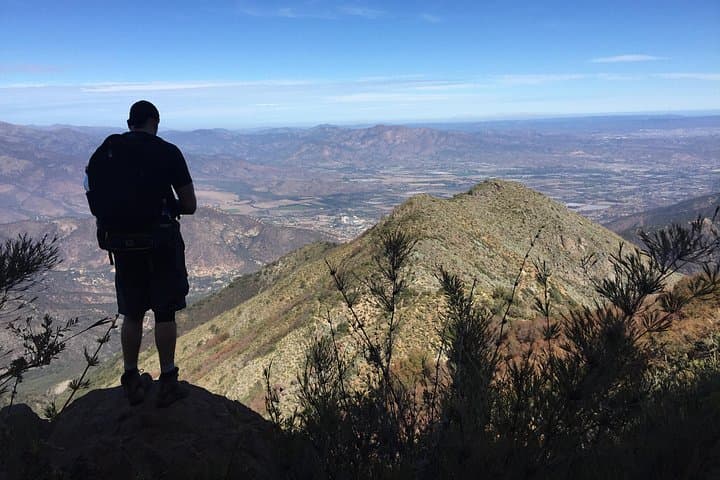
On the trail the landscape takes on a personality: the coastal breezes tug at exposed ridgelines, granite slabs dare you to pick a line, and the oaks hold sunlight like small coin piles. The hard work comes late — the last hour’s slope steepens and footing shifts from packed dirt to fractured rock before you break onto the 1,920m (6,300 ft) summit, where views spill eastward to the Andes and westward toward the Pacific.
Practicalities: this is a full-day outing (transport from Santiago plus hiking totals around 8–12 hours). Expect sustained uphill hiking with roughly 1,000–1,400m of elevation gain depending on your pickup point; trekking poles are provided but bring your own if you prefer. The operator includes bottled water, snacks and a boxed lunch; still carry at least 2 liters of water and extra electrolytes for warm months. Footwear should be sturdy, grippy hiking boots — the final approach is granite and can be slippery when wet.
Timing matters: start early to avoid afternoon winds and to catch the clearer mountain light. Weather can change quickly; layers, sun protection and a lightweight rain shell will cover most conditions. Leave no trace: stay on established paths to protect regenerating belloto and canelo stands. Reach the summit and you’ll understand why this coastal massif has drawn explorers for two centuries — it makes the continent feel like a map you can hold in both hands.
Hiking and on-trail time is typically 5–7 hours round-trip; the tour lists a 12-hour duration to include transport from Santiago and return.
Yes—the Andinista path is established and commonly used, though the last approach crosses granite where cairns and obvious lines are the main guides.
No technical climbing skills are required, but you should be comfortable with steep, sustained uphill hiking and uneven, rocky terrain.
Basic facilities exist at park entrances; on the trail expect no formal restrooms—plan accordingly and follow leave-no-trace principles.
Expect birds like Chilean mockingbird and occasional small mammals; reptiles can sun on rocks in warmer months.
The operator requires a moderate fitness level and does not recommend it for very young children; check age requirements when booking.
Coigue Expeditions operates guided outdoor trips and adventures with an emphasis on safety, stewardship, and memorable experiences.
The bus eases out of Santiago before dawn and the cityscape dissolves into groves and low coastal ridges. By the time the van drops you at the park entrance near Olmué, the air already smells of damp earth and boldo leaves; the trailhead hums with the kind of quiet that only mountains keep. You follow the Andinista path into a forest of boldos, litres and canelos, the trunks mottled with lichen, and the silhouettes of Nothofagus oaks appearing as you climb.
The bus eases out of Santiago before dawn and the cityscape dissolves into groves and low coastal ridges. By the time the van drops you at the park entrance near Olmué, the air already smells of damp earth and boldo leaves; the trailhead hums with the kind of quiet that only mountains keep. You follow the Andinista path into a forest of boldos, litres and canelos, the trunks mottled with lichen, and the silhouettes of Nothofagus oaks appearing as you climb.
This route retraces a nineteenth-century curiosity: Charles Darwin passed through Chilean coastal ranges during the Beagle voyage, and La Campana’s slopes were a living laboratory of endemic trees and granite outcrops. The geology is blunt and direct — an old batholith of granite that weathers into steep slabs and boulder fields near the summit. The walk crosses multiple life zones: a lower sclerophyll scrub that hints at the Pacific, a mid-elevation evergreen belt, and cold-tolerant oaks higher up, where an abandoned quartz mine sits at about 1,260m (4,150 ft).
Culturally, the park links coastal Valparaíso’s maritime history to inland agricultural valleys; small towns like Olmué serve as gateways with simple empanada shops and cafés where guides fuel up before setting out. Locally protected species include belloto del norte (Beilschmiedia) and patches of canelo, both of which conservation groups monitor because grazing and fire historically reduced their range.
On the trail the landscape takes on a personality: the coastal breezes tug at exposed ridgelines, granite slabs dare you to pick a line, and the oaks hold sunlight like small coin piles. The hard work comes late — the last hour’s slope steepens and footing shifts from packed dirt to fractured rock before you break onto the 1,920m (6,300 ft) summit, where views spill eastward to the Andes and westward toward the Pacific.
Practicalities: this is a full-day outing (transport from Santiago plus hiking totals around 8–12 hours). Expect sustained uphill hiking with roughly 1,000–1,400m of elevation gain depending on your pickup point; trekking poles are provided but bring your own if you prefer. The operator includes bottled water, snacks and a boxed lunch; still carry at least 2 liters of water and extra electrolytes for warm months. Footwear should be sturdy, grippy hiking boots — the final approach is granite and can be slippery when wet.
Timing matters: start early to avoid afternoon winds and to catch the clearer mountain light. Weather can change quickly; layers, sun protection and a lightweight rain shell will cover most conditions. Leave no trace: stay on established paths to protect regenerating belloto and canelo stands. Reach the summit and you’ll understand why this coastal massif has drawn explorers for two centuries — it makes the continent feel like a map you can hold in both hands.