THE ADVENTURE COLLECTIVE® · Independent discovery and booking for outdoor travel

Step from Santiago into the coastal hills for a full-day trek through La Campana’s ancient palm groves and coastal forests. This private tour pairs a moderate 3-hour hike with transport, a box lunch and local wildlife viewing.
Step from Santiago into the coastal hills for a full-day trek through La Campana’s ancient palm groves and coastal forests. This private tour pairs a moderate 3-hour hike with transport, a box lunch and local wildlife viewing.
A cool wind from the coastal range cuts across the trail as the morning minivan leaves Santiago and climbs toward La Campana. By the time the group steps onto the well-worn path, the vegetation has already changed: scrub gives way to stands of the Chilean wine palm and low evergreen forest. The guide sets the pace; the palms seem to watch, their heavy fronds shifting like an audience.
Verified experiences and guided adventures in the surrounding area.
Operated by Anclatourchile · Olmué, Valparaíso Region
A cool wind from the coastal range cuts across the trail as the morning minivan leaves Santiago and climbs toward La Campana. By the time the group steps onto the well-worn path, the vegetation has already changed: scrub gives way to stands of the Chilean wine palm and low evergreen forest. The guide sets the pace; the palms seem to watch, their heavy fronds shifting like an audience.
La Campana sits on the western edge of Chile’s central valley, a geologic uplift of ancient granites and metamorphic rocks that creates steep ridgelines and sheltered hollows where the endemic Jubaea chilensis survives. Naturalists remember Charles Darwin’s passage through this region; his notes helped frame early ideas about species distribution. Local culture ties to small towns like Olmué and coastal farming communities, and you’ll see stone walls and terraced slopes en route.
Expect roughly three hours of steady hiking on clear footpaths with intermittent rocky sections and short climbs—enough to test legs but suitable for most fit walkers. The tour includes private transport, bottled water and a box lunch, with a celebratory beer for the return ride.
Practically, wear supportive hiking shoes, layers for shifting coastal weather, and sun protection; carry 1–2 liters of water and a small daypack. Start early to avoid the hottest midday sun and to catch the best bird activity. The park’s palms and scrub can feel alive—watch quietly for birds and foxes and leave no trace behind.
The guided trekking portion is about 3 hours on well-defined trails with short uphill sections.
The tour is described as suitable for most fitness levels, but participants should be comfortable walking uneven trails for several hours; inform the operator about mobility concerns.
Private round-trip transport from Santiago, bottled water, a box lunch, a private guide, and a beer for the return journey are included.
Entrance is handled by the operator as part of the tour; visitors on independent trips should check park access rules and fees.
Anclatourchile operates guided outdoor trips and adventures with an emphasis on safety, stewardship, and memorable experiences.
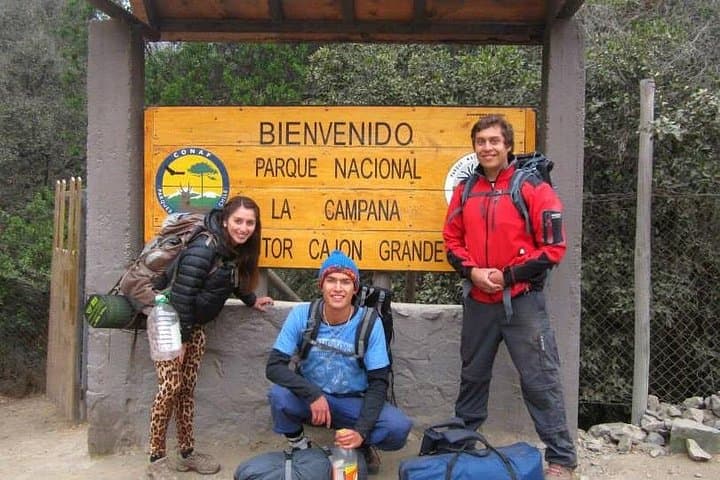


A cool wind from the coastal range cuts across the trail as the morning minivan leaves Santiago and climbs toward La Campana. By the time the group steps onto the well-worn path, the vegetation has already changed: scrub gives way to stands of the Chilean wine palm and low evergreen forest. The guide sets the pace; the palms seem to watch, their heavy fronds shifting like an audience.
A cool wind from the coastal range cuts across the trail as the morning minivan leaves Santiago and climbs toward La Campana. By the time the group steps onto the well-worn path, the vegetation has already changed: scrub gives way to stands of the Chilean wine palm and low evergreen forest. The guide sets the pace; the palms seem to watch, their heavy fronds shifting like an audience.
La Campana sits on the western edge of Chile’s central valley, a geologic uplift of ancient granites and metamorphic rocks that creates steep ridgelines and sheltered hollows where the endemic Jubaea chilensis survives. Naturalists remember Charles Darwin’s passage through this region; his notes helped frame early ideas about species distribution. Local culture ties to small towns like Olmué and coastal farming communities, and you’ll see stone walls and terraced slopes en route.
Expect roughly three hours of steady hiking on clear footpaths with intermittent rocky sections and short climbs—enough to test legs but suitable for most fit walkers. The tour includes private transport, bottled water and a box lunch, with a celebratory beer for the return ride.
Practically, wear supportive hiking shoes, layers for shifting coastal weather, and sun protection; carry 1–2 liters of water and a small daypack. Start early to avoid the hottest midday sun and to catch the best bird activity. The park’s palms and scrub can feel alive—watch quietly for birds and foxes and leave no trace behind.