THE ADVENTURE COLLECTIVE® · Independent discovery and booking for outdoor travel

Experience La Jolla’s rocky intertidal with a marine biologist on a focused, hour-long low-tide walk. Learn species, zonation and shore stewardship while navigating stairs and uneven rock pools.
Experience La Jolla’s rocky intertidal with a marine biologist on a focused, hour-long low-tide walk. Learn species, zonation and shore stewardship while navigating stairs and uneven rock pools.
Salt air and sea-scrubbed sandstone greet you as the path drops toward the ocean; foam edges the rocks and gulls quarrel overhead. Standing across from 333 Coast Boulevard in La Jolla, you’ll follow a marine biology educator down the stairs and into a world that is submerged part of every day and exposed at low tide — a living mosaic of anemones, limpets, crabs and tiny fishes.
Verified experiences and guided adventures in the surrounding area.
Operated by SnorkelMatt · La Jolla, California
Salt air and sea-scrubbed sandstone greet you as the path drops toward the ocean; foam edges the rocks and gulls quarrel overhead. Standing across from 333 Coast Boulevard in La Jolla, you’ll follow a marine biology educator down the stairs and into a world that is submerged part of every day and exposed at low tide — a living mosaic of anemones, limpets, crabs and tiny fishes.
The coastline here is carved from uplifted marine terraces and fractured sandstone; the rocky intertidal zones are classic Pacific assemblages that educated naturalists have studied for generations. La Jolla’s shore has cultural ties to early coastal communities and to modern conservation science: local institutions like Scripps Institution of Oceanography helped shape the region’s natural history studies.
On a guided hour-long walk (groups up to 15), the biologist will explain zonation — spray, high, mid and low tide areas — and point out adaptations that let creatures survive sun, salt and predators. You’ll learn why sea stars reappear after die-offs, how anemones feed, and why the no-collection rule matters.
Practically: tours run at low tide windows and are stair- and uneven-terrain dependent (not wheelchair-friendly). Wear sturdy, closed-toe shoes with good grip, layer for wind and sun, and check tide times before you go. Bring water and a camera; hands-off observation is enforced for animal welfare. Expect about 60 minutes of walking and kneeling on rocks, lots of learning, and a fresh sense of how dynamic the shoreline really is.
The guided experience runs about 60 minutes, timed to coincide with a suitable low-tide window for viewing intertidal life.
No — the meeting spot involves stairs and significant uneven rocky terrain; it is not wheelchair-accessible.
No — the tour follows a strict no-touch and no-collection policy to protect wildlife and comply with local regulations.
Wear closed-toe shoes with good traction, dress in layers for wind and sun, bring a water bottle and a camera; avoid sandals or footwear with poor grip.
SnorkelMatt operates guided outdoor trips and adventures with an emphasis on safety, stewardship, and memorable experiences.
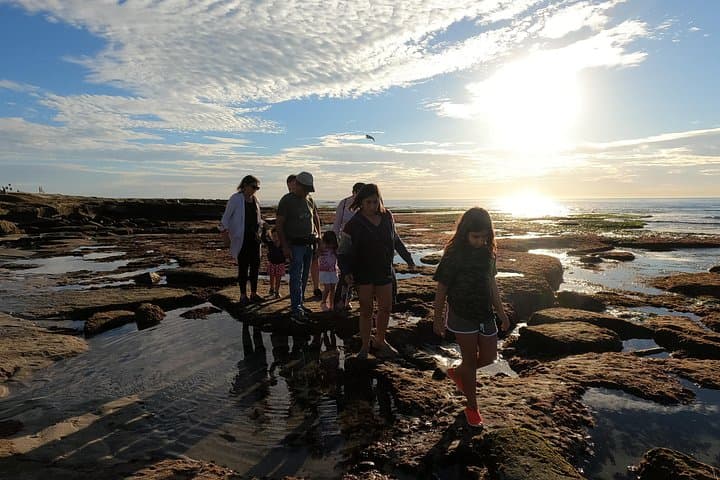

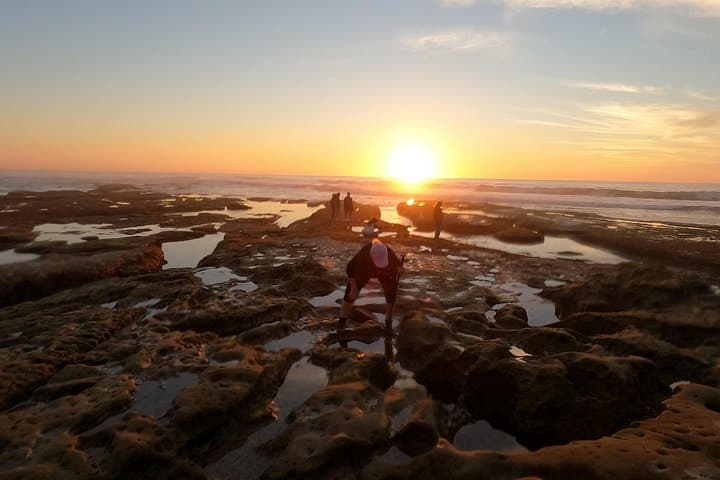
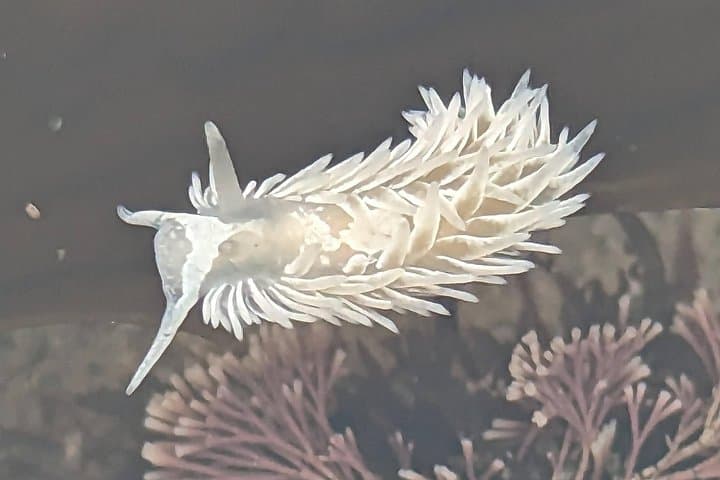
Salt air and sea-scrubbed sandstone greet you as the path drops toward the ocean; foam edges the rocks and gulls quarrel overhead. Standing across from 333 Coast Boulevard in La Jolla, you’ll follow a marine biology educator down the stairs and into a world that is submerged part of every day and exposed at low tide — a living mosaic of anemones, limpets, crabs and tiny fishes.
Salt air and sea-scrubbed sandstone greet you as the path drops toward the ocean; foam edges the rocks and gulls quarrel overhead. Standing across from 333 Coast Boulevard in La Jolla, you’ll follow a marine biology educator down the stairs and into a world that is submerged part of every day and exposed at low tide — a living mosaic of anemones, limpets, crabs and tiny fishes.
The coastline here is carved from uplifted marine terraces and fractured sandstone; the rocky intertidal zones are classic Pacific assemblages that educated naturalists have studied for generations. La Jolla’s shore has cultural ties to early coastal communities and to modern conservation science: local institutions like Scripps Institution of Oceanography helped shape the region’s natural history studies.
On a guided hour-long walk (groups up to 15), the biologist will explain zonation — spray, high, mid and low tide areas — and point out adaptations that let creatures survive sun, salt and predators. You’ll learn why sea stars reappear after die-offs, how anemones feed, and why the no-collection rule matters.
Practically: tours run at low tide windows and are stair- and uneven-terrain dependent (not wheelchair-friendly). Wear sturdy, closed-toe shoes with good grip, layer for wind and sun, and check tide times before you go. Bring water and a camera; hands-off observation is enforced for animal welfare. Expect about 60 minutes of walking and kneeling on rocks, lots of learning, and a fresh sense of how dynamic the shoreline really is.