THE ADVENTURE COLLECTIVE® · Independent discovery and booking for outdoor travel

Short forest hike, river crossings, a dramatic waterfall with swim-friendly natural pools, and a traditional casado lunch featuring Black Angus beef — a compact Guanacaste adventure for a half-day outing.
Short forest hike, river crossings, a dramatic waterfall with swim-friendly natural pools, and a traditional casado lunch featuring Black Angus beef — a compact Guanacaste adventure for a half-day outing.
The trail opens under a humid canopy; sunlight slips through fern fronds and the river ahead dares you to cross. A 2-kilometer forest walk leads to La Leona, where a broad curtain of water drops into turquoise pools framed by volcanic rock and a cavern large enough to explore.
Verified experiences and guided adventures in the surrounding area.
Operated by Catarata La Leona · Liberia, Guanacaste
The trail opens under a humid canopy; sunlight slips through fern fronds and the river ahead dares you to cross. A 2-kilometer forest walk leads to La Leona, where a broad curtain of water drops into turquoise pools framed by volcanic rock and a cavern large enough to explore.
Geology here is readable: blackened lava flows and eroded basalt cliffs shaped channels and caves that funnel seasonal runoff into the falls. The surrounding forest is typical of northwest Costa Rica — dry-to-wet transitional forest that blooms dramatically in the rainy season. Culturally, the hike finishes with a local casado: Black Angus beef served with rice, beans, salad, and fried plantains — a solid, traditional meal that reflects Guanacaste’s ranching and agricultural roots.
Expect river crossings and short rock scrambles; the route is relatively short but uneven. Wildlife sightings — howler monkeys, white-faced capuchins, and the occasional spider monkey — depend on time of day and weather, so mornings and late afternoons are best for mammals and birds. Swim in natural pools when flows are calm, and respect posted safety guidance during high water.
Practical notes: bring a small drybag for electronics, sturdy shoes with good grip, insect repellent, and a lightweight towel. Plan for 3–4 hours including travel and lunch; the provider supplies drybags and life vests. Leave no trace: pack out waste and avoid stepping on sensitive cave formations. With a brisk hike, a cliffside cavern to explore, and an authentic Costa Rican meal, this outing is compact, active, and deeply local.
The walk is about 2 kilometers one-way through forest with some uneven terrain and short river crossings; the full experience, including swimming and lunch, is roughly 3–4 hours.
The tour is generally rated easy-to-moderate; children and older travelers who are steady on uneven ground can participate, but avoid if you have serious mobility or spinal issues.
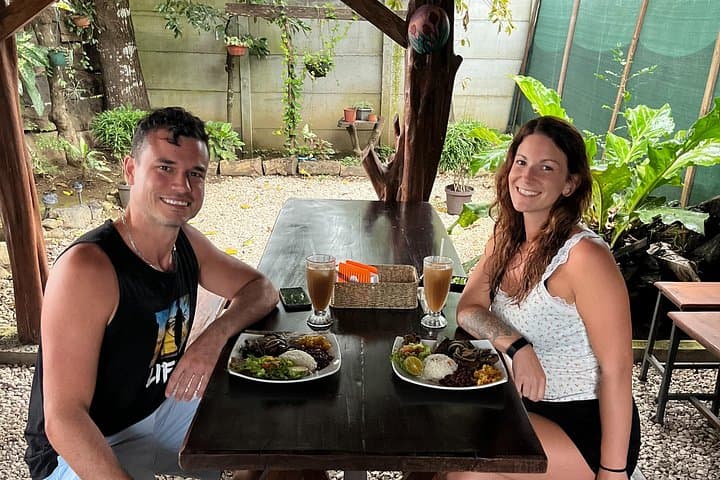
Lunch is a traditional casado featuring Black Angus beef (cuts like California or chuck steak), rice and beans, salad, and fried plantains.
Wildlife sightings aren’t guaranteed but howler monkeys and white-faced capuchins are commonly seen; sightings depend on time of day and weather.
Catarata La Leona operates guided outdoor trips and adventures with an emphasis on safety, stewardship, and memorable experiences.
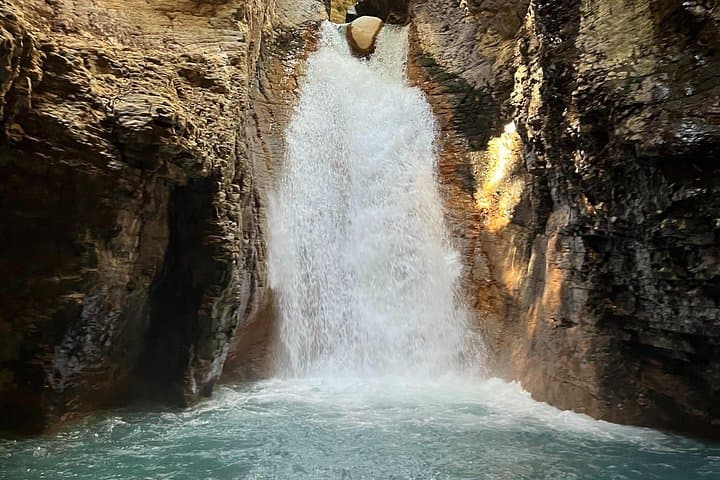
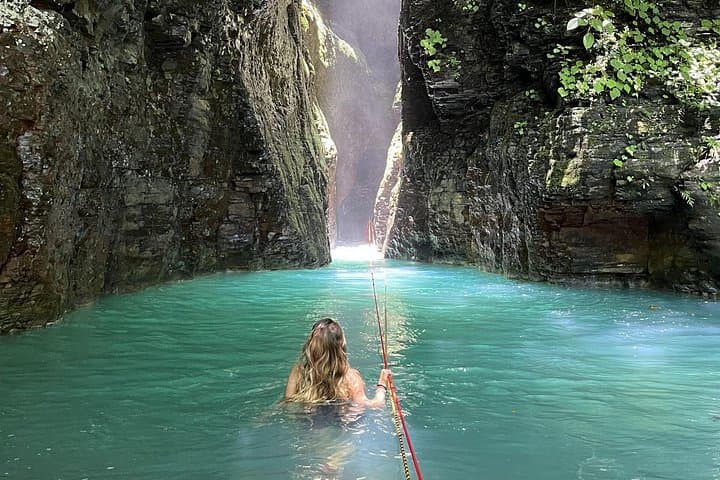
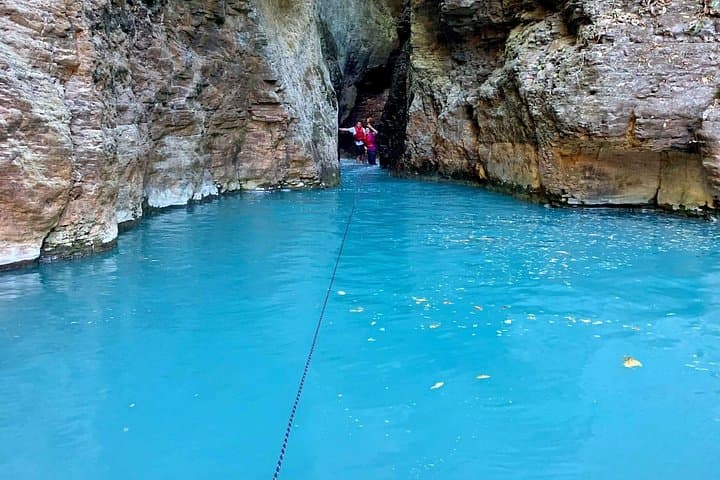
The trail opens under a humid canopy; sunlight slips through fern fronds and the river ahead dares you to cross. A 2-kilometer forest walk leads to La Leona, where a broad curtain of water drops into turquoise pools framed by volcanic rock and a cavern large enough to explore.
The trail opens under a humid canopy; sunlight slips through fern fronds and the river ahead dares you to cross. A 2-kilometer forest walk leads to La Leona, where a broad curtain of water drops into turquoise pools framed by volcanic rock and a cavern large enough to explore.
Geology here is readable: blackened lava flows and eroded basalt cliffs shaped channels and caves that funnel seasonal runoff into the falls. The surrounding forest is typical of northwest Costa Rica — dry-to-wet transitional forest that blooms dramatically in the rainy season. Culturally, the hike finishes with a local casado: Black Angus beef served with rice, beans, salad, and fried plantains — a solid, traditional meal that reflects Guanacaste’s ranching and agricultural roots.
Expect river crossings and short rock scrambles; the route is relatively short but uneven. Wildlife sightings — howler monkeys, white-faced capuchins, and the occasional spider monkey — depend on time of day and weather, so mornings and late afternoons are best for mammals and birds. Swim in natural pools when flows are calm, and respect posted safety guidance during high water.
Practical notes: bring a small drybag for electronics, sturdy shoes with good grip, insect repellent, and a lightweight towel. Plan for 3–4 hours including travel and lunch; the provider supplies drybags and life vests. Leave no trace: pack out waste and avoid stepping on sensitive cave formations. With a brisk hike, a cliffside cavern to explore, and an authentic Costa Rican meal, this outing is compact, active, and deeply local.