THE ADVENTURE COLLECTIVE® · Independent discovery and booking for outdoor travel

A 2.5-hour evening walk through La Paz that pairs market food with Aymara culture and Teleférico panoramas. Taste anticuchos, ride the city’s cable car and watch the urban nightscape from El Montículo as guides explain chola identity and local literature.
A 2.5-hour evening walk through La Paz that pairs market food with Aymara culture and Teleférico panoramas. Taste anticuchos, ride the city’s cable car and watch the urban nightscape from El Montículo as guides explain chola identity and local literature.
You step out into a city that slopes toward the abyss of the valley, the wind tasting of baked corn and diesel. Streetlamps pick out women in bowler hats and layered skirts—cholas moving like a single cultural current through the chaos—and the cable cars hum overhead, carrying neighborhoods across a skyline that refuses to sit still.
Verified experiences and guided adventures in the surrounding area.
Operated by Carmen Valdivia Escobar · La Paz, La Paz
You step out into a city that slopes toward the abyss of the valley, the wind tasting of baked corn and diesel. Streetlamps pick out women in bowler hats and layered skirts—cholas moving like a single cultural current through the chaos—and the cable cars hum overhead, carrying neighborhoods across a skyline that refuses to sit still.
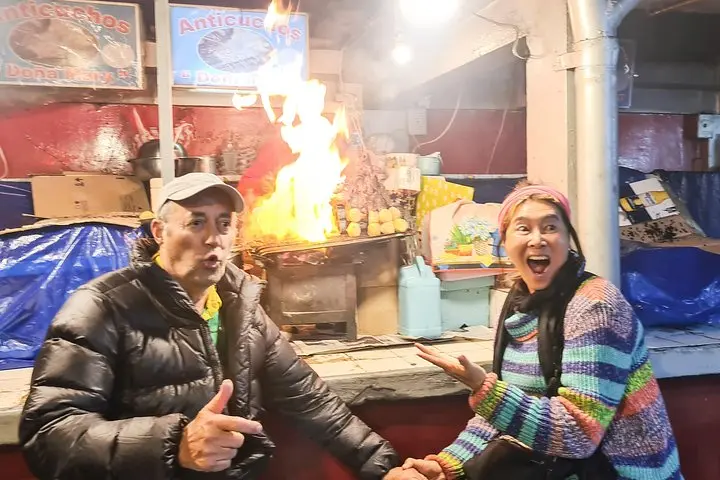
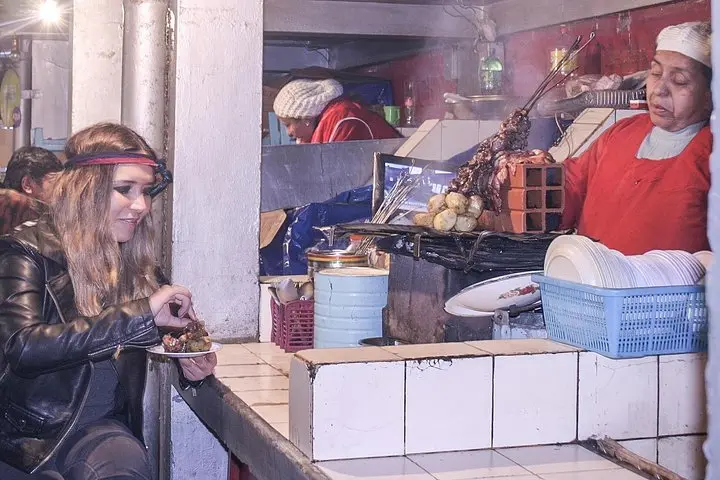
This walking tour threads food, social history and high-city vistas. Begin at Las Velas market, a decades-old food hall where anticuchos (grilled beef heart) are handed down generations and where market design maps La Paz’s social life. The route climbs to the Teleférico—Mi Teleférico—Bolivia’s urban cable car system built atop dramatic geology: steep Andean slopes carved by tectonic uplift and the Choqueyapu river far below.
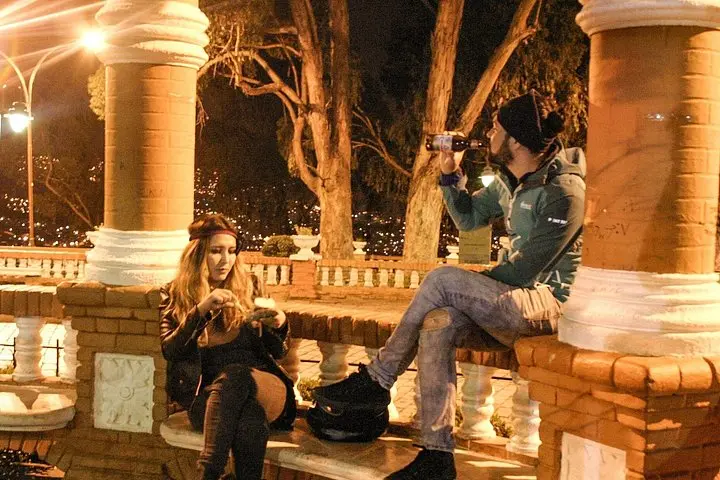
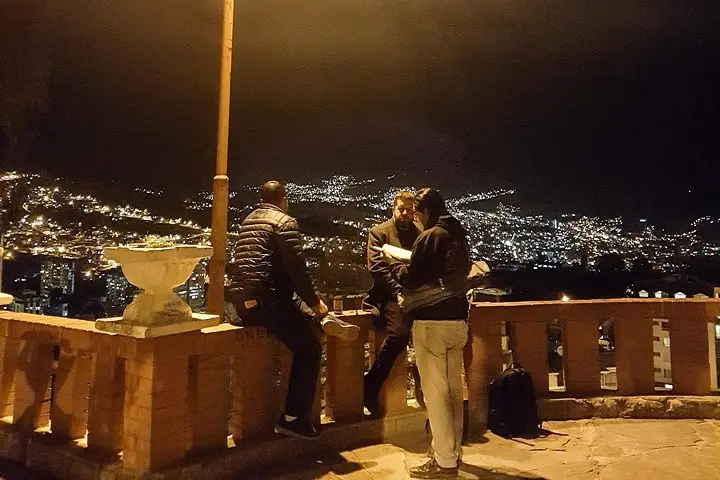
In El Alto you’ll meet Aymara traditions: linseed drinks, ritual toasts to Pachamama and the chola as modern identity. Sopocachi’s El Montículo offers a compact topography of the city and a place to hear Jaime Saenz’s lines and sample local beer as the nightscape unrolls.
Practical notes: the walk is urban with stairs and uneven sidewalks; weather changes fast at 3,600–4,000 m elevation, so layers and steady hydration are essential. Wear sturdy shoes, carry small cash for food stalls, and plan for 2–3 hours including cable-car rides. Expect lively crowds, strong flavors, and concise cultural talks—this is a nightscape of people as much as it is a string of viewpoints, where food, music and identity meet above the valley.
The tour involves market walking and municipal cable car stations with stairs; accessibility is limited—contact the operator to confirm specific accommodations.
Snacks and specific tastings like anticuchos and pastries are included, but special dietary needs (vegetarian/vegan) are not guaranteed—notify the operator in advance.
Yes—La Paz sits around 3,600 m. Take time to acclimatize, avoid heavy meals and alcohol before the tour, and descend if symptoms worsen.
The itinerary notes Teleférico admission is included for the stop used during the tour; confirm with the booking to ensure specific lines are covered.
Carmen Valdivia Escobar operates guided outdoor trips and adventures with an emphasis on safety, stewardship, and memorable experiences.
You step out into a city that slopes toward the abyss of the valley, the wind tasting of baked corn and diesel. Streetlamps pick out women in bowler hats and layered skirts—cholas moving like a single cultural current through the chaos—and the cable cars hum overhead, carrying neighborhoods across a skyline that refuses to sit still.
You step out into a city that slopes toward the abyss of the valley, the wind tasting of baked corn and diesel. Streetlamps pick out women in bowler hats and layered skirts—cholas moving like a single cultural current through the chaos—and the cable cars hum overhead, carrying neighborhoods across a skyline that refuses to sit still.
This walking tour threads food, social history and high-city vistas. Begin at Las Velas market, a decades-old food hall where anticuchos (grilled beef heart) are handed down generations and where market design maps La Paz’s social life. The route climbs to the Teleférico—Mi Teleférico—Bolivia’s urban cable car system built atop dramatic geology: steep Andean slopes carved by tectonic uplift and the Choqueyapu river far below.
In El Alto you’ll meet Aymara traditions: linseed drinks, ritual toasts to Pachamama and the chola as modern identity. Sopocachi’s El Montículo offers a compact topography of the city and a place to hear Jaime Saenz’s lines and sample local beer as the nightscape unrolls.
Practical notes: the walk is urban with stairs and uneven sidewalks; weather changes fast at 3,600–4,000 m elevation, so layers and steady hydration are essential. Wear sturdy shoes, carry small cash for food stalls, and plan for 2–3 hours including cable-car rides. Expect lively crowds, strong flavors, and concise cultural talks—this is a nightscape of people as much as it is a string of viewpoints, where food, music and identity meet above the valley.