THE ADVENTURE COLLECTIVE® · Independent discovery and booking for outdoor travel

A private 10-day arc from La Paz to Uyuni that stitches highland archaeology, salt-flat spectacle, colonial cities and living Andean culture into a single trip. Expect thin air, long drives, and unforgettable light.
A private 10-day arc from La Paz to Uyuni that stitches highland archaeology, salt-flat spectacle, colonial cities and living Andean culture into a single trip. Expect thin air, long drives, and unforgettable light.
You step out of El Alto airport and the air pushes back—thin, clear, a physical reminder that you are already high in a city that grew vertically along a ravine. The cable cars—Mi Teleférico—slice like colorful threads between ridgelines, and below them La Paz unfurls: plazas crowded with vendors, the Basilica de San Francisco’s carved stone face, and the Witches' Market where bundles of herbs and llama fetuses wait as offerings. This ten-day private itinerary moves with the same deliberate pace as the landscape: fast on the maps, slow in the body.
Verified experiences and guided adventures in the surrounding area.
Operated by Travel China Guide · La Paz, La Paz Department
You step out of El Alto airport and the air pushes back—thin, clear, a physical reminder that you are already high in a city that grew vertically along a ravine. The cable cars—Mi Teleférico—slice like colorful threads between ridgelines, and below them La Paz unfurls: plazas crowded with vendors, the Basilica de San Francisco’s carved stone face, and the Witches' Market where bundles of herbs and llama fetuses wait as offerings. This ten-day private itinerary moves with the same deliberate pace as the landscape: fast on the maps, slow in the body.
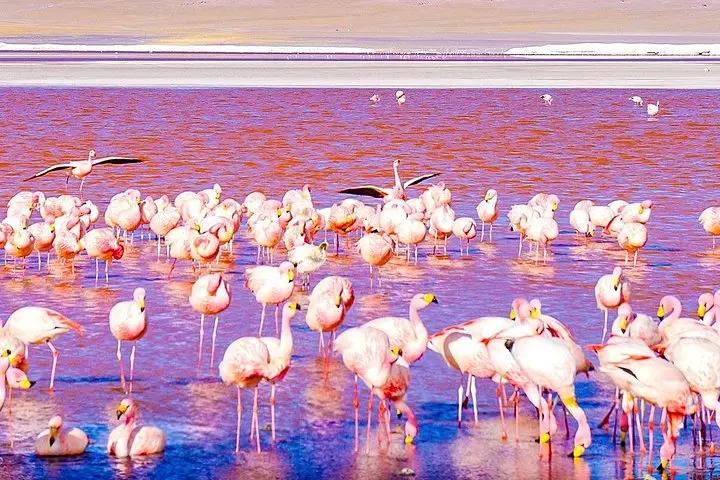
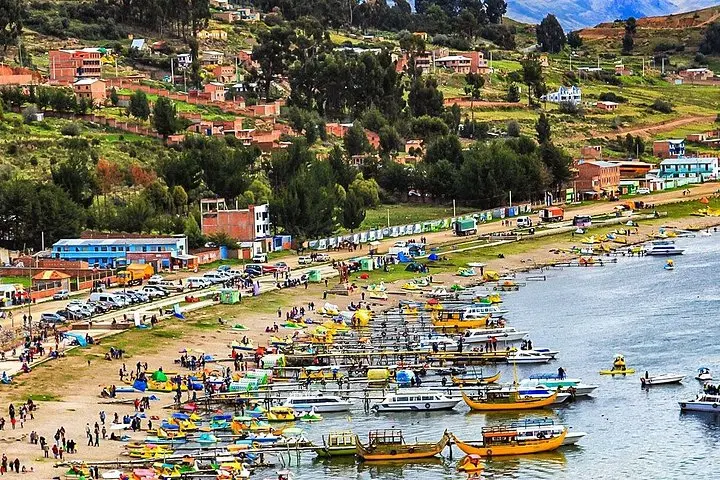
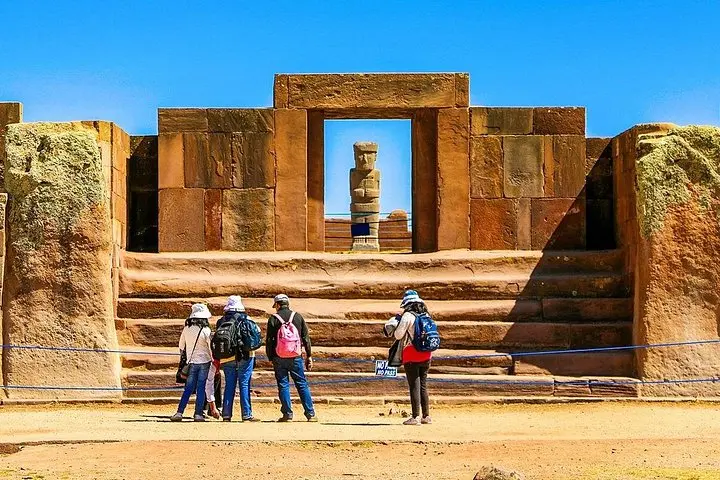
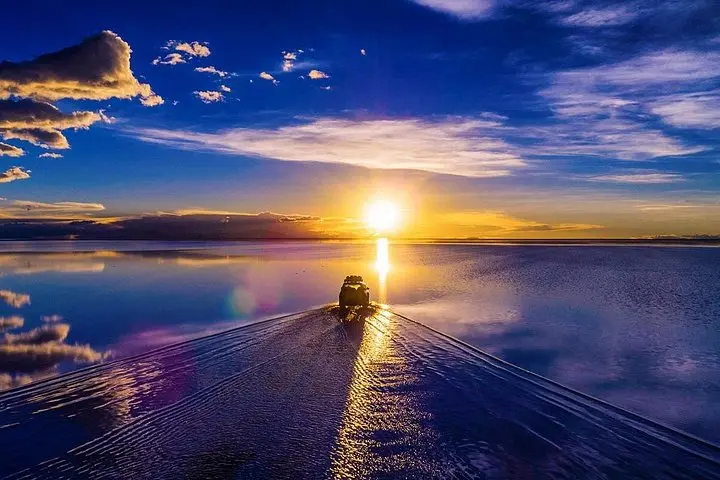
The route reads like a compact history of the Andes. Tiwanaku’s monoliths predate the Inca and hint at a civilization aligned with Lake Titicaca’s rhythms; Isla del Sol holds stepped Inca terraces and stone staircases that look out over the lake’s wind-creased surface. Uyuni, a geological blanketing of salt, is less a flat thing and more a bright stage where the horizon dares you to judge distance. Cerro Rico in Potosí is the bruise of colonial extraction—its tunnels and the miners who still work them tell a raw story of global demand and local cost.
Culturally the trip oscillates between highland ritual and colonial architecture. In Sucre, whitewashed mansions and the House of Liberty make an airy counterpoint to the cramped, mineral-heavy rooms of Potosí. Markets—Tarabuco and the stalls in Colchani—are where craft and daily necessity collide: woven belts speak language and lineage, salt slabs are turned into art.
Practically, this is a logistics-forward tour: long drives across altiplano plateaus, short internal flights (La Paz–Uyuni, Sucre–La Paz), and a mix of walking and light hiking. Altitude is the real itinerary organizer—your pace will be set by how your body acclimatizes. Expect cold nights, especially in Uyuni’s salt plain when temperatures can fall sharply after sunset, and dress in layers. The salt flats are blinding; sunglasses and SPF are non-negotiable. Cash is useful in smaller towns; many artisanal stalls won’t take cards.
What you’ll carry is small but purposeful: a daypack for water and layers, sturdy shoes for stone streets and Isla del Sol trails, and an appetite for varied food—from lakeside trout to hearty Andean stews. The private nature of the tour means flexibility: linger longer at a viewpoint, skip a long museum, or buy an extra hour for photography at Incahuasi.
This itinerary is both an education and a challenge: geological drama, colonial legacies, and living indigenous culture threaded through ten days that require curiosity, patience, and a respect for altitude. For travelers who want Bolivia’s essentials in a single, private arc, this is a route that rewards close attention and steady breath.
Yes—altitude affects everyone differently; ascend slowly, hydrate, avoid alcohol, and consider medication (consult your doctor) if you have prior issues.
Yes, the itinerary includes economy flights La Paz–Uyuni and Sucre–La Paz as noted in the inclusions.
Yes, it’s a private tour with a dedicated guide and driver, offering flexibility within the planned route.
A mix of 3–5 star hotels and locally run lodges are used, including a salt-hotel option in Uyuni and boutique hotels in La Paz and Sucre.
Yes—single travelers can book, but check pickup and single-supplement policies when reserving.
For mirror reflections, the rainy season (Jan–Mar) is best; for clear salt expanses and easier driving, the dry season (May–Oct) is preferable.
Travel China Guide operates guided outdoor trips and adventures with an emphasis on safety, stewardship, and memorable experiences.
You step out of El Alto airport and the air pushes back—thin, clear, a physical reminder that you are already high in a city that grew vertically along a ravine. The cable cars—Mi Teleférico—slice like colorful threads between ridgelines, and below them La Paz unfurls: plazas crowded with vendors, the Basilica de San Francisco’s carved stone face, and the Witches' Market where bundles of herbs and llama fetuses wait as offerings. This ten-day private itinerary moves with the same deliberate pace as the landscape: fast on the maps, slow in the body.
You step out of El Alto airport and the air pushes back—thin, clear, a physical reminder that you are already high in a city that grew vertically along a ravine. The cable cars—Mi Teleférico—slice like colorful threads between ridgelines, and below them La Paz unfurls: plazas crowded with vendors, the Basilica de San Francisco’s carved stone face, and the Witches' Market where bundles of herbs and llama fetuses wait as offerings. This ten-day private itinerary moves with the same deliberate pace as the landscape: fast on the maps, slow in the body.
The route reads like a compact history of the Andes. Tiwanaku’s monoliths predate the Inca and hint at a civilization aligned with Lake Titicaca’s rhythms; Isla del Sol holds stepped Inca terraces and stone staircases that look out over the lake’s wind-creased surface. Uyuni, a geological blanketing of salt, is less a flat thing and more a bright stage where the horizon dares you to judge distance. Cerro Rico in Potosí is the bruise of colonial extraction—its tunnels and the miners who still work them tell a raw story of global demand and local cost.
Culturally the trip oscillates between highland ritual and colonial architecture. In Sucre, whitewashed mansions and the House of Liberty make an airy counterpoint to the cramped, mineral-heavy rooms of Potosí. Markets—Tarabuco and the stalls in Colchani—are where craft and daily necessity collide: woven belts speak language and lineage, salt slabs are turned into art.
Practically, this is a logistics-forward tour: long drives across altiplano plateaus, short internal flights (La Paz–Uyuni, Sucre–La Paz), and a mix of walking and light hiking. Altitude is the real itinerary organizer—your pace will be set by how your body acclimatizes. Expect cold nights, especially in Uyuni’s salt plain when temperatures can fall sharply after sunset, and dress in layers. The salt flats are blinding; sunglasses and SPF are non-negotiable. Cash is useful in smaller towns; many artisanal stalls won’t take cards.
What you’ll carry is small but purposeful: a daypack for water and layers, sturdy shoes for stone streets and Isla del Sol trails, and an appetite for varied food—from lakeside trout to hearty Andean stews. The private nature of the tour means flexibility: linger longer at a viewpoint, skip a long museum, or buy an extra hour for photography at Incahuasi.
This itinerary is both an education and a challenge: geological drama, colonial legacies, and living indigenous culture threaded through ten days that require curiosity, patience, and a respect for altitude. For travelers who want Bolivia’s essentials in a single, private arc, this is a route that rewards close attention and steady breath.