THE ADVENTURE COLLECTIVE® · Independent discovery and booking for outdoor travel

Traverse canyon rims and listen for the rattle of macaws on a four-hour guided birdwalk at La Pirámide Park in the Sierra Madre Occidental. This community-run conservation area blends geology, culture and focused birding—ideal for morning outings and wildlife-focused travelers.
Traverse canyon rims and listen for the rattle of macaws on a four-hour guided birdwalk at La Pirámide Park in the Sierra Madre Occidental. This community-run conservation area blends geology, culture and focused birding—ideal for morning outings and wildlife-focused travelers.
You step off a dusty service road and the mountain breathes around you: wind threading through pines, a distant cliff answering with a gull-like cry. La Pirámide Park spreads across 220 hectares of the Sierra Madre Occidental between Durango and Mazatlán—ridges, ravines and sheer rock faces that shape the flight paths of resident and migratory birds.
Verified experiences and guided adventures in the surrounding area.
Operated by Parque La Pirámide · Durango, Durango
You step off a dusty service road and the mountain breathes around you: wind threading through pines, a distant cliff answering with a gull-like cry. La Pirámide Park spreads across 220 hectares of the Sierra Madre Occidental between Durango and Mazatlán—ridges, ravines and sheer rock faces that shape the flight paths of resident and migratory birds.
The route crosses Ejido Chavarria Viejo territory, a community-led conservation project that has opened its land to low-impact nature tourism and environmental education. Geology here is rugged: volcanic and sedimentary strata carved into canyons such as Yerba Canyon and the dramatic Calaveras cliffs, which create thermal updrafts that birds use to glide and display.
Culturally, the trail connects rural Durango life with natural history—local guides share stories about traditional land stewardship and how birdlife signals seasonal changes. The draw is clear: expect to see and hear species like the Military (Green) Macaw and trogons, and to study canyon microhabitats with a guide and field guide in hand.
Practically, the activity is a four-hour walking excursion on uneven dirt and rocky singletrack with short, steep steps. Binoculars and a bird guide are provided; bring your own optics if you prefer. Mornings are best for song and activity; afternoons warm quickly and thunderstorms are possible in summer. Wear sturdy footwear, bring 1–2 liters of water, sun protection, and insect repellent. Respect nesting areas, keep noise low, and follow your guide’s route to minimize impact. The experience is straightforward, immersive birding on community-conserved land with clear logistics and high wildlife payoff.
The guided experience is about four hours on easy to moderate uneven trails with short, steep sections—suitable for most people in reasonable health.
Yes—binoculars and a bird guide are included, though many guests prefer to bring their own optics.
Early morning offers the best bird activity year-round; spring brings breeding displays and migration peaks, while summer has warmer days and afternoon storms.
The route is family-friendly but uneven; children and those with mobility issues should be accompanied and may need to skip steeper sections.
Parque La Pirámide operates guided outdoor trips and adventures with an emphasis on safety, stewardship, and memorable experiences.
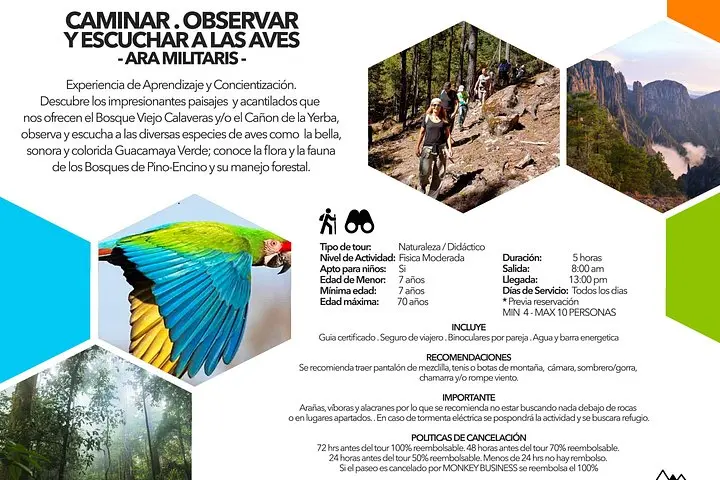
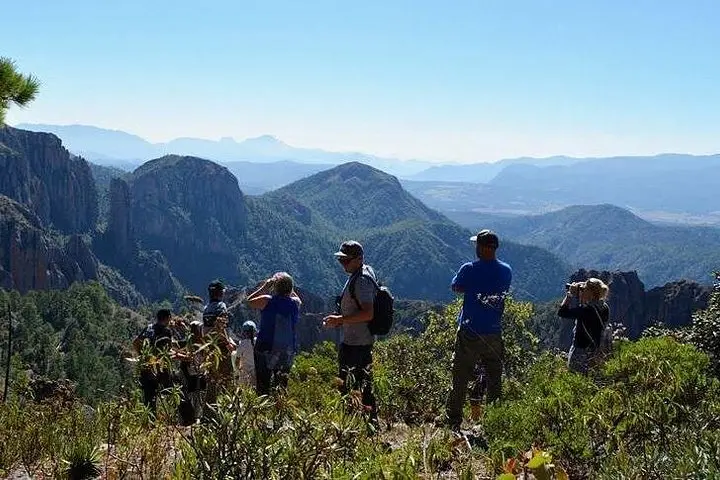
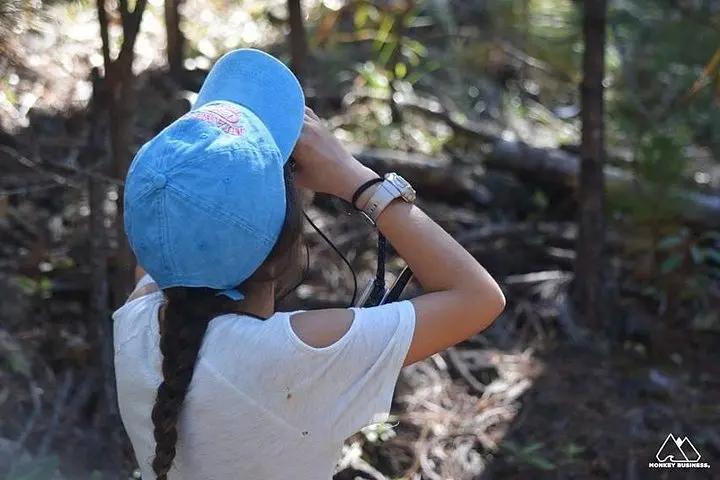
You step off a dusty service road and the mountain breathes around you: wind threading through pines, a distant cliff answering with a gull-like cry. La Pirámide Park spreads across 220 hectares of the Sierra Madre Occidental between Durango and Mazatlán—ridges, ravines and sheer rock faces that shape the flight paths of resident and migratory birds.
You step off a dusty service road and the mountain breathes around you: wind threading through pines, a distant cliff answering with a gull-like cry. La Pirámide Park spreads across 220 hectares of the Sierra Madre Occidental between Durango and Mazatlán—ridges, ravines and sheer rock faces that shape the flight paths of resident and migratory birds.
The route crosses Ejido Chavarria Viejo territory, a community-led conservation project that has opened its land to low-impact nature tourism and environmental education. Geology here is rugged: volcanic and sedimentary strata carved into canyons such as Yerba Canyon and the dramatic Calaveras cliffs, which create thermal updrafts that birds use to glide and display.
Culturally, the trail connects rural Durango life with natural history—local guides share stories about traditional land stewardship and how birdlife signals seasonal changes. The draw is clear: expect to see and hear species like the Military (Green) Macaw and trogons, and to study canyon microhabitats with a guide and field guide in hand.
Practically, the activity is a four-hour walking excursion on uneven dirt and rocky singletrack with short, steep steps. Binoculars and a bird guide are provided; bring your own optics if you prefer. Mornings are best for song and activity; afternoons warm quickly and thunderstorms are possible in summer. Wear sturdy footwear, bring 1–2 liters of water, sun protection, and insect repellent. Respect nesting areas, keep noise low, and follow your guide’s route to minimize impact. The experience is straightforward, immersive birding on community-conserved land with clear logistics and high wildlife payoff.