THE ADVENTURE COLLECTIVE® · Independent discovery and booking for outdoor travel

Explore one of Central America’s largest cave systems and a near-circular karst lake on a focused two-day trip from Cobán. Expect full-day cave passages, highland rainforest trails, basic eco-lodging, and close encounters with local biodiversity.
Explore one of Central America’s largest cave systems and a near-circular karst lake on a focused two-day trip from Cobán. Expect full-day cave passages, highland rainforest trails, basic eco-lodging, and close encounters with local biodiversity.
A low morning mist clings to the jungle as the van leaves Cobán and the road narrows into green. By mid-morning you stand at the mouth of Candelaria, where subterranean rivers push and groan through caverns carved over millennia; water and rock argue with each step while guides point out Maya altars and narrow tunnels that still hold rippling echoes of ancient rituals.
Verified experiences and guided adventures in the surrounding area.
Operated by Maya World tours · Cobán, Alta Verapaz
A low morning mist clings to the jungle as the van leaves Cobán and the road narrows into green. By mid-morning you stand at the mouth of Candelaria, where subterranean rivers push and groan through caverns carved over millennia; water and rock argue with each step while guides point out Maya altars and narrow tunnels that still hold rippling echoes of ancient rituals.
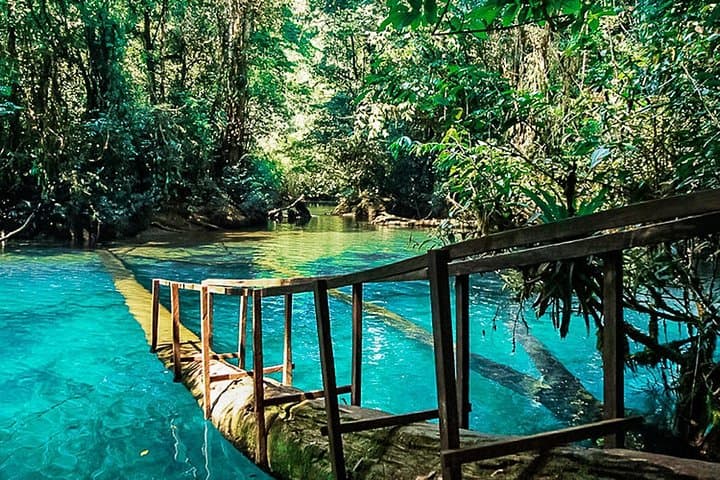
On day two the group moves to Laguna Lachua, a near-circular karst lake set in high tropical forest. The rim drops steeply into glassy water—likely a cenote—surrounded by dense canopy where howler monkeys call and toucans flash color. Both sites are in a landscape shaped by limestone dissolution and long human presence: Candelaria served as a Maya pilgrimage complex, and Lachua’s protected basin is recognized for its biodiversity and Ramsar-level conservation significance.
Expect full-day explorations each day (roughly 8 hours in-cave or on trail), basic overnight lodging at an eco-hotel without electrical service, and local guides who handle logistics and permits. Terrain alternates from slippery cave floors and river crossings to muddy rainforest trails; waterproof footwear, a reliable headlamp, and layered clothing are practical musts. Hydrate frequently—the highland humidity and steady elevation make exertion feel harder than the map suggests.
Plan for wet conditions in the rainy season and limited amenities at the eco-hotel; bring cash for small fees and respect cave archaeology. The trip is a direct, hands-on encounter with karst geology and highland rainforest ecology—raw, informative, and physically engaging.
Moderate: each day includes about 8 hours of activity with uneven terrain, river crossings in caves, and rainforest hiking—basic stamina and balance are required.
No regular electric service is provided; expect limited lighting and bring power banks for charging devices before arrival.
Caves can be tight, wet, and slippery; older children comfortable with confined spaces and supervised by adults may do fine, but check with operators about age limits.
No technical caving skills are required—local guides lead passages—but you should be comfortable walking on wet rock and stooping through low sections.
Maya World tours operates guided outdoor trips and adventures with an emphasis on safety, stewardship, and memorable experiences.


A low morning mist clings to the jungle as the van leaves Cobán and the road narrows into green. By mid-morning you stand at the mouth of Candelaria, where subterranean rivers push and groan through caverns carved over millennia; water and rock argue with each step while guides point out Maya altars and narrow tunnels that still hold rippling echoes of ancient rituals.
A low morning mist clings to the jungle as the van leaves Cobán and the road narrows into green. By mid-morning you stand at the mouth of Candelaria, where subterranean rivers push and groan through caverns carved over millennia; water and rock argue with each step while guides point out Maya altars and narrow tunnels that still hold rippling echoes of ancient rituals.
On day two the group moves to Laguna Lachua, a near-circular karst lake set in high tropical forest. The rim drops steeply into glassy water—likely a cenote—surrounded by dense canopy where howler monkeys call and toucans flash color. Both sites are in a landscape shaped by limestone dissolution and long human presence: Candelaria served as a Maya pilgrimage complex, and Lachua’s protected basin is recognized for its biodiversity and Ramsar-level conservation significance.
Expect full-day explorations each day (roughly 8 hours in-cave or on trail), basic overnight lodging at an eco-hotel without electrical service, and local guides who handle logistics and permits. Terrain alternates from slippery cave floors and river crossings to muddy rainforest trails; waterproof footwear, a reliable headlamp, and layered clothing are practical musts. Hydrate frequently—the highland humidity and steady elevation make exertion feel harder than the map suggests.
Plan for wet conditions in the rainy season and limited amenities at the eco-hotel; bring cash for small fees and respect cave archaeology. The trip is a direct, hands-on encounter with karst geology and highland rainforest ecology—raw, informative, and physically engaging.