THE ADVENTURE COLLECTIVE® · Independent discovery and booking for outdoor travel

Spend a day from Da Nang to Son Tra’s Lady Buddha, explore the caves and shrines of the Marble Mountains, then cross into Hoi An’s lantern-lit streets for dinner and night markets. This compact tour pairs coastal panoramas, karst geology, and living heritage.
Spend a day from Da Nang to Son Tra’s Lady Buddha, explore the caves and shrines of the Marble Mountains, then cross into Hoi An’s lantern-lit streets for dinner and night markets. This compact tour pairs coastal panoramas, karst geology, and living heritage.
You step out of the minivan as the sea-bright wind pushes at your jacket and the Lady Buddha watches over the bay—an enormous white figure turning the Son Tra Peninsula into a dramatic lookout. The morning opens with the hush of temple bells and broad ocean views that dare you to look farther down the coastline.
Verified experiences and guided adventures in the surrounding area.
Operated by Local Tours Around Viet Nam · Da Nang, Da Nang
You step out of the minivan as the sea-bright wind pushes at your jacket and the Lady Buddha watches over the bay—an enormous white figure turning the Son Tra Peninsula into a dramatic lookout. The morning opens with the hush of temple bells and broad ocean views that dare you to look farther down the coastline.
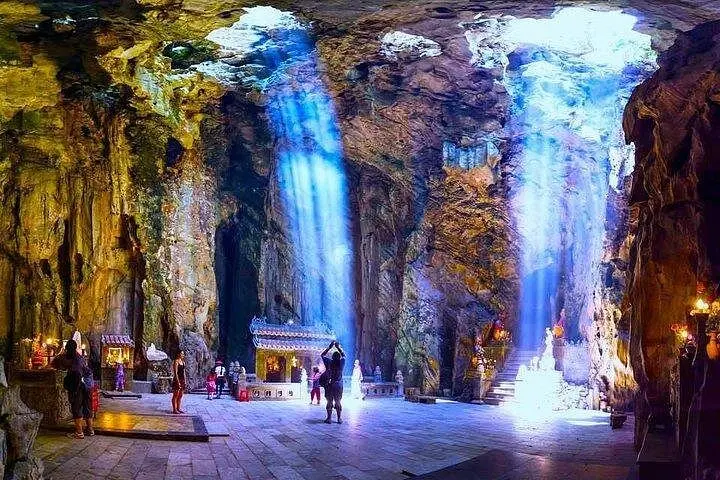
From Son Tra, the route bends south to the Marble Mountains: five limestone outcrops that lift from the rice plain, their caves breathing cool damp air. Stairs and carved passageways thread through shrines and viewpoints; the stone remembers centuries of Cham and Vietnamese faith. By evening the tour slips into Hoi An’s narrow lanes, where lanterns drop the light low and the wooden bridges and assembly halls outline a town shaped by maritime trade and Chinese, Japanese and European influences.
Geology here is visible—the Marble Mountains are karst towers of marble and limestone, pocked with grottoes and rooftop views. Hoi An’s architecture speaks to its status as a 15th–19th century trading port. Local craftsmen still carve marble in villages beneath the hills, and night markets line the Thu Bon River with food smoke and bargaining voices.
Practical guidance: wear grippy shoes for steps and cave floors, carry water and sun protection for exposed lookouts, and bring small change for market purchases. Respect temple dress codes (shoulders and knees covered). Plan for roughly six hours on the road with moderate walking—timing your visit to Hoi An for sunset maximizes the lantern-lit atmosphere while avoiding midday heat.
Yes; the tour includes hotel pickup and drop-off within Da Nang—confirm your pickup point when booking.
Entrance fees and the listed meal are included; check the itinerary for specifics and any additional optional purchases.
The tour is generally suitable for families and older travelers, but Marble Mountain steps may be strenuous—consider mobility limits before booking.
Dress modestly: cover shoulders and knees; bring a scarf or sarong to comply with local customs.
Local Tours Around Viet Nam operates guided outdoor trips and adventures with an emphasis on safety, stewardship, and memorable experiences.



You step out of the minivan as the sea-bright wind pushes at your jacket and the Lady Buddha watches over the bay—an enormous white figure turning the Son Tra Peninsula into a dramatic lookout. The morning opens with the hush of temple bells and broad ocean views that dare you to look farther down the coastline.
You step out of the minivan as the sea-bright wind pushes at your jacket and the Lady Buddha watches over the bay—an enormous white figure turning the Son Tra Peninsula into a dramatic lookout. The morning opens with the hush of temple bells and broad ocean views that dare you to look farther down the coastline.
From Son Tra, the route bends south to the Marble Mountains: five limestone outcrops that lift from the rice plain, their caves breathing cool damp air. Stairs and carved passageways thread through shrines and viewpoints; the stone remembers centuries of Cham and Vietnamese faith. By evening the tour slips into Hoi An’s narrow lanes, where lanterns drop the light low and the wooden bridges and assembly halls outline a town shaped by maritime trade and Chinese, Japanese and European influences.
Geology here is visible—the Marble Mountains are karst towers of marble and limestone, pocked with grottoes and rooftop views. Hoi An’s architecture speaks to its status as a 15th–19th century trading port. Local craftsmen still carve marble in villages beneath the hills, and night markets line the Thu Bon River with food smoke and bargaining voices.
Practical guidance: wear grippy shoes for steps and cave floors, carry water and sun protection for exposed lookouts, and bring small change for market purchases. Respect temple dress codes (shoulders and knees covered). Plan for roughly six hours on the road with moderate walking—timing your visit to Hoi An for sunset maximizes the lantern-lit atmosphere while avoiding midday heat.