THE ADVENTURE COLLECTIVE® · Independent discovery and booking for outdoor travel

A four‑to‑six hour summer hike from Ushuaia that winds through lenga forest, beaver‑altered rivers, and peat bogs to the glacier‑fed Laguna Esmeralda. This accessible Patagonian walk pairs dramatic mountain views with close‑up nature interpretation.
A four‑to‑six hour summer hike from Ushuaia that winds through lenga forest, beaver‑altered rivers, and peat bogs to the glacier‑fed Laguna Esmeralda. This accessible Patagonian walk pairs dramatic mountain views with close‑up nature interpretation.
You step off the van along Ruta 3 with the Andes breathing behind you and a wind that seems to read your pack before you do. The guide points to a mossy opening and says the trail is 4.7 km one way; the path disappears into a stand of lenga trees whose trunks wear lichen like calluses. Underfoot the ground gives — peat and roots forming a soft, springy carpet — and a halo of ice‑cold streams hums beside you, daring you to go faster.
Verified experiences and guided adventures in the surrounding area.
Operated by Ciatrip · Ushuaia, Tierra del Fuego
You step off the van along Ruta 3 with the Andes breathing behind you and a wind that seems to read your pack before you do. The guide points to a mossy opening and says the trail is 4.7 km one way; the path disappears into a stand of lenga trees whose trunks wear lichen like calluses. Underfoot the ground gives — peat and roots forming a soft, springy carpet — and a halo of ice‑cold streams hums beside you, daring you to go faster.
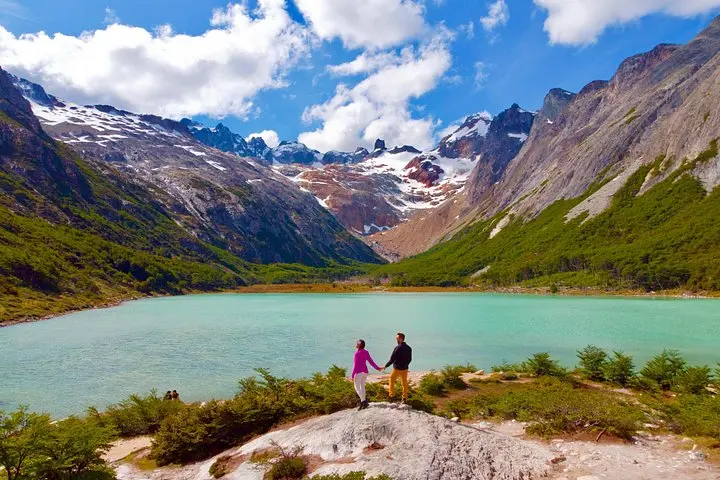
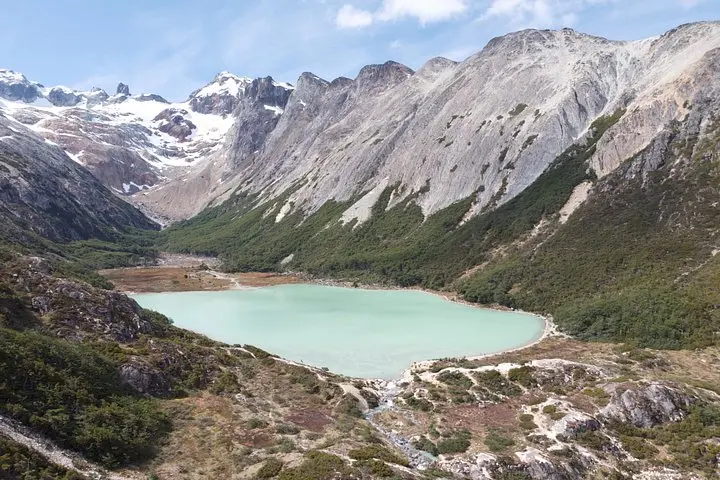
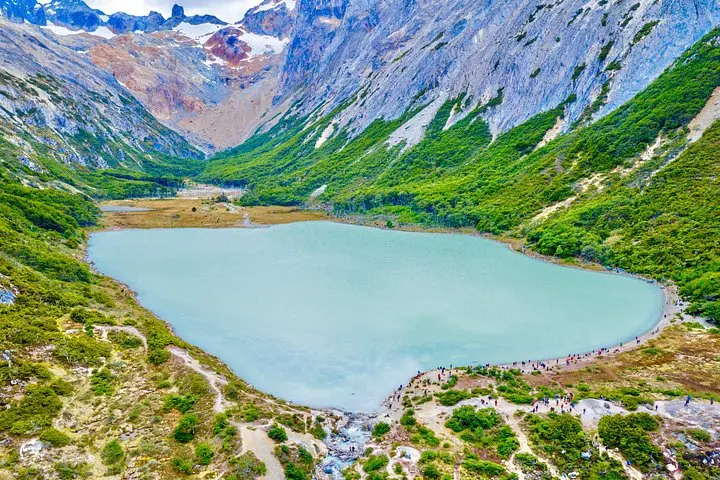
Laguna Esmeralda is a young landscape. The lake itself is drained by melt from the Ojo del Albino glacier, a white eye in the mountains that feeds a vivid, opaline water color on still days. The geology here is blunt — glacial polish, moraine ridges and rivers that have re‑written valleys. Human history on Tierra del Fuego is shorter and harsher: native Yamana people, European sailors, and then the beaver, an introduced engineer that reshaped riparian edges with a stubborn ambition you can see in felled trees and labyrinthine dams.
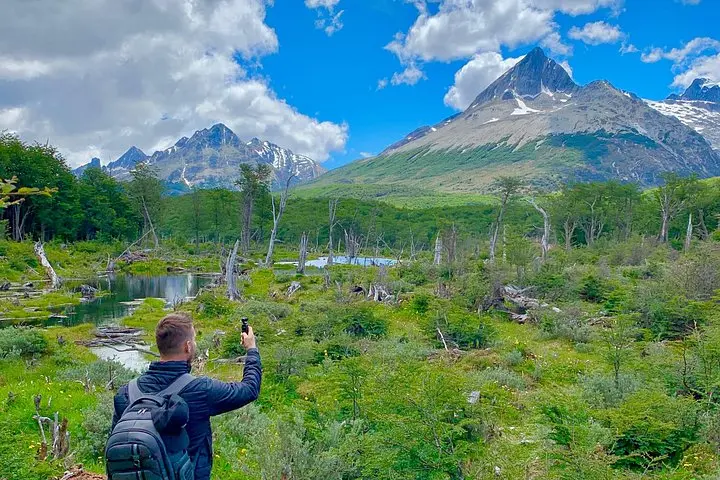
The hike moves through distinct chapters: low, wet turba bogs; a corridor of lenga forest; a boggy river crossing networked with wooden planks; then a steady climb to a glacial cirque and the lagoon’s rim. Keep an ear for the river — it announces its moods, sometimes a whisper, sometimes a stampeded voice. Guides often pause to point out beaver activity and explain how introduced species altered waterways and local forests.
Practicalities: this tour runs about 6 hours total from Ushuaia, with roughly 4–6 hours of door‑to‑door time including transport. The trail is about 4.7 km each way with ~250 m elevation gain; expect soft, uneven, and occasionally muddy terrain. The provider supplies poles and crampons if needed, and snacks and a certified guide are included. Pickup from most Ushuaia hotels is standard; the van ride along Ruta 3 is scenic and part of the experience.
How to prepare: wear waterproof hiking boots, bring layered clothing for wind and sun, and carry 1–1.5 liters of water plus high‑energy snacks. Start early in summer to avoid afternoon weather shifts and to get the lagoon in calmer light for photos. Respect the fragile peat and stay on the track — those spongy soils recover slowly.
Laguna Esmeralda delivers a compact Patagonian story: stubborn glaciers, rivers that demand attention, and forests learning to live with a new, industrious mammal. It’s an accessible slice of wild Tierra del Fuego that rewards curiosity and simple preparation.
The trail is about 4.7 km each way with roughly 250 m of elevation gain; it’s a moderate hike with some muddy, uneven sections and short uphill stretches.
Moderately fit children and adults can usually manage it, but the operator recommends participants be in moderate health and may limit bookings to people up to 60 years old.
Waterproof hiking boots, layered clothing including a warm midlayer and a windproof/rain shell, and a hat and gloves for colder conditions are recommended.
The tour provides poles and crampons if conditions require them, but many hikers bring their own poles for balance on peat and boardwalks.
Yes—early or late in the day the light is best and the water’s emerald tones are most vivid; drone use is often restricted, so check with your guide.
Expect to find evidence of beaver activity, waterfowl, and possibly small birds like austral thrushes; larger mammals are uncommon along the trail.
Ciatrip operates guided outdoor trips and adventures with an emphasis on safety, stewardship, and memorable experiences.
You step off the van along Ruta 3 with the Andes breathing behind you and a wind that seems to read your pack before you do. The guide points to a mossy opening and says the trail is 4.7 km one way; the path disappears into a stand of lenga trees whose trunks wear lichen like calluses. Underfoot the ground gives — peat and roots forming a soft, springy carpet — and a halo of ice‑cold streams hums beside you, daring you to go faster.
You step off the van along Ruta 3 with the Andes breathing behind you and a wind that seems to read your pack before you do. The guide points to a mossy opening and says the trail is 4.7 km one way; the path disappears into a stand of lenga trees whose trunks wear lichen like calluses. Underfoot the ground gives — peat and roots forming a soft, springy carpet — and a halo of ice‑cold streams hums beside you, daring you to go faster.
Laguna Esmeralda is a young landscape. The lake itself is drained by melt from the Ojo del Albino glacier, a white eye in the mountains that feeds a vivid, opaline water color on still days. The geology here is blunt — glacial polish, moraine ridges and rivers that have re‑written valleys. Human history on Tierra del Fuego is shorter and harsher: native Yamana people, European sailors, and then the beaver, an introduced engineer that reshaped riparian edges with a stubborn ambition you can see in felled trees and labyrinthine dams.
The hike moves through distinct chapters: low, wet turba bogs; a corridor of lenga forest; a boggy river crossing networked with wooden planks; then a steady climb to a glacial cirque and the lagoon’s rim. Keep an ear for the river — it announces its moods, sometimes a whisper, sometimes a stampeded voice. Guides often pause to point out beaver activity and explain how introduced species altered waterways and local forests.
Practicalities: this tour runs about 6 hours total from Ushuaia, with roughly 4–6 hours of door‑to‑door time including transport. The trail is about 4.7 km each way with ~250 m elevation gain; expect soft, uneven, and occasionally muddy terrain. The provider supplies poles and crampons if needed, and snacks and a certified guide are included. Pickup from most Ushuaia hotels is standard; the van ride along Ruta 3 is scenic and part of the experience.
How to prepare: wear waterproof hiking boots, bring layered clothing for wind and sun, and carry 1–1.5 liters of water plus high‑energy snacks. Start early in summer to avoid afternoon weather shifts and to get the lagoon in calmer light for photos. Respect the fragile peat and stay on the track — those spongy soils recover slowly.
Laguna Esmeralda delivers a compact Patagonian story: stubborn glaciers, rivers that demand attention, and forests learning to live with a new, industrious mammal. It’s an accessible slice of wild Tierra del Fuego that rewards curiosity and simple preparation.