THE ADVENTURE COLLECTIVE® · Independent discovery and booking for outdoor travel

Paddle through a mangrove canal in Fajardo to reach Laguna Grande and witness waters that glow when disturbed. This two-hour guided night tour combines quiet paddling, a natural history briefing, and the chance to see Pyrodinium bahamense light up the bay.
Paddle through a mangrove canal in Fajardo to reach Laguna Grande and witness waters that glow when disturbed. This two-hour guided night tour combines quiet paddling, a natural history briefing, and the chance to see Pyrodinium bahamense light up the bay.
The night air in Fajardo tightens as you push off from the mangrove-fringed shore. Paddles cut the black surface and each stroke sprays tiny stars across the wake—blue‑green sparks that flare and then wink out. Guides keep the group tight, voices low, as the mangrove canal narrows and the water begins to hum with life; this is Laguna Grande, one of Puerto Rico’s famous bioluminescent bays.
Verified experiences and guided adventures in the surrounding area.
Operated by Yokahu Kayak Trips, Inc. · Fajardo, Puerto Rico
The night air in Fajardo tightens as you push off from the mangrove-fringed shore. Paddles cut the black surface and each stroke sprays tiny stars across the wake—blue‑green sparks that flare and then wink out. Guides keep the group tight, voices low, as the mangrove canal narrows and the water begins to hum with life; this is Laguna Grande, one of Puerto Rico’s famous bioluminescent bays.
The glow comes from Pyrodinium bahamense, single-celled organisms that light up when disturbed. The bay sits at the edge of Las Cabezas de San Juan Nature Reserve, an area shaped by coral reef remnants, carbonate sediments and centuries of coastal change. For centuries local fishermen and coastal communities have known these waters as a night-time wonder; today small-scale ecotourism helps fund protections for the mangrove forest that buffers the shore and feeds the bay.
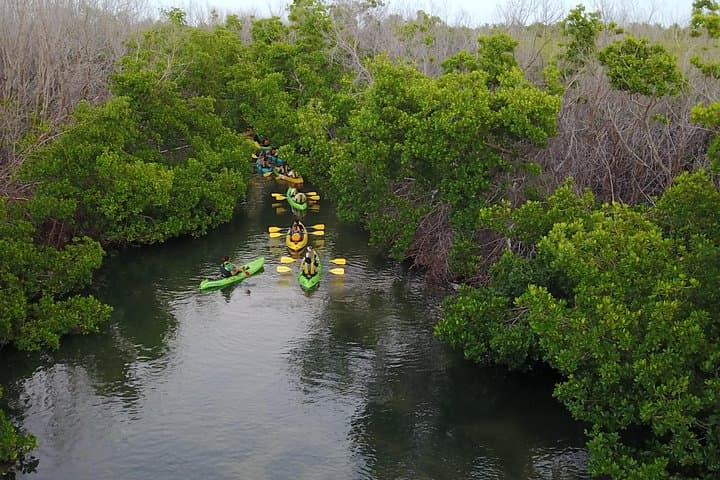
Your two-hour tour threads between red and black mangroves in double kayaks built for stability. Guides explain the ecosystem as they steer: the mangroves trap sediment, filter runoff, and cradle juvenile fish; the bioluminescent plankton respond to motion, not light, so the brightest displays happen when the water is calm and the group moves slowly.
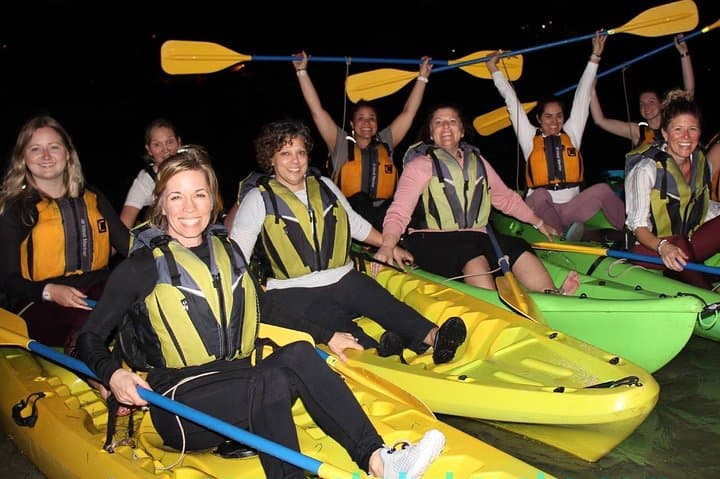
Practical matters matter here. Tours meet at the Yokahu Kayak Trips site in Fajardo—look for a green tent beside the ocean and plan to arrive 30 minutes early. The operator provides kayaks, paddles, USCG life jackets and light snacks. Note the 245‑pound weight limit per person and that kayaks are primarily doubles; odd-number groups will be paired. Children must be at least six and everyone should be able to paddle for up to two hours.
Timing is the single biggest factor for visibility: moonless nights after dusk give the most dramatic glow, while heavy rain, wind or a full moon will wash out the effect. That said, the guides emphasize the phenomenon is natural and variable—no operator can guarantee intensity.
For comfort and stewardship, wear quick-dry clothes and closed-toe water shoes; use biodegradable insect repellent and avoid lotion or sunscreen before launch. Bring a small waterproof bag for your phone or camera, and a headlamp with a red filter to preserve night vision without disturbing the organisms. Follow the guide’s instructions: don’t dump water on the surface for photos, avoid excessive splashing, and leave the mangroves intact.
This is a short, local night expedition but one that leaves a long impression—an intimate reminder that coastal ecosystems are alive, reactive and fragile. With simple preparation and a quiet paddle, Laguna Grande rewards you with an otherworldly light show and a clearer sense of why these shorelines need protection.
The experience runs about 2 hours total, including equipment briefings, paddling through mangroves and time at the bioluminescent bay.
Yes—children age 6 and older may participate but must be paired with a family member; all participants must be able to paddle.
No; the bioluminescent display varies with environmental conditions. Guides do their best but intensity cannot be guaranteed.
Single kayaks cannot be guaranteed; most boats are doubles and odd-numbered groups will be paired with other guests.
Maximum weight per person is 245 pounds and pregnant travelers or those with significant heart or spinal conditions are not permitted.
Use a waterproof bag, a camera with low-light capability, and avoid flash; practice slow, steady strokes for the best light trails.
Yokahu Kayak Trips, Inc. operates guided outdoor trips and adventures with an emphasis on safety, stewardship, and memorable experiences.


The night air in Fajardo tightens as you push off from the mangrove-fringed shore. Paddles cut the black surface and each stroke sprays tiny stars across the wake—blue‑green sparks that flare and then wink out. Guides keep the group tight, voices low, as the mangrove canal narrows and the water begins to hum with life; this is Laguna Grande, one of Puerto Rico’s famous bioluminescent bays.
The night air in Fajardo tightens as you push off from the mangrove-fringed shore. Paddles cut the black surface and each stroke sprays tiny stars across the wake—blue‑green sparks that flare and then wink out. Guides keep the group tight, voices low, as the mangrove canal narrows and the water begins to hum with life; this is Laguna Grande, one of Puerto Rico’s famous bioluminescent bays.
The glow comes from Pyrodinium bahamense, single-celled organisms that light up when disturbed. The bay sits at the edge of Las Cabezas de San Juan Nature Reserve, an area shaped by coral reef remnants, carbonate sediments and centuries of coastal change. For centuries local fishermen and coastal communities have known these waters as a night-time wonder; today small-scale ecotourism helps fund protections for the mangrove forest that buffers the shore and feeds the bay.
Your two-hour tour threads between red and black mangroves in double kayaks built for stability. Guides explain the ecosystem as they steer: the mangroves trap sediment, filter runoff, and cradle juvenile fish; the bioluminescent plankton respond to motion, not light, so the brightest displays happen when the water is calm and the group moves slowly.
Practical matters matter here. Tours meet at the Yokahu Kayak Trips site in Fajardo—look for a green tent beside the ocean and plan to arrive 30 minutes early. The operator provides kayaks, paddles, USCG life jackets and light snacks. Note the 245‑pound weight limit per person and that kayaks are primarily doubles; odd-number groups will be paired. Children must be at least six and everyone should be able to paddle for up to two hours.
Timing is the single biggest factor for visibility: moonless nights after dusk give the most dramatic glow, while heavy rain, wind or a full moon will wash out the effect. That said, the guides emphasize the phenomenon is natural and variable—no operator can guarantee intensity.
For comfort and stewardship, wear quick-dry clothes and closed-toe water shoes; use biodegradable insect repellent and avoid lotion or sunscreen before launch. Bring a small waterproof bag for your phone or camera, and a headlamp with a red filter to preserve night vision without disturbing the organisms. Follow the guide’s instructions: don’t dump water on the surface for photos, avoid excessive splashing, and leave the mangroves intact.
This is a short, local night expedition but one that leaves a long impression—an intimate reminder that coastal ecosystems are alive, reactive and fragile. With simple preparation and a quiet paddle, Laguna Grande rewards you with an otherworldly light show and a clearer sense of why these shorelines need protection.