THE ADVENTURE COLLECTIVE® · Independent discovery and booking for outdoor travel

Glide across Lake Arenal’s broad bays, then stroll an easy peninsula trail lined with bird towers and volcano views. This short boat-and-hike combo packs wildlife, geology, and accessible trail time into a relaxed 2–3 hour outing.
Glide across Lake Arenal’s broad bays, then stroll an easy peninsula trail lined with bird towers and volcano views. This short boat-and-hike combo packs wildlife, geology, and accessible trail time into a relaxed 2–3 hour outing.
You step onto a low-slung boat as the lake pulls at the hull, the water daring you toward wide bays framed by green headlands and the blunt cone of Arenal volcano beyond.
Verified experiences and guided adventures in the surrounding area.
Operated by Jacamar Naturalist Tours · La Fortuna, Alajuela
You step onto a low-slung boat as the lake pulls at the hull, the water daring you toward wide bays framed by green headlands and the blunt cone of Arenal volcano beyond.
The ride carves along sheltered peninsulas and small islets, each turn revealing a new angle on the volcano and the highland ridges that feed this reservoir. Lake Arenal is Costa Rica’s largest lake (about 85 km²), deepening after the 1979 dam raised the waterline and moved lowland settlements to higher ground. The peninsula trail that follows is a brief, accessible walk — roughly 2 miles with minimal grade — that crosses secondary forest, birding towers, and shoreline scrub where toucans and oropendolas call and howler monkeys announce themselves across the water.
Geology here is active: the lake basin and surrounding soils are products of volcanic uplift and repeated eruptions from Arenal. Culturally, the lakeshore supports fishing communities and small farms; guides often weave local history into the narration, explaining how the hydroelectric project reshaped land use and livelihoods.
Practical guidance: plan 2–3 hours total, with roughly 60 minutes on the boat and an hour on the trail. Bring sun protection, insect repellent, and a lightweight rain layer—afternoon squalls are common in the wet season. Binoculars and a camera with a zoom lens pay dividends at the viewing towers. The trail is compact and wheelchair-friendly but can be muddy after rain; grippy shoes and a steady pace make the walk pleasant for all ages.
Timing your visit for late afternoon often yields calmer waters and better light on the volcano, but mornings are quieter for bird activity.
The peninsula trail is described as accessible with little incline and no steps, but boat boarding may require assistance—contact the operator ahead to confirm accommodations.
Pick-up and drop-off are generally included; confirm your pickup point when booking and arrive at the listed meeting location if you choose not to be picked up.
Common sightings include toucans, motmots, oropendolas, and various monkeys; sightings aren’t guaranteed but guides focus on known feeding and roosting areas.
Yes—boats are suitable for families, but keep children seated during transit and wear life jackets when provided.
Jacamar Naturalist Tours operates guided outdoor trips and adventures with an emphasis on safety, stewardship, and memorable experiences.
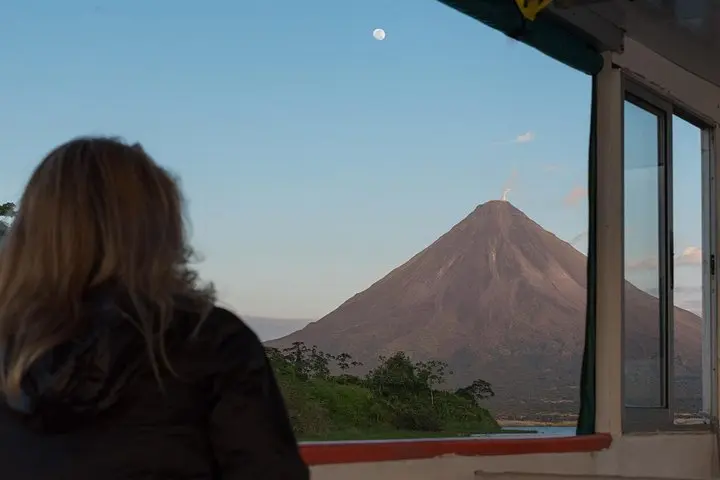
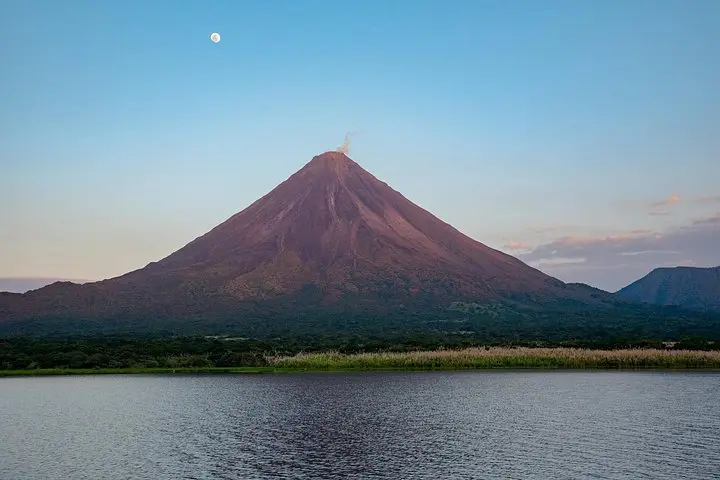
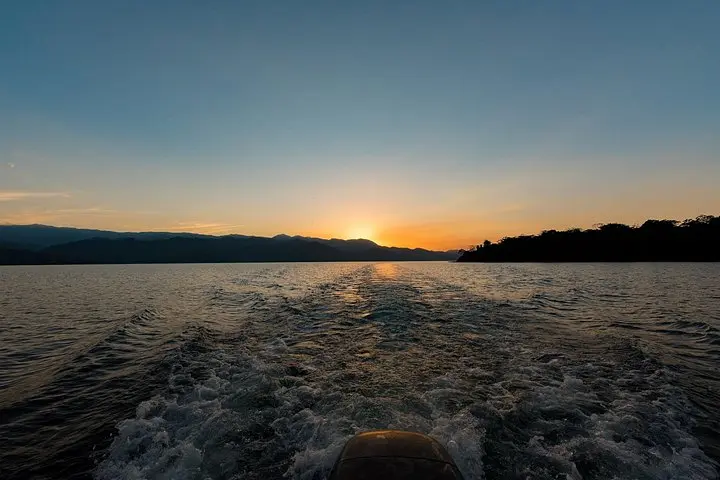
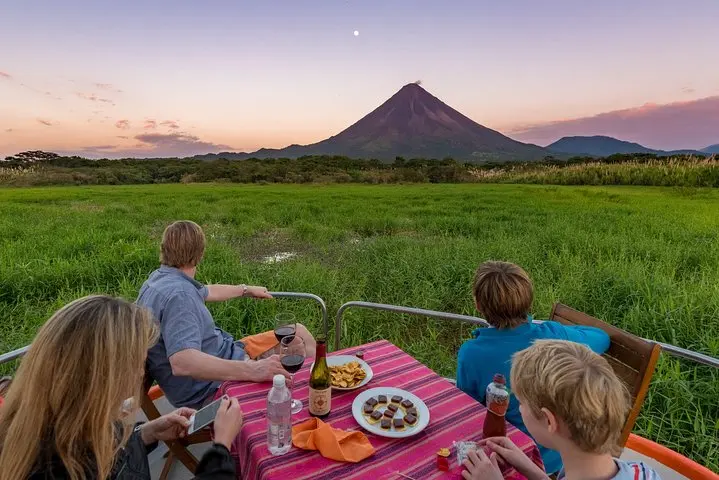
You step onto a low-slung boat as the lake pulls at the hull, the water daring you toward wide bays framed by green headlands and the blunt cone of Arenal volcano beyond.
You step onto a low-slung boat as the lake pulls at the hull, the water daring you toward wide bays framed by green headlands and the blunt cone of Arenal volcano beyond.
The ride carves along sheltered peninsulas and small islets, each turn revealing a new angle on the volcano and the highland ridges that feed this reservoir. Lake Arenal is Costa Rica’s largest lake (about 85 km²), deepening after the 1979 dam raised the waterline and moved lowland settlements to higher ground. The peninsula trail that follows is a brief, accessible walk — roughly 2 miles with minimal grade — that crosses secondary forest, birding towers, and shoreline scrub where toucans and oropendolas call and howler monkeys announce themselves across the water.
Geology here is active: the lake basin and surrounding soils are products of volcanic uplift and repeated eruptions from Arenal. Culturally, the lakeshore supports fishing communities and small farms; guides often weave local history into the narration, explaining how the hydroelectric project reshaped land use and livelihoods.
Practical guidance: plan 2–3 hours total, with roughly 60 minutes on the boat and an hour on the trail. Bring sun protection, insect repellent, and a lightweight rain layer—afternoon squalls are common in the wet season. Binoculars and a camera with a zoom lens pay dividends at the viewing towers. The trail is compact and wheelchair-friendly but can be muddy after rain; grippy shoes and a steady pace make the walk pleasant for all ages.
Timing your visit for late afternoon often yields calmer waters and better light on the volcano, but mornings are quieter for bird activity.