THE ADVENTURE COLLECTIVE® · Independent discovery and booking for outdoor travel

A day at Lake Chala is equal parts geology lesson and slow-motion wildlife film: a caldera rim to walk, clear spring-fed water to paddle, and cliffs alive with raptors. This day trip from Moshi delivers immersive crater-side scenery with practical, guide-led access.
A day at Lake Chala is equal parts geology lesson and slow-motion wildlife film: a caldera rim to walk, clear spring-fed water to paddle, and cliffs alive with raptors. This day trip from Moshi delivers immersive crater-side scenery with practical, guide-led access.
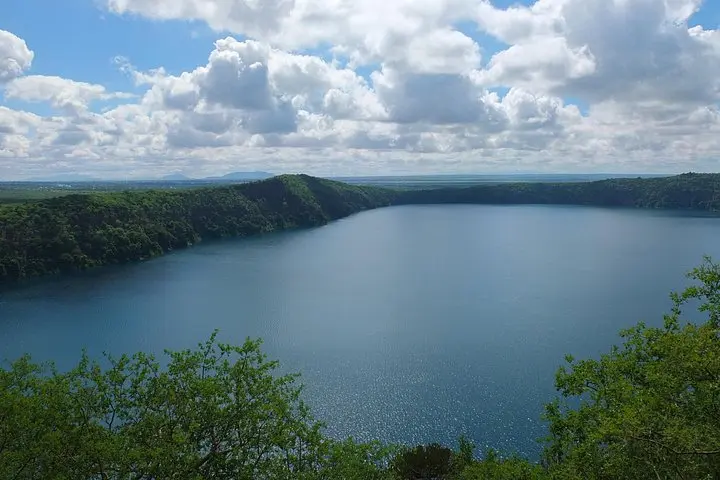
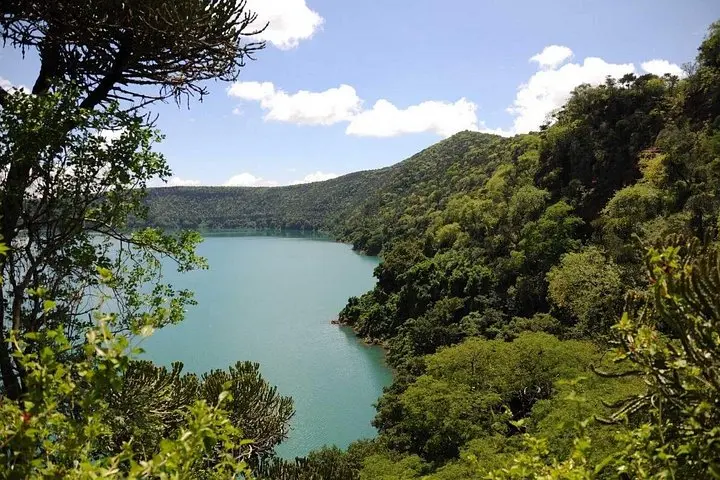
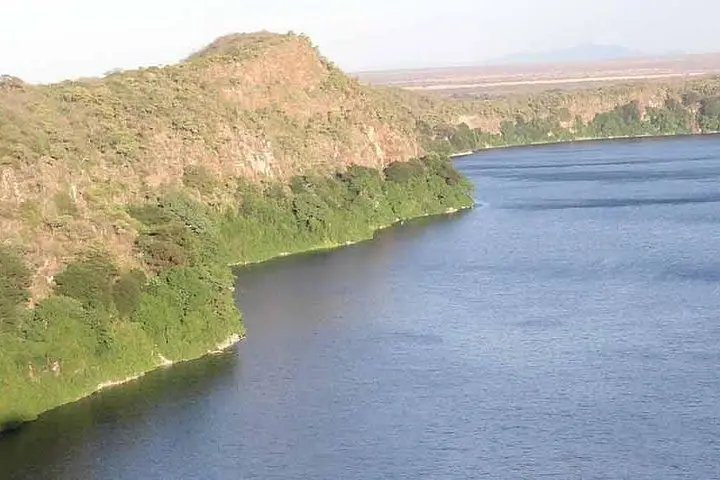
The first steps off the minivan feel like stepping into a different era: the road drops away and a green rim of forest curves around a mirror of water so still it looks like cut glass held against sky. Lake Chala sits in a volcanic caldera on the Tanzania–Kenya border, its steep crater walls folding down to a shoreline that alternates between dense lake-forest and open volcanic grassland. The lake doesn’t shout; it draws you in — the surface dares you to come closer while the rim keeps you honest with sudden drops and sheer rock faces.
Verified experiences and guided adventures in the surrounding area.
Operated by Livingstone Safari Tanzania · Moshi, Kilimanjaro Region
The first steps off the minivan feel like stepping into a different era: the road drops away and a green rim of forest curves around a mirror of water so still it looks like cut glass held against sky. Lake Chala sits in a volcanic caldera on the Tanzania–Kenya border, its steep crater walls folding down to a shoreline that alternates between dense lake-forest and open volcanic grassland. The lake doesn’t shout; it draws you in — the surface dares you to come closer while the rim keeps you honest with sudden drops and sheer rock faces.
Geologically the basin is young, carved by volcanic collapse and fed by underground springs that trace their source back beneath Mount Kilimanjaro. That subterranean connection gives Chala an unusual clarity and, reportedly, significant depth — it's often described as one of Africa’s deepest inland lakes. Culturally the area sits at a crossroads: small farms and grazing plots dot the approach roads and Maasai and Pare traditions shape the local rhythms, from grazing routes to the seasonal use of forest resources.
On a day trip from Moshi, you’ll get the full range of the place: a guided shoreline walk that moves between closed-canopy forest and open “mbuga” plains, a chance to paddle a canoe where the water turns from green to indigo, and time scanning the cliffs for birds of prey. African Fish Eagles announce themselves with a shrill cry, Verreaux’s Eagles ride the thermals, and smaller forest birds flit through trees that host species found nowhere else on the crater’s slopes. Tracks in sandy coves tell of dik-dik and baboon; if luck is on your side you might glimpse large game at a distance.
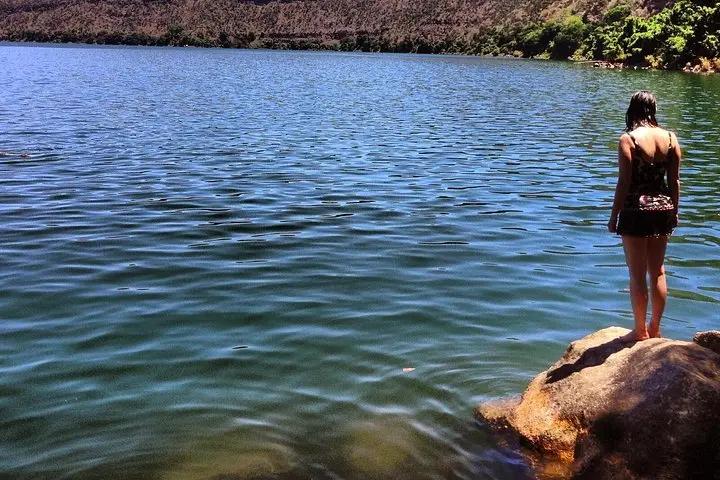
Practicalities: this is a full-day outing — expect about 7 hours total including transport from Moshi (roughly 1.5 hours each way). Walking routes around the shoreline and short rim trails cover roughly 4–6 km with intermittent steep sections and up to 200–300 meters of uneven ascent and descent. Swimming and canoeing are options, but be cautious: the water falls away quickly and shore access can be steep. Guides supplied by the operator handle route-finding, local history and wildlife spotting; fees, lunch and private transport are typically included on the standard day tour.
Timing matters: arrive mid-morning for softer light and calmer waters; afternoons can heat up and bring more insect activity. Bring sturdy shoes, sun protection, insect repellent and a dry bag if you plan to paddle. Respect local signs and stay with your guide — the crater is wild and unmapped in places, and the best moments are the quiet ones when the lake seems to hold its breath and the rest of the world recedes.
Expect roughly 1.5 hours each way depending on road conditions; operators typically pick up from Moshi hotels.
Yes, swimming is possible in designated areas but the lake is deep and shore access can be steep — swim only under guide supervision and use a life jacket if unsure.
Children can join but should be supervised at all times; discuss age and abilities with the operator when booking.
This listing offers private transportation and a guide; interpretive commentary and wildlife spotting are part of the experience.
Basic facilities may be available near the access point; the tour usually includes a packed or cooked lunch brought from Moshi.
Local access or community fees may apply; these are often included in the tour price but confirm with the operator and carry small cash just in case.
Livingstone Safari Tanzania operates guided outdoor trips and adventures with an emphasis on safety, stewardship, and memorable experiences.
The first steps off the minivan feel like stepping into a different era: the road drops away and a green rim of forest curves around a mirror of water so still it looks like cut glass held against sky. Lake Chala sits in a volcanic caldera on the Tanzania–Kenya border, its steep crater walls folding down to a shoreline that alternates between dense lake-forest and open volcanic grassland. The lake doesn’t shout; it draws you in — the surface dares you to come closer while the rim keeps you honest with sudden drops and sheer rock faces.
The first steps off the minivan feel like stepping into a different era: the road drops away and a green rim of forest curves around a mirror of water so still it looks like cut glass held against sky. Lake Chala sits in a volcanic caldera on the Tanzania–Kenya border, its steep crater walls folding down to a shoreline that alternates between dense lake-forest and open volcanic grassland. The lake doesn’t shout; it draws you in — the surface dares you to come closer while the rim keeps you honest with sudden drops and sheer rock faces.
Geologically the basin is young, carved by volcanic collapse and fed by underground springs that trace their source back beneath Mount Kilimanjaro. That subterranean connection gives Chala an unusual clarity and, reportedly, significant depth — it's often described as one of Africa’s deepest inland lakes. Culturally the area sits at a crossroads: small farms and grazing plots dot the approach roads and Maasai and Pare traditions shape the local rhythms, from grazing routes to the seasonal use of forest resources.
On a day trip from Moshi, you’ll get the full range of the place: a guided shoreline walk that moves between closed-canopy forest and open “mbuga” plains, a chance to paddle a canoe where the water turns from green to indigo, and time scanning the cliffs for birds of prey. African Fish Eagles announce themselves with a shrill cry, Verreaux’s Eagles ride the thermals, and smaller forest birds flit through trees that host species found nowhere else on the crater’s slopes. Tracks in sandy coves tell of dik-dik and baboon; if luck is on your side you might glimpse large game at a distance.
Practicalities: this is a full-day outing — expect about 7 hours total including transport from Moshi (roughly 1.5 hours each way). Walking routes around the shoreline and short rim trails cover roughly 4–6 km with intermittent steep sections and up to 200–300 meters of uneven ascent and descent. Swimming and canoeing are options, but be cautious: the water falls away quickly and shore access can be steep. Guides supplied by the operator handle route-finding, local history and wildlife spotting; fees, lunch and private transport are typically included on the standard day tour.
Timing matters: arrive mid-morning for softer light and calmer waters; afternoons can heat up and bring more insect activity. Bring sturdy shoes, sun protection, insect repellent and a dry bag if you plan to paddle. Respect local signs and stay with your guide — the crater is wild and unmapped in places, and the best moments are the quiet ones when the lake seems to hold its breath and the rest of the world recedes.