THE ADVENTURE COLLECTIVE® · Independent discovery and booking for outdoor travel

Paddle a volcanic crater, swim in emerald depths, and stand on bedrock that looks toward Kilimanjaro. This private five‑hour tour to Lake Chala mixes geology, endemic wildlife, and easy adventure with lunch and transport included.
Paddle a volcanic crater, swim in emerald depths, and stand on bedrock that looks toward Kilimanjaro. This private five‑hour tour to Lake Chala mixes geology, endemic wildlife, and easy adventure with lunch and transport included.
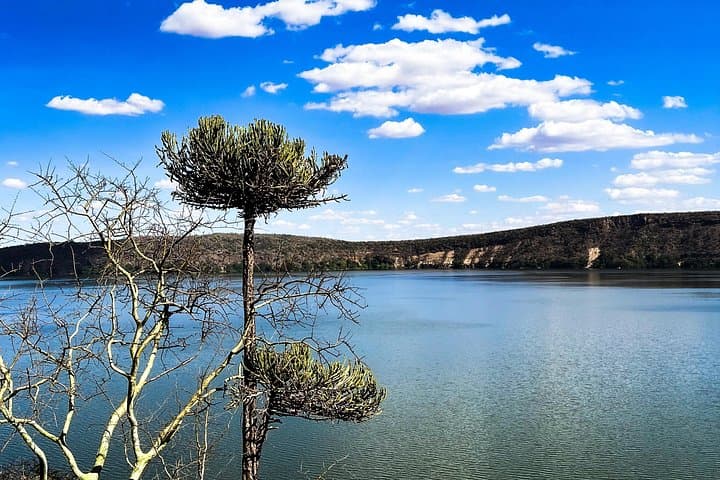
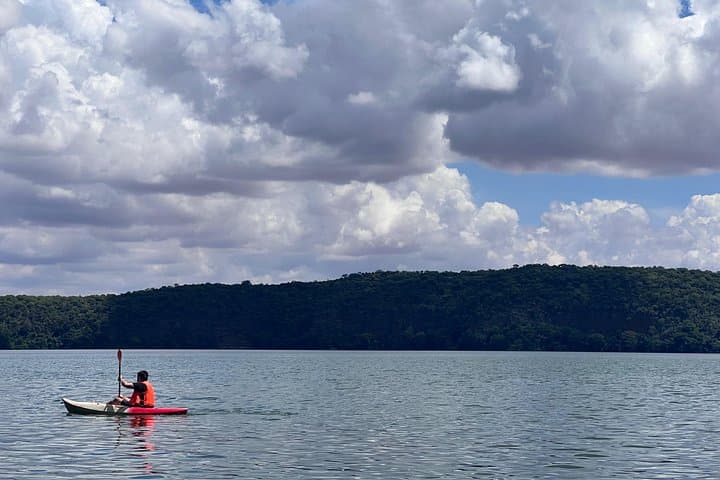
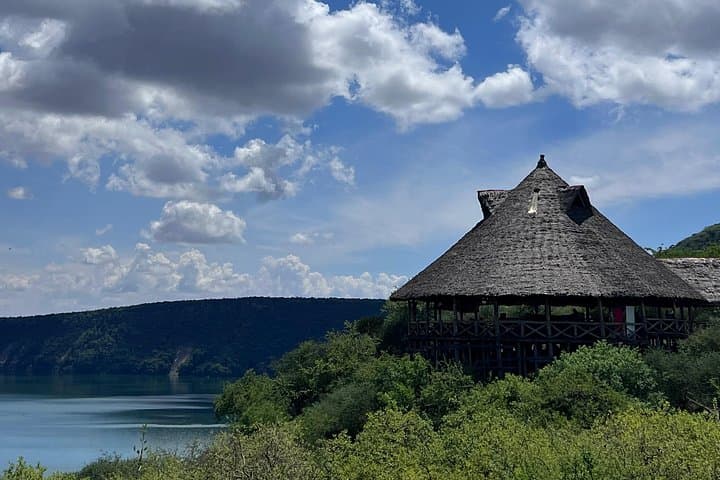
You arrive along a red-earth road and the trees open like a curtain. Below, Lake Chala sits in its volcanic crater—dark, glassy, and surprisingly deep—its rim cliffs dropping steeply into water measured at roughly 97 meters. The guide tucks a pair of bright kayaks onto the shoreline, gestures toward the basin, and the day begins with the slow, tactile work of paddling where molten rock once cooled.
Verified experiences and guided adventures in the surrounding area.
Operated by Tarry Adventures and Safaris · Taveta, Taita-Taveta County
You arrive along a red-earth road and the trees open like a curtain. Below, Lake Chala sits in its volcanic crater—dark, glassy, and surprisingly deep—its rim cliffs dropping steeply into water measured at roughly 97 meters. The guide tucks a pair of bright kayaks onto the shoreline, gestures toward the basin, and the day begins with the slow, tactile work of paddling where molten rock once cooled.
Lake Chala is a geological scar made visible: a 250,000-year-old volcanic crater filled by springs and rain, covering about 4.2 square kilometers and straddling the Kenya–Tanzania border (roughly 75% in Tanzania). That ancient heat left a bedrock stage where unique fish and birds evolved in relative isolation; for a naturalist, the lake feels like a small, contained world.
Culturally the area sits in the shadow of Kilimanjaro. From certain high points on the rim you can pick out the massif’s flanks and, on a clear day, the icy cap itself—an unexpected counterpoint to the tropical scrub and basalt around your feet. Local guides are often from nearby villages; their stories braid practical knowledge about the crater’s geology with tales about seasonal bird migrations and traditional uses of plants along the shore.
The itinerary is compact and practical: a short 10–15 minute walk to the lake, an hour of guided kayaking with the option to swim, a visit to exposed bedrock formations and a viewpoint that looks across to Lake Jipe and Kilimanjaro when weather permits. The pace is unhurried—time for observation, not speed—so you finish with lunch prepared locally and private transport back to your pickup point.
Practical tips: arrive early for calm water and better reflections for photos; wear shoes that grip wet rock; bring a dry bag for phones; and expect midday sun and occasional winds off the crater that can build short chop. The activity is low-impact physically but the crater rim has uneven basalt steps and loose pebbles, so steady footing matters.
This is a private tour that includes kayak rental, bottled water, and lunch; it’s suitable for most fitness levels and is an excellent short excursion if you’re based in Moshi or exploring Kilimanjaro’s southern approaches. Respect the lake—don’t introduce foreign baits or detergents—and follow your guide’s directions when swimming near sudden drop-offs.
In five hours you move from road to rim to water and back again, seeing the site’s geology, endemic species, and wide views concatenated into a single, quiet arc of exploration. It’s simple, elemental travel: a crater, a paddle, a meal—then the slow return to whatever comes next.
No—basic instruction is provided and the guided route is sheltered; guides can keep you near shore if you prefer.
Yes, swimming is allowed but only in designated, shallow areas—follow your guide and avoid sudden drop-offs.
Infants must sit on laps per operator policy; older children who can swim and follow safety briefings are fine.
Possibly—views depend on clear weather. Early mornings usually offer the best visibility toward Kilimanjaro and Lake Jipe.
Facilities are basic; use hotel facilities before departure or ask your guide about nearby rest areas.
This tour stays on the local side without border formalities. If your itinerary includes crossing into the neighboring country, bring appropriate travel documents.
Tarry Adventures and Safaris operates guided outdoor trips and adventures with an emphasis on safety, stewardship, and memorable experiences.

You arrive along a red-earth road and the trees open like a curtain. Below, Lake Chala sits in its volcanic crater—dark, glassy, and surprisingly deep—its rim cliffs dropping steeply into water measured at roughly 97 meters. The guide tucks a pair of bright kayaks onto the shoreline, gestures toward the basin, and the day begins with the slow, tactile work of paddling where molten rock once cooled.
You arrive along a red-earth road and the trees open like a curtain. Below, Lake Chala sits in its volcanic crater—dark, glassy, and surprisingly deep—its rim cliffs dropping steeply into water measured at roughly 97 meters. The guide tucks a pair of bright kayaks onto the shoreline, gestures toward the basin, and the day begins with the slow, tactile work of paddling where molten rock once cooled.
Lake Chala is a geological scar made visible: a 250,000-year-old volcanic crater filled by springs and rain, covering about 4.2 square kilometers and straddling the Kenya–Tanzania border (roughly 75% in Tanzania). That ancient heat left a bedrock stage where unique fish and birds evolved in relative isolation; for a naturalist, the lake feels like a small, contained world.
Culturally the area sits in the shadow of Kilimanjaro. From certain high points on the rim you can pick out the massif’s flanks and, on a clear day, the icy cap itself—an unexpected counterpoint to the tropical scrub and basalt around your feet. Local guides are often from nearby villages; their stories braid practical knowledge about the crater’s geology with tales about seasonal bird migrations and traditional uses of plants along the shore.
The itinerary is compact and practical: a short 10–15 minute walk to the lake, an hour of guided kayaking with the option to swim, a visit to exposed bedrock formations and a viewpoint that looks across to Lake Jipe and Kilimanjaro when weather permits. The pace is unhurried—time for observation, not speed—so you finish with lunch prepared locally and private transport back to your pickup point.
Practical tips: arrive early for calm water and better reflections for photos; wear shoes that grip wet rock; bring a dry bag for phones; and expect midday sun and occasional winds off the crater that can build short chop. The activity is low-impact physically but the crater rim has uneven basalt steps and loose pebbles, so steady footing matters.
This is a private tour that includes kayak rental, bottled water, and lunch; it’s suitable for most fitness levels and is an excellent short excursion if you’re based in Moshi or exploring Kilimanjaro’s southern approaches. Respect the lake—don’t introduce foreign baits or detergents—and follow your guide’s directions when swimming near sudden drop-offs.
In five hours you move from road to rim to water and back again, seeing the site’s geology, endemic species, and wide views concatenated into a single, quiet arc of exploration. It’s simple, elemental travel: a crater, a paddle, a meal—then the slow return to whatever comes next.