THE ADVENTURE COLLECTIVE® · Independent discovery and booking for outdoor travel

Spend a focused day exploring Lake Manyara National Park from Arusha—where tree-climbing lions, elephant herds and hundreds of bird species concentrate around an alkaline lake framed by Rift Valley escarpments. This compact safari is ideal when you want big-wildlife viewing without long road transfers.
Spend a focused day exploring Lake Manyara National Park from Arusha—where tree-climbing lions, elephant herds and hundreds of bird species concentrate around an alkaline lake framed by Rift Valley escarpments. This compact safari is ideal when you want big-wildlife viewing without long road transfers.
Morning light strips across the Rift Valley escarpment as the Land Cruiser leaves Arusha behind and the tarmac gives way to red earth.
Verified experiences and guided adventures in the surrounding area.
Operated by Budget Safaris Tanzania · Mto wa Mbu, Manyara Region
Morning light strips across the Rift Valley escarpment as the Land Cruiser leaves Arusha behind and the tarmac gives way to red earth.
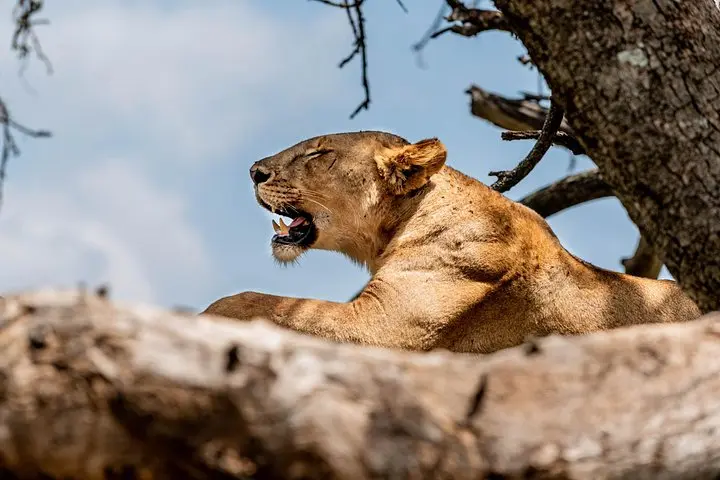
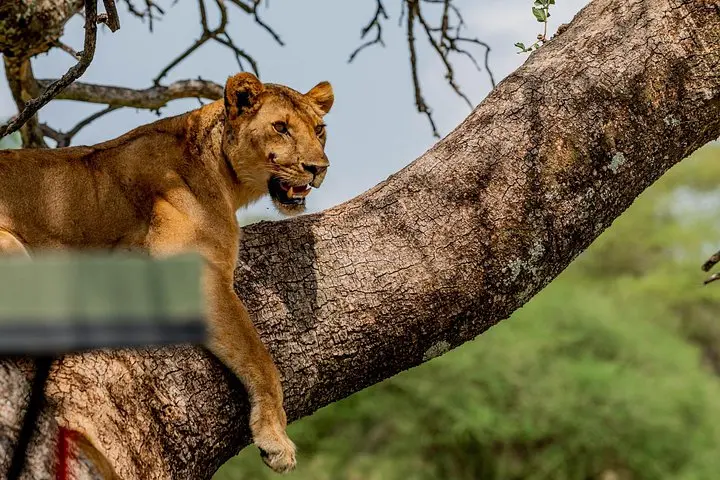
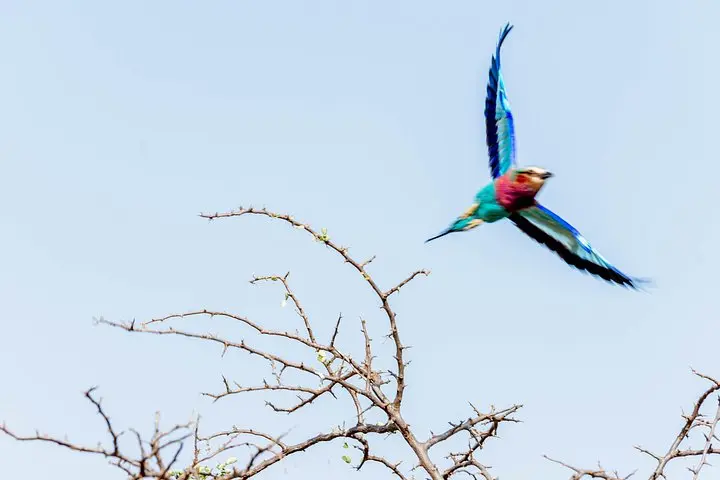
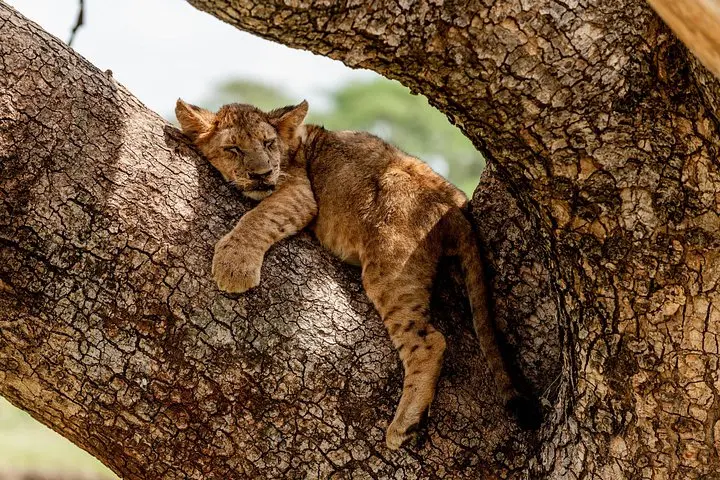
Within two hours the air cools and the landscape changes: a thin band of groundwater forest hugs the park edge, an alkaline lake flashes silver beyond wide floodplains, and acacia silhouettes puncture a low, rolling horizon. On a typical day tour through Lake Manyara National Park, visitors move between shaded tracks, open floodplain and lakeshore—scenes where large elephant herds browse, rare tree-climbing lions take silent naps in fig branches, and hundreds of waterbirds wheel in the thermal currents.
Geology and local history are visible in the park’s placement on the western flank of the Eastern Rift; soils and springs create habitats distinct from the nearby plains. The cultural pulse comes from nearby Mto wa Mbu, a market town where larger-than-life fruit stalls and Swahili and Maasai influences meet the safari corridor.
Practically, expect a full-day outing: roughly 2–3 hours drive from Arusha each way, protected vehicle-based game drives, and optional short guided walks where permitted. Terrain is mainly compact dirt tracks and flat floodplain; minimal elevation change (park lies around 900–1,200 m). Early morning and late afternoon light produce the best wildlife activity and photography. Bring layered clothing, binoculars, sun protection, and drinking water; listen to your guide on animal approach and park rules. For travelers short on time, this one-day safari delivers concentrated wildlife viewing with a clear, compact route through one of Tanzania’s most varied small parks.
Typical door-to-door travel is about 2–3 hours each way depending on traffic and pick-up location, as the park sits on the western Rift escarpment.
Lake Manyara is known for large elephant herds and occasional tree-climbing lions, but sightings depend on seasonal movements—guides increase odds by choosing active habitats and timing.
Most day safaris are vehicle-based; short guided walks may be offered where park rules allow—confirm with your operator before booking.
Yes—the safari is accessible for families and travelers with limited mobility when traveling by vehicle, though rough tracks can be bumpy.
Budget Safaris Tanzania operates guided outdoor trips and adventures with an emphasis on safety, stewardship, and memorable experiences.
Morning light strips across the Rift Valley escarpment as the Land Cruiser leaves Arusha behind and the tarmac gives way to red earth.
Morning light strips across the Rift Valley escarpment as the Land Cruiser leaves Arusha behind and the tarmac gives way to red earth.
Within two hours the air cools and the landscape changes: a thin band of groundwater forest hugs the park edge, an alkaline lake flashes silver beyond wide floodplains, and acacia silhouettes puncture a low, rolling horizon. On a typical day tour through Lake Manyara National Park, visitors move between shaded tracks, open floodplain and lakeshore—scenes where large elephant herds browse, rare tree-climbing lions take silent naps in fig branches, and hundreds of waterbirds wheel in the thermal currents.
Geology and local history are visible in the park’s placement on the western flank of the Eastern Rift; soils and springs create habitats distinct from the nearby plains. The cultural pulse comes from nearby Mto wa Mbu, a market town where larger-than-life fruit stalls and Swahili and Maasai influences meet the safari corridor.
Practically, expect a full-day outing: roughly 2–3 hours drive from Arusha each way, protected vehicle-based game drives, and optional short guided walks where permitted. Terrain is mainly compact dirt tracks and flat floodplain; minimal elevation change (park lies around 900–1,200 m). Early morning and late afternoon light produce the best wildlife activity and photography. Bring layered clothing, binoculars, sun protection, and drinking water; listen to your guide on animal approach and park rules. For travelers short on time, this one-day safari delivers concentrated wildlife viewing with a clear, compact route through one of Tanzania’s most varied small parks.