
Lake Nakuru National Park Full-Day Safari: Flamingos, Rhinos & Scenic Viewpoints
Spend a full day at Lake Nakuru National Park watching flamingos along the soda lake, searching for rhinos on a guided game drive, and taking in sweeping Rift Valley viewpoints. This accessible, vehicle-based safari packs notable wildlife and scenic stops into a single day trip.
An Adventure In Nakuru.
Spend a full day at Lake Nakuru National Park watching flamingos along the soda lake, searching for rhinos on a guided game drive, and taking in sweeping Rift Valley viewpoints. This accessible, vehicle-based safari packs notable wildlife and scenic stops into a single day trip.
Read the full experience
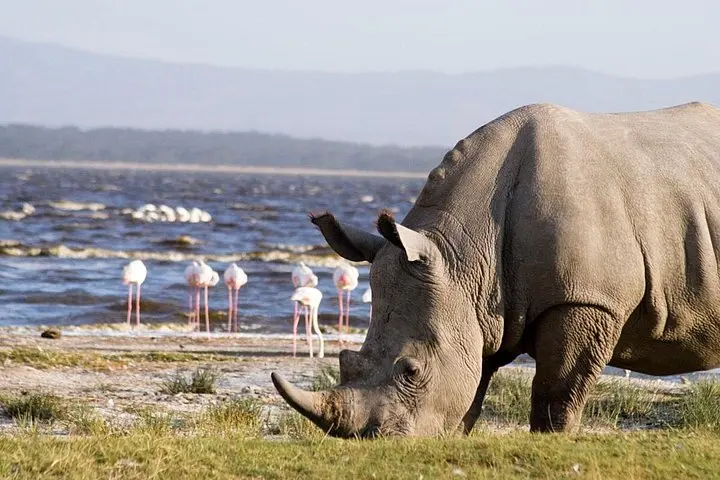
Morning light on Lake Nakuru cuts across the surface and throws the flamingos into sharp relief — a living pink fringe along an inland sea. On a full-day tour visitors move from shoreline bird-watching into open savanna, where game drives thread between viewpoints named for the animals that claim them: Lion Hill, Baboon Cliff and the Makalia waterfalls nearby. The park’s shallow soda lake concentrates food for wading birds; flamingos can gather in numbers that change with water levels and algae blooms, while short drives often turn up white rhinos, waterbuck and prowling baboons.
Morning light on Lake Nakuru cuts across the surface and throws the flamingos into sharp relief — a living pink fringe along an inland sea. On a full-day tour visitors move from shoreline bird-watching into open savanna, where game drives thread between viewpoints named for the animals that claim them: Lion Hill, Baboon Cliff and the Makalia waterfalls nearby. The park’s shallow soda lake concentrates food for wading birds; flamingos can gather in numbers that change with water levels and algae blooms, while short drives often turn up white rhinos, waterbuck and prowling baboons.
Lake Nakuru’s story is both geological and cultural. The lake sits in the Rift Valley, its alkaline waters shaped by tectonic uplift and fed by ephemeral streams; human communities around Nakuru town have long depended on the lake’s resources and now participate in conservation and eco-tourism. The park was designated to protect these distinctive waterbirds and the surrounding wildlife, evolving into a managed reserve balancing tourism and habitat protection.
Practical guidance: expect a full 9-hour day with mostly vehicle-based viewing and short walks at viewpoints. Bring binoculars and sun protection; morning and late-afternoon light are best for bird activity and photographic contrast. Roads can be dusty or muddy depending on the rains; wear closed-toe shoes and layer for cool mornings. Respect viewing distances, follow your guide’s instructions, and carry reusable water — the park provides basic facilities but conditions are rustic.
This tour suits travelers seeking accessible wildlife encounters and concentrated birding without long treks, offering high return for a single day out of Nakuru or Nairobi.
Frequently asked questions
Lake Nakuru is roughly a 2.5–3 hour drive from Nairobi depending on traffic and weather, making it feasible as a long day trip or an overnight stay in Nakuru town.
Flamingo numbers fluctuate with water and algae conditions; mornings and late afternoons concentrate feeding and are the best times for observation, though presence varies seasonally.
Many areas and the provided transportation are wheelchair accessible, but terrain at some viewpoints can be uneven—check with your operator for current accessibility details.
White rhinos are resident in Lake Nakuru and are commonly seen on game drives, but wildlife sightings cannot be guaranteed on any given day.
About This Experience
City Break Safaris operates guided outdoor trips and adventures with an emphasis on safety, stewardship, and memorable experiences.
Adventure tips
Recommended gear
- Binoculars: Essential for seeing flamingos, pelicans and distant mammals on the lake shore.
- Wide-brim hat & sunscreen: Protects against strong equatorial sun during open-vehicle drives.
- Closed-toe walking shoes: Useful for short walks at viewpoints and uneven surfaces around the park.
- Reusable water bottle: Staying hydrated is critical during full-day drives in warm, dry conditions.
Photos of the experience
Related adventures & guides
Read the full experience
Morning light on Lake Nakuru cuts across the surface and throws the flamingos into sharp relief — a living pink fringe along an inland sea. On a full-day tour visitors move from shoreline bird-watching into open savanna, where game drives thread between viewpoints named for the animals that claim them: Lion Hill, Baboon Cliff and the Makalia waterfalls nearby. The park’s shallow soda lake concentrates food for wading birds; flamingos can gather in numbers that change with water levels and algae blooms, while short drives often turn up white rhinos, waterbuck and prowling baboons.
Morning light on Lake Nakuru cuts across the surface and throws the flamingos into sharp relief — a living pink fringe along an inland sea. On a full-day tour visitors move from shoreline bird-watching into open savanna, where game drives thread between viewpoints named for the animals that claim them: Lion Hill, Baboon Cliff and the Makalia waterfalls nearby. The park’s shallow soda lake concentrates food for wading birds; flamingos can gather in numbers that change with water levels and algae blooms, while short drives often turn up white rhinos, waterbuck and prowling baboons.
Lake Nakuru’s story is both geological and cultural. The lake sits in the Rift Valley, its alkaline waters shaped by tectonic uplift and fed by ephemeral streams; human communities around Nakuru town have long depended on the lake’s resources and now participate in conservation and eco-tourism. The park was designated to protect these distinctive waterbirds and the surrounding wildlife, evolving into a managed reserve balancing tourism and habitat protection.
Practical guidance: expect a full 9-hour day with mostly vehicle-based viewing and short walks at viewpoints. Bring binoculars and sun protection; morning and late-afternoon light are best for bird activity and photographic contrast. Roads can be dusty or muddy depending on the rains; wear closed-toe shoes and layer for cool mornings. Respect viewing distances, follow your guide’s instructions, and carry reusable water — the park provides basic facilities but conditions are rustic.
This tour suits travelers seeking accessible wildlife encounters and concentrated birding without long treks, offering high return for a single day out of Nakuru or Nairobi.
Make a day of it nearby.
Verified experiences and guided adventures in the surrounding area.