THE ADVENTURE COLLECTIVE® · Independent discovery and booking for outdoor travel

Explore Lalibela’s extraordinary rock-hewn churches—medieval monoliths carved from volcanic tuff and still active places of worship. This guided tour pairs close-up archaeology with living Amhara traditions and practical tips for high-altitude travel.
Explore Lalibela’s extraordinary rock-hewn churches—medieval monoliths carved from volcanic tuff and still active places of worship. This guided tour pairs close-up archaeology with living Amhara traditions and practical tips for high-altitude travel.
Dust from the highland track lifts as the small convoy turns toward Lalibela, and the air—thin at 2,520 m—carries the crack of stone and the distant cadence of prayer.
Verified experiences and guided adventures in the surrounding area.
Operated by Highland Eco Trekking Tours Ethiopia · Lalibela, Amhara
Dust from the highland track lifts as the small convoy turns toward Lalibela, and the air—thin at 2,520 m—carries the crack of stone and the distant cadence of prayer.
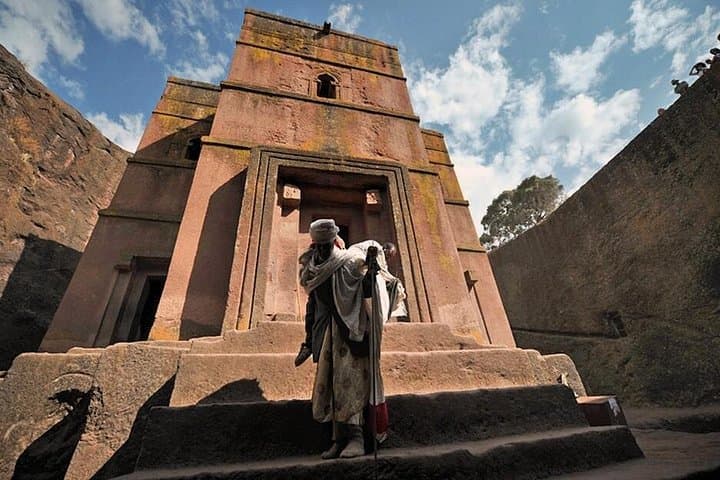
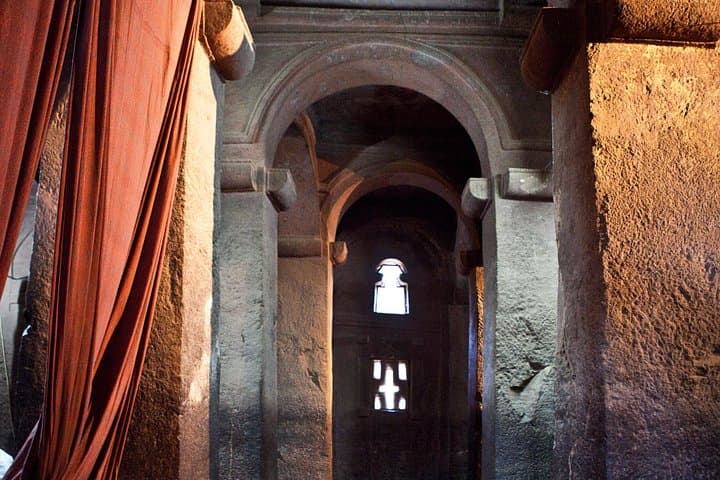
Visitors step from car into a medieval plan etched below grade: churches carved downward out of living bedrock, their roofs level with the narrow lanes that thread the town. The experience reads like walking through an underground city where light and shadow define portals and courtyards.
Built in the 12th–13th centuries during the Zagwe dynasty, the rock-hewn churches are an engineered curiosity—monolithic excavation rather than stone assembly. Geologically, the site sits on consolidated volcanic tuff; craftsmen removed material to shape full structures, then cut interiors and passageways. Religiously, Lalibela has been Ethiopia’s second holiest city after Axum, drawing pilgrims who still walk for days to reach the complex each year.
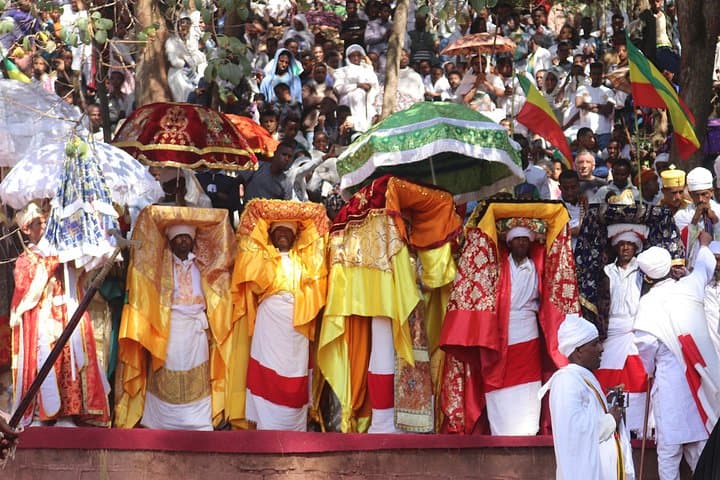
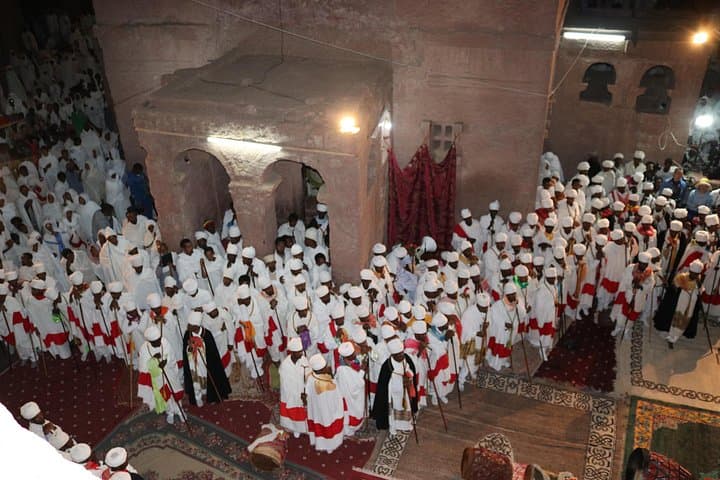
Culturally, expect ritual rhythms: priests in white cloaks, chanting, and a coffee ceremony offered in local homes. The most photographed site, Bet Giyorgis (St. George), is carved in a cruciform plan and sits slightly apart, daring visitors to circle its precise outline.
Practical guidance: the standard private tour covers both northwestern and southeastern clusters in one long day (or a two-day itinerary if you prefer a gentler pace). Wear sturdy shoes for uneven stone steps, carry water and sun protection, and allow time around midday—key-holders often take a lunch break. Respect liturgical spaces: modest dress and quiet are required. For acclimatization, plan a low-activity arrival day; altitude affects many travelers. Guided interpretation and a local coffee ceremony are typically included, giving context to the architecture and to Amhara village life.
Typical private tours cover the main clusters in one full day (about 8–10 hours including transfers), or can be split over two days for a relaxed pace.
Yes, the site is open year-round, but internal access can be limited during religious services or at midday when custodians break for lunch.
Yes—physical demands are low but include uneven stone and steps; mobility limitations should be discussed with the operator in advance.
Admission is controlled locally and may not be included in all packages; confirm with the operator before booking whether park fees are included.
Highland Eco Trekking Tours Ethiopia operates guided outdoor trips and adventures with an emphasis on safety, stewardship, and memorable experiences.
Dust from the highland track lifts as the small convoy turns toward Lalibela, and the air—thin at 2,520 m—carries the crack of stone and the distant cadence of prayer.
Dust from the highland track lifts as the small convoy turns toward Lalibela, and the air—thin at 2,520 m—carries the crack of stone and the distant cadence of prayer.
Visitors step from car into a medieval plan etched below grade: churches carved downward out of living bedrock, their roofs level with the narrow lanes that thread the town. The experience reads like walking through an underground city where light and shadow define portals and courtyards.
Built in the 12th–13th centuries during the Zagwe dynasty, the rock-hewn churches are an engineered curiosity—monolithic excavation rather than stone assembly. Geologically, the site sits on consolidated volcanic tuff; craftsmen removed material to shape full structures, then cut interiors and passageways. Religiously, Lalibela has been Ethiopia’s second holiest city after Axum, drawing pilgrims who still walk for days to reach the complex each year.
Culturally, expect ritual rhythms: priests in white cloaks, chanting, and a coffee ceremony offered in local homes. The most photographed site, Bet Giyorgis (St. George), is carved in a cruciform plan and sits slightly apart, daring visitors to circle its precise outline.
Practical guidance: the standard private tour covers both northwestern and southeastern clusters in one long day (or a two-day itinerary if you prefer a gentler pace). Wear sturdy shoes for uneven stone steps, carry water and sun protection, and allow time around midday—key-holders often take a lunch break. Respect liturgical spaces: modest dress and quiet are required. For acclimatization, plan a low-activity arrival day; altitude affects many travelers. Guided interpretation and a local coffee ceremony are typically included, giving context to the architecture and to Amhara village life.