THE ADVENTURE COLLECTIVE® · Independent discovery and booking for outdoor travel

This full-day Landmannalaugar tour pairs an easy guided hike through rhyolite hills with a soak in natural hot springs and a visit to Háifoss—one of Iceland’s most dramatic waterfalls. Expect volcanic craters, lava fields and variable weather on a long but rewarding day in the highlands.
This full-day Landmannalaugar tour pairs an easy guided hike through rhyolite hills with a soak in natural hot springs and a visit to Háifoss—one of Iceland’s most dramatic waterfalls. Expect volcanic craters, lava fields and variable weather on a long but rewarding day in the highlands.
A raw wind lifts steam from small pools as the bus drops you on a streaked valley floor—rhyolite ridges flare in ochre and rose while basalt fingers mark where lava once flowed. The guide points down a trail that threads between fumaroles and ancient lava fields; for the next two hours the group moves at a steady, deliberate pace, trading views of steaming vents for turquoise crater lakes and lone outcrops of hardy moss.
Verified experiences and guided adventures in the surrounding area.
Operated by BusTravel Iceland · Landmannalaugar, Southern Region
A raw wind lifts steam from small pools as the bus drops you on a streaked valley floor—rhyolite ridges flare in ochre and rose while basalt fingers mark where lava once flowed. The guide points down a trail that threads between fumaroles and ancient lava fields; for the next two hours the group moves at a steady, deliberate pace, trading views of steaming vents for turquoise crater lakes and lone outcrops of hardy moss.
This route crosses ground shaped by repeated eruptions: rhyolite hills formed by silica-rich lava give the highland its color, Hnausapollur crater was created in eruptions roughly 1,200 years ago, and Háifoss—one of Iceland's tallest falls at about 122 meters—sits downstream in Þjórsárdalur. Local culture here is sparse and practical; shepherding and summer mountain travel have long shaped how people read weather and routes.
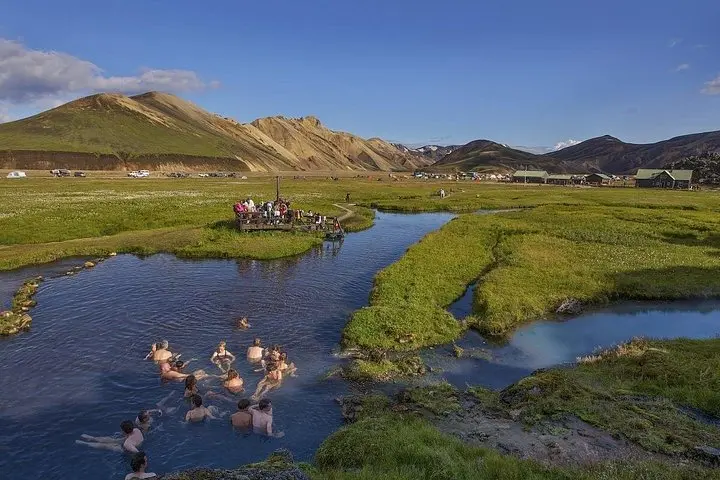
Expect mixed terrain: compacted trail, loose volcanic scree and short-but-steep pitches with roughly 4–6 km of walking and 200–300 m of cumulative elevation gain on the guided section. The thermal pools near Landmannalaugar invite a soak—but they are basic and untended, so check temperatures before entering. Practical tips: wear waterproof, grippy boots, layer for sudden wind and rain, carry at least 1–2 liters of water and a windproof layer, and leave no trace—moss and soil recover slowly. The tour is a long day (about 13 hours including transport) but delivers a concentrated cross-section of Iceland’s highland geology: multicolored peaks, crater lakes daring you to explore, and the thunder of Háifoss closing the loop.
The guided hike section is about two hours (roughly 4–6 km) and optional; the full tour including transport is approximately 13 hours.
Yes—you can bathe in the basic, unmonitored natural pools at Landmannalaugar; check water temperature before entering and respect other visitors.
Yes—guides rate the hike as accessible to most fitness levels, but you should be comfortable walking on uneven ground and prepared for changing weather.
Highland routes like those into Landmannalaugar are typically open in summer months (roughly June–September); outside that window roads are often closed due to snow and river crossings.
BusTravel Iceland operates guided outdoor trips and adventures with an emphasis on safety, stewardship, and memorable experiences.
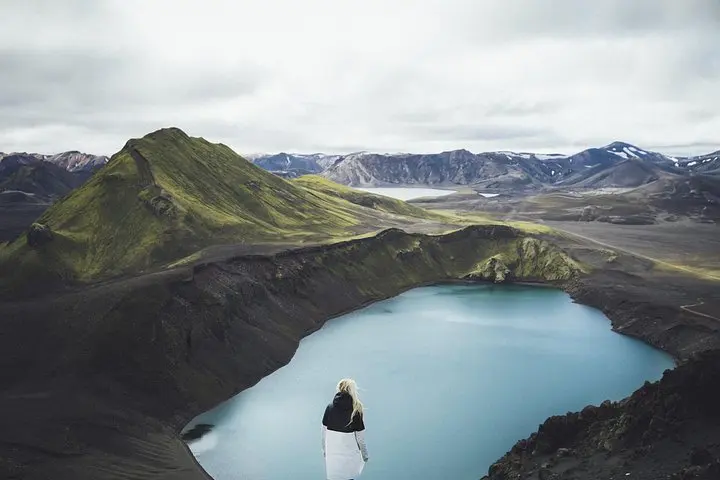
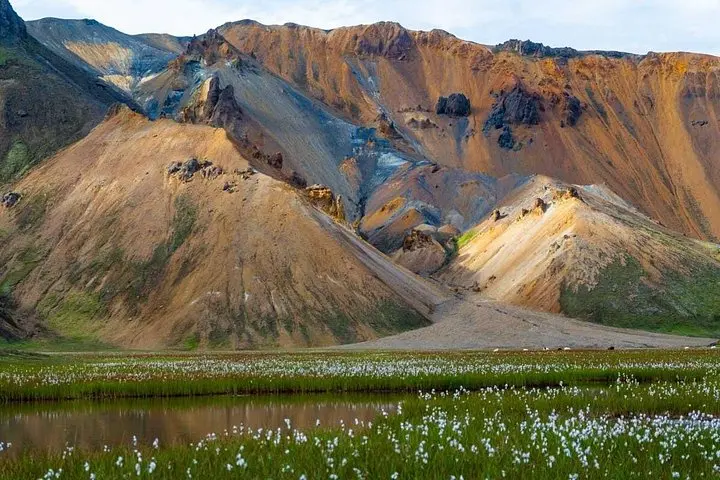
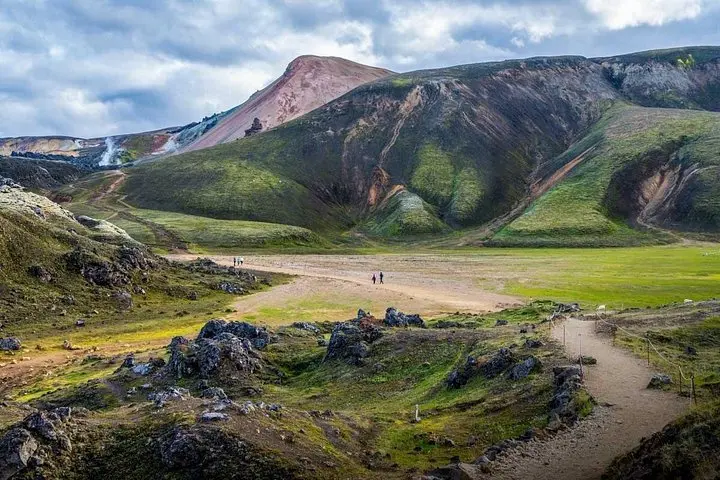
A raw wind lifts steam from small pools as the bus drops you on a streaked valley floor—rhyolite ridges flare in ochre and rose while basalt fingers mark where lava once flowed. The guide points down a trail that threads between fumaroles and ancient lava fields; for the next two hours the group moves at a steady, deliberate pace, trading views of steaming vents for turquoise crater lakes and lone outcrops of hardy moss.
A raw wind lifts steam from small pools as the bus drops you on a streaked valley floor—rhyolite ridges flare in ochre and rose while basalt fingers mark where lava once flowed. The guide points down a trail that threads between fumaroles and ancient lava fields; for the next two hours the group moves at a steady, deliberate pace, trading views of steaming vents for turquoise crater lakes and lone outcrops of hardy moss.
This route crosses ground shaped by repeated eruptions: rhyolite hills formed by silica-rich lava give the highland its color, Hnausapollur crater was created in eruptions roughly 1,200 years ago, and Háifoss—one of Iceland's tallest falls at about 122 meters—sits downstream in Þjórsárdalur. Local culture here is sparse and practical; shepherding and summer mountain travel have long shaped how people read weather and routes.
Expect mixed terrain: compacted trail, loose volcanic scree and short-but-steep pitches with roughly 4–6 km of walking and 200–300 m of cumulative elevation gain on the guided section. The thermal pools near Landmannalaugar invite a soak—but they are basic and untended, so check temperatures before entering. Practical tips: wear waterproof, grippy boots, layer for sudden wind and rain, carry at least 1–2 liters of water and a windproof layer, and leave no trace—moss and soil recover slowly. The tour is a long day (about 13 hours including transport) but delivers a concentrated cross-section of Iceland’s highland geology: multicolored peaks, crater lakes daring you to explore, and the thunder of Háifoss closing the loop.