THE ADVENTURE COLLECTIVE® · Independent discovery and booking for outdoor travel

An eight‑day trek from Pokhara to Kyanjing Gompa that climbs forested valleys into high alpine views. Expect tea‑house stays, Tamang villages, and a sunrise climb to Kyanjin Ri for expansive mountain panoramas.
An eight‑day trek from Pokhara to Kyanjing Gompa that climbs forested valleys into high alpine views. Expect tea‑house stays, Tamang villages, and a sunrise climb to Kyanjin Ri for expansive mountain panoramas.
Morning light hits the valley as you step off the long-distance bus and smell wet earth and wood smoke—the start of an eight‑day trek that moves from low green hills into a sky of serrated peaks.
Verified experiences and guided adventures in the surrounding area.
Operated by Nepal Mountain Club Pvt Ltd · Syabrubesi, Bagmati Province
Morning light hits the valley as you step off the long-distance bus and smell wet earth and wood smoke—the start of an eight‑day trek that moves from low green hills into a sky of serrated peaks.
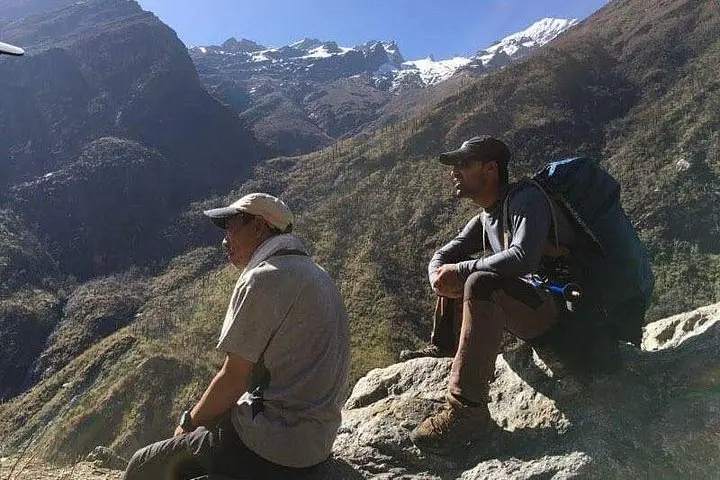
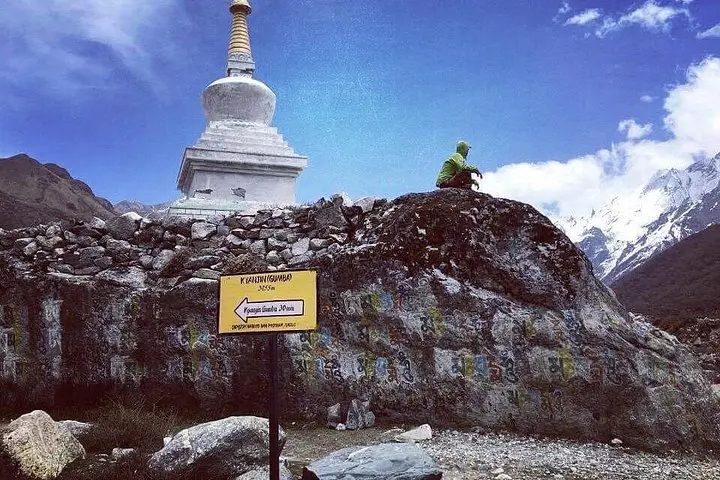
The route follows the Langtang River north from Syabrubesi, climbing through rhododendron and oak forest to Lama Hotel, then onto Langtang Village and the high hamlet of Kyanjing Gompa. Geologically this is a collision country: uplifted schist and granite shed boulders into fast, clear streams; moraines and steep ridgelines describe recent glacier work. Culturally the valley is Tamang country—stone houses, prayer flags, and a living monastery in Kyanjing that anchors local life.
Along the way you'll pass small cheese‑making rooms run by yak‑herders, cross wooden bridges that rattle with each step, and gain views of Langtang Lirung and a skyline of 6,000–7,000m peaks. The village system, tea houses and short day routes make logistics straightforward, but altitude is the real variable—Kyanjing Ri (approx. 4,600m) is the high vantage many aim for.
Practical notes: allow time to acclimatize, plan 4–7 hour walking days, and expect simple tea‑house rooms and communal meals. Carry layered insulation, treat water or bring a filter, and hire a local guide or porter to support navigation and cultural access. Best seasons are spring and fall for firm trails and long views; monsoon brings dense forest growth and variable trail conditions.
This itinerary pairs accessible village trekking with big‑mountain scenery—an excellent option if you want high‑alpine panoramas without extended technical routes.
Yes—TIMS card and Langtang National Park entrance permit are required; guides usually handle purchasing these before or during the first paperwork stop.
Expect 4–7 hours of walking per day on varied terrain; some days include steep sections and altitude gain that slow pace.
Yes—altitude becomes significant above ~3,000m; use a gradual ascent profile, stay hydrated, and know AMS symptoms; descend if severe.
Tea houses and guesthouses offer basic twin rooms, simple hot showers where available, and communal meals—comfort is modest but warm and functional.
Nepal Mountain Club Pvt Ltd operates guided outdoor trips and adventures with an emphasis on safety, stewardship, and memorable experiences.
Morning light hits the valley as you step off the long-distance bus and smell wet earth and wood smoke—the start of an eight‑day trek that moves from low green hills into a sky of serrated peaks.
Morning light hits the valley as you step off the long-distance bus and smell wet earth and wood smoke—the start of an eight‑day trek that moves from low green hills into a sky of serrated peaks.
The route follows the Langtang River north from Syabrubesi, climbing through rhododendron and oak forest to Lama Hotel, then onto Langtang Village and the high hamlet of Kyanjing Gompa. Geologically this is a collision country: uplifted schist and granite shed boulders into fast, clear streams; moraines and steep ridgelines describe recent glacier work. Culturally the valley is Tamang country—stone houses, prayer flags, and a living monastery in Kyanjing that anchors local life.
Along the way you'll pass small cheese‑making rooms run by yak‑herders, cross wooden bridges that rattle with each step, and gain views of Langtang Lirung and a skyline of 6,000–7,000m peaks. The village system, tea houses and short day routes make logistics straightforward, but altitude is the real variable—Kyanjing Ri (approx. 4,600m) is the high vantage many aim for.
Practical notes: allow time to acclimatize, plan 4–7 hour walking days, and expect simple tea‑house rooms and communal meals. Carry layered insulation, treat water or bring a filter, and hire a local guide or porter to support navigation and cultural access. Best seasons are spring and fall for firm trails and long views; monsoon brings dense forest growth and variable trail conditions.
This itinerary pairs accessible village trekking with big‑mountain scenery—an excellent option if you want high‑alpine panoramas without extended technical routes.