THE ADVENTURE COLLECTIVE® · Independent discovery and booking for outdoor travel

Travel from Vientiane’s capital calm to the plateau graves of the Plain of Jars and the sacred riverside of Luang Prabang. This five-day cultural route mixes Iron Age archaeology, wartime history, karst landscapes and wet-season waterfalls.
Travel from Vientiane’s capital calm to the plateau graves of the Plain of Jars and the sacred riverside of Luang Prabang. This five-day cultural route mixes Iron Age archaeology, wartime history, karst landscapes and wet-season waterfalls.
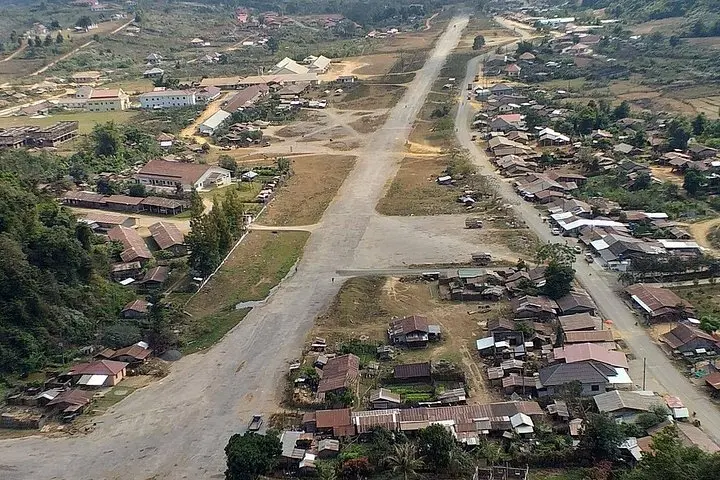
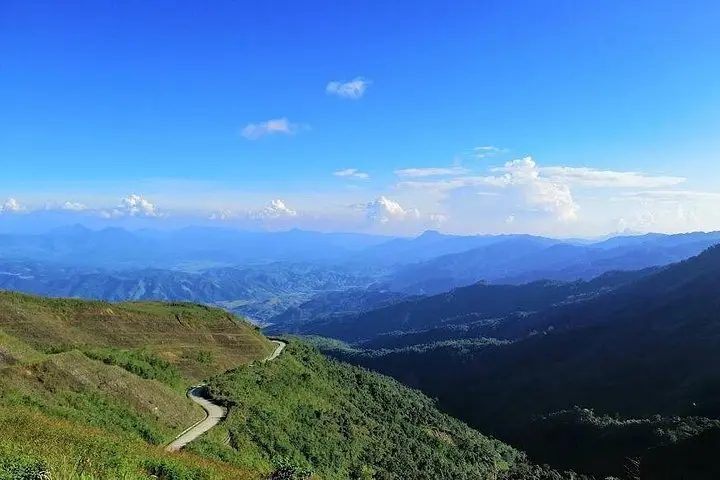
The road opens under a wide Southeast Asian sky as you leave Vientiane’s lowland hum and climb toward the cooler plateaus of Xieng Khouang. Dust and mist lift off rice paddies, revealing stone jars half-buried on grassy knolls, while later the Mekong’s slow current will welcome you in the gilded calm of Luang Prabang.
Verified experiences and guided adventures in the surrounding area.
Operated by Laos Minivan Tours · Phonsavan, Xieng Khouang Province
The road opens under a wide Southeast Asian sky as you leave Vientiane’s lowland hum and climb toward the cooler plateaus of Xieng Khouang. Dust and mist lift off rice paddies, revealing stone jars half-buried on grassy knolls, while later the Mekong’s slow current will welcome you in the gilded calm of Luang Prabang.
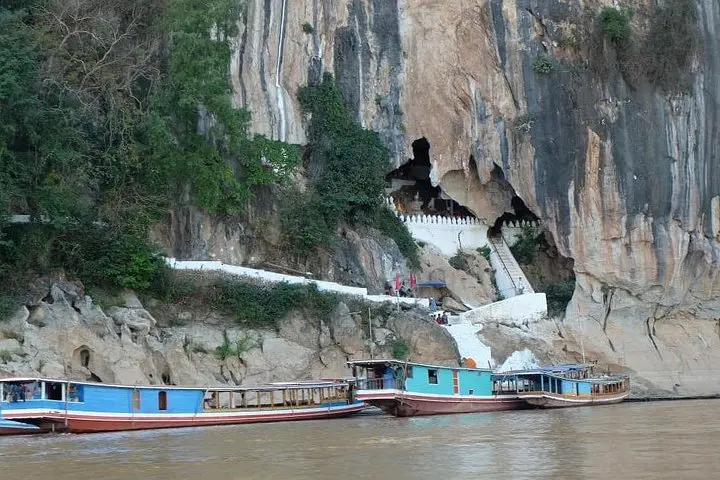
This multi-day route threads recent history and deep prehistory: the Plain of Jars — enigmatic Iron Age stone monuments — sits amid karst ridges scarred by heavy bombing during the Indochina conflicts; Long Cheng (the CIA-era site in Xaisomboun) and Muang Khoun’s ruined stupas recall turbulent 20th-century geopolitics. Geologically the region is limestone and sandstone, with caves like Pak Ou carved by millennia of water and Kuang Si’s tiered limestone pools fed by karst springs.
Culture here is village-centered: craft hamlets (Ban Naphia spoon-makers, Ban Xangkhong weavers), morning alms in Luang Prabang, and small markets that feel unchanged by tourism. Wildlife appears in edges — butterflies and rescued Asiatic black bears at Kuang Si’s sanctuary — while local guides explain UXO clearance and conservation work that shapes present-day access.
Practical: expect a 45–60 minute domestic flight Vientiane–Phonsavan, 7–8 hours driving between Phonsavan and Luang Prabang on mixed paved and rough mountain roads, moderate walking at sites (short climbs, uneven trails). Bring cash in kip for smaller villages, a lightweight rain shell during monsoon months, and comfortable walking shoes for limestone paths.
This itinerary suits travelers who want layered history, dramatic geology, and village-scale cultural encounters across five active days in northern Laos.
The itinerary includes a domestic flight from Vientiane to Phonsavan arranged as part of the tour logistics; exact flight times depend on schedule.
Yes — the tour is rated easy to moderate with short walks and vehicle transfers; families and older travelers should note the long driving day between Phonsavan and Luang Prabang and plan accordingly.
Local guides commonly speak English and Lao; for specialist history or archaeology briefings, guides provided by the operator will offer context in English.
Walking at archaeological sites and waterfalls involves short, uneven trails, steps and occasional muddy sections; expect light to moderate hikes rather than technical treks.
Laos Minivan Tours operates guided outdoor trips and adventures with an emphasis on safety, stewardship, and memorable experiences.
The road opens under a wide Southeast Asian sky as you leave Vientiane’s lowland hum and climb toward the cooler plateaus of Xieng Khouang. Dust and mist lift off rice paddies, revealing stone jars half-buried on grassy knolls, while later the Mekong’s slow current will welcome you in the gilded calm of Luang Prabang.
The road opens under a wide Southeast Asian sky as you leave Vientiane’s lowland hum and climb toward the cooler plateaus of Xieng Khouang. Dust and mist lift off rice paddies, revealing stone jars half-buried on grassy knolls, while later the Mekong’s slow current will welcome you in the gilded calm of Luang Prabang.
This multi-day route threads recent history and deep prehistory: the Plain of Jars — enigmatic Iron Age stone monuments — sits amid karst ridges scarred by heavy bombing during the Indochina conflicts; Long Cheng (the CIA-era site in Xaisomboun) and Muang Khoun’s ruined stupas recall turbulent 20th-century geopolitics. Geologically the region is limestone and sandstone, with caves like Pak Ou carved by millennia of water and Kuang Si’s tiered limestone pools fed by karst springs.
Culture here is village-centered: craft hamlets (Ban Naphia spoon-makers, Ban Xangkhong weavers), morning alms in Luang Prabang, and small markets that feel unchanged by tourism. Wildlife appears in edges — butterflies and rescued Asiatic black bears at Kuang Si’s sanctuary — while local guides explain UXO clearance and conservation work that shapes present-day access.
Practical: expect a 45–60 minute domestic flight Vientiane–Phonsavan, 7–8 hours driving between Phonsavan and Luang Prabang on mixed paved and rough mountain roads, moderate walking at sites (short climbs, uneven trails). Bring cash in kip for smaller villages, a lightweight rain shell during monsoon months, and comfortable walking shoes for limestone paths.
This itinerary suits travelers who want layered history, dramatic geology, and village-scale cultural encounters across five active days in northern Laos.