THE ADVENTURE COLLECTIVE® · Independent discovery and booking for outdoor travel

A four‑day route that pairs high Andean passes and Quechua village life with a final entrance to Machu Picchu. Expect multi‑hour days, ridgetop views around 4,600 m, and a mix of camping and one night in Aguas Calientes.
A four‑day route that pairs high Andean passes and Quechua village life with a final entrance to Machu Picchu. Expect multi‑hour days, ridgetop views around 4,600 m, and a mix of camping and one night in Aguas Calientes.
Morning mist lifts off a high valley as you step out of a minivan and into the Andes’ thin air. The Lares trek begins with hot springs and stone houses, then climbs through puna grass and fields where llamas and alpacas graze like slow-moving flocks of cloud. Daylight marks a slow, steady ascent: switchbacks, grassy ridgelines and an upper pass where the wind feels like an insistence you keep moving.
Verified experiences and guided adventures in the surrounding area.
Operated by Inkas Destination Tour Operator · Cusco, Cusco
Morning mist lifts off a high valley as you step out of a minivan and into the Andes’ thin air. The Lares trek begins with hot springs and stone houses, then climbs through puna grass and fields where llamas and alpacas graze like slow-moving flocks of cloud. Daylight marks a slow, steady ascent: switchbacks, grassy ridgelines and an upper pass where the wind feels like an insistence you keep moving.
This route threads communities of Quechua farmers whose weaving and dyed ponchos preserve pre‑Columbian patterns; terraces and Inca-built stonework appear at viewpoints near Pumamarka and Ollantaytambo. Geologically the valley is carved by glacial and river action, yielding steep-sided valleys, moraine ridges and the clear basin of Ipsaycocha Lake at roughly 4,280 m. Cultural contact is as much part of the walk as the landscape — shepherds, children returning from school and seasonal crops remind you this is working mountain country.
Practical guidance: expect daily walking of 3–8 hours over mixed dirt tracks and stone paths, with the highest point near 4,600 m at the Ipsaycocha pass. Nights are in tents and one night in Aguas Calientes before an early guided visit to Machu Picchu; trains and ground transfers are included. Hydrate for altitude, carry layered clothing for wind and rain, and bring cash for small village purchases and tips. With a licensed guide and basic conditioning, this trek is an attainable high‑altitude experience that finishes at the Inca citadel.
No technical backpacking skills are required; guided camping is provided and muleteers handle heavier gear, but you should be comfortable walking several hours at altitude.
Altitude effects are possible—proper acclimatization in Cusco, hydration, and pacing reduce risk; the company provides a first aid kit and oxygen.
Yes—meals (breakfast, lunch, dinner) are included on trek days, along with tents, mattresses, and a dining tent.
Minimum age is 6; assess individual stamina and prior altitude exposure before booking.
Inkas Destination Tour Operator operates guided outdoor trips and adventures with an emphasis on safety, stewardship, and memorable experiences.
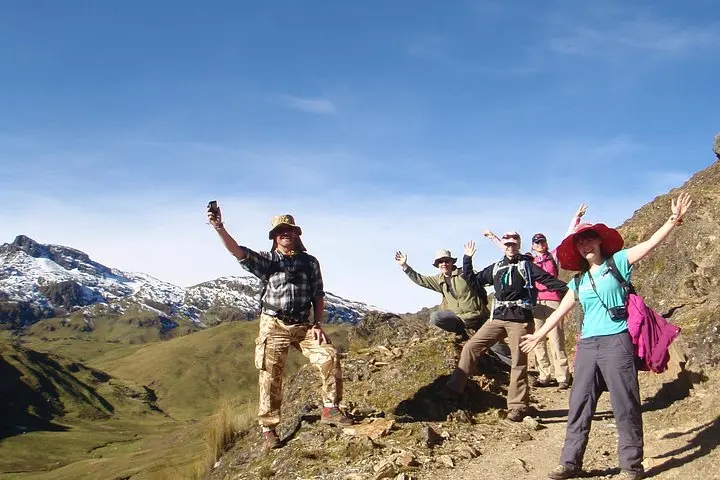
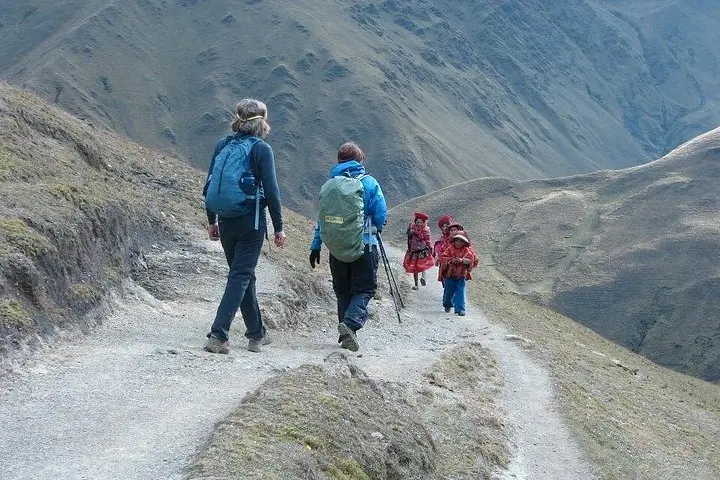
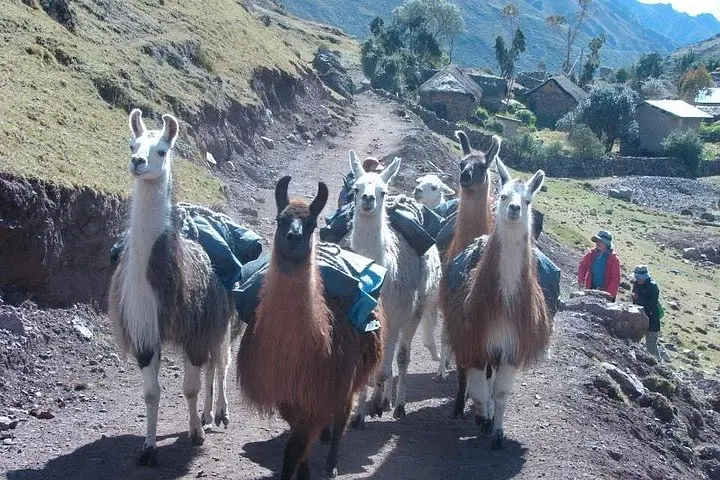
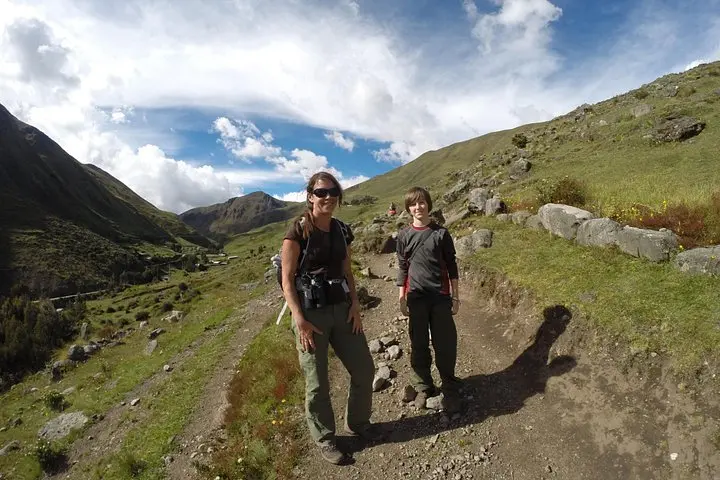
Morning mist lifts off a high valley as you step out of a minivan and into the Andes’ thin air. The Lares trek begins with hot springs and stone houses, then climbs through puna grass and fields where llamas and alpacas graze like slow-moving flocks of cloud. Daylight marks a slow, steady ascent: switchbacks, grassy ridgelines and an upper pass where the wind feels like an insistence you keep moving.
Morning mist lifts off a high valley as you step out of a minivan and into the Andes’ thin air. The Lares trek begins with hot springs and stone houses, then climbs through puna grass and fields where llamas and alpacas graze like slow-moving flocks of cloud. Daylight marks a slow, steady ascent: switchbacks, grassy ridgelines and an upper pass where the wind feels like an insistence you keep moving.
This route threads communities of Quechua farmers whose weaving and dyed ponchos preserve pre‑Columbian patterns; terraces and Inca-built stonework appear at viewpoints near Pumamarka and Ollantaytambo. Geologically the valley is carved by glacial and river action, yielding steep-sided valleys, moraine ridges and the clear basin of Ipsaycocha Lake at roughly 4,280 m. Cultural contact is as much part of the walk as the landscape — shepherds, children returning from school and seasonal crops remind you this is working mountain country.
Practical guidance: expect daily walking of 3–8 hours over mixed dirt tracks and stone paths, with the highest point near 4,600 m at the Ipsaycocha pass. Nights are in tents and one night in Aguas Calientes before an early guided visit to Machu Picchu; trains and ground transfers are included. Hydrate for altitude, carry layered clothing for wind and rain, and bring cash for small village purchases and tips. With a licensed guide and basic conditioning, this trek is an attainable high‑altitude experience that finishes at the Inca citadel.