THE ADVENTURE COLLECTIVE® · Independent discovery and booking for outdoor travel

A long, rewarding day-trip from Las Vegas that pairs the sculpted corridors of Lower Antelope Canyon with the sweeping curvatures of Horseshoe Bend. Expect dramatic light, narrow sandstone passages, and a 14-hour itinerary that requires planning but rewards the patient traveler.
A long, rewarding day-trip from Las Vegas that pairs the sculpted corridors of Lower Antelope Canyon with the sweeping curvatures of Horseshoe Bend. Expect dramatic light, narrow sandstone passages, and a 14-hour itinerary that requires planning but rewards the patient traveler.
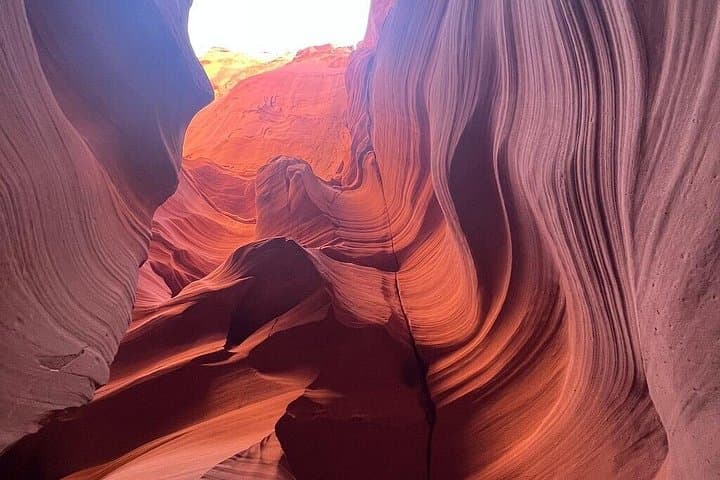
The van hums west out of Las Vegas before dawn, taillights shrinking into the desert. By midmorning the neon gives way to a different kind of geometry: wide, low mesas and a horizon that seems to fold into itself. At Antelope Canyon the group disembarks into a thin ribbon of light — Lower Antelope’s narrow corridor where sandstone walls squeeze to a few feet apart and sunlight pours down like a spotlight, painting the sand with bands of copper and gold.
Verified experiences and guided adventures in the surrounding area.
Operated by Brazuka Tour · Page, Arizona
The van hums west out of Las Vegas before dawn, taillights shrinking into the desert. By midmorning the neon gives way to a different kind of geometry: wide, low mesas and a horizon that seems to fold into itself. At Antelope Canyon the group disembarks into a thin ribbon of light — Lower Antelope’s narrow corridor where sandstone walls squeeze to a few feet apart and sunlight pours down like a spotlight, painting the sand with bands of copper and gold.
Lower Antelope Canyon is a walkable slot carved by flash floods and wind over millions of years. Expect roughly 0.4 miles of winding passage, a few stair sections, and a sandy, uneven floor underfoot. The canyon’s striations record shifts in river and climate; what you see are layers of Jurassic Navajo Sandstone compressed, scoured, and polished into sweeping curves. Your guide—required on Navajo Nation land—reads the canyon like a script, timing stops to catch the hour when shafts of light pierce the ceiling.
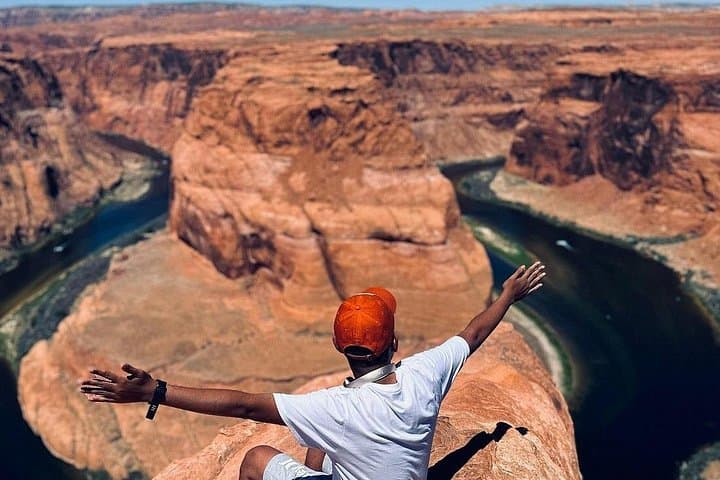
An hour later the road delivers you to Horseshoe Bend. The overlook sits along a short 1.5-mile round-trip trail from the lot, and the view opens onto a dramatic 1,000-foot plunge to the Colorado River as it loops in a near-perfect horseshoe. The same water that polished Antelope’s walls carved this meander, the river cutting deeper and deeper into red rock across geologic time. A quick detour past Glen Canyon Dam offers a modern counterpoint: a 710-foot concrete structure that created Lake Powell and reshaped the region’s hydrology and economy when it was completed in 1966.
Cultural context matters here. These places lie within and adjacent to the Navajo Nation; permits, fees, and guided access are part of respectful visitation. The tour typically runs about 14 hours round-trip from Las Vegas, with long stretches on highway and short walks at each stop, so plan for a long but manageable day.
Practical guidance: start early, carry sun protection and at least 2 liters of water, and wear sturdy shoes for sand and iron-stair sections inside the canyon. Photography is rewarding but crowded—use a fast lens and be ready for contrasting light; in Antelope, midday delivers the dramatic beams, while Horseshoe Bend is at its richest just after sunrise or before sunset. Pay attention to weather: monsoon season and flash floods can close slot canyons with little notice. Finally, respect posted rules on Navajo land: stay with your group, avoid touching fragile sandstone, and budget time to enjoy each viewpoint rather than rush through them.
The tour is approximately 14 hours round-trip from Las Vegas; pickups start early in the morning—confirm exact time with the operator.
Yes—Antelope Canyon is on Navajo Nation land and entry requires a guided tour and admission fees included on organized tours.
The viewpoint trail is about 1.5 miles round-trip with minimal technical difficulty but exposed desert conditions; bring water and sun protection.
Personal photography is allowed; tripod use may be restricted during busy tours—check with your guide about gear policies.
The operator notes the experience is not recommended for pregnant travelers; short children can participate but should be able to navigate stairs and sandy terrain.
Tours may be canceled for safety due to flash flood risk or other unsafe conditions; check cancellation policy for refunds up to 24 hours in advance.
Brazuka Tour operates guided outdoor trips and adventures with an emphasis on safety, stewardship, and memorable experiences.


The van hums west out of Las Vegas before dawn, taillights shrinking into the desert. By midmorning the neon gives way to a different kind of geometry: wide, low mesas and a horizon that seems to fold into itself. At Antelope Canyon the group disembarks into a thin ribbon of light — Lower Antelope’s narrow corridor where sandstone walls squeeze to a few feet apart and sunlight pours down like a spotlight, painting the sand with bands of copper and gold.
The van hums west out of Las Vegas before dawn, taillights shrinking into the desert. By midmorning the neon gives way to a different kind of geometry: wide, low mesas and a horizon that seems to fold into itself. At Antelope Canyon the group disembarks into a thin ribbon of light — Lower Antelope’s narrow corridor where sandstone walls squeeze to a few feet apart and sunlight pours down like a spotlight, painting the sand with bands of copper and gold.
Lower Antelope Canyon is a walkable slot carved by flash floods and wind over millions of years. Expect roughly 0.4 miles of winding passage, a few stair sections, and a sandy, uneven floor underfoot. The canyon’s striations record shifts in river and climate; what you see are layers of Jurassic Navajo Sandstone compressed, scoured, and polished into sweeping curves. Your guide—required on Navajo Nation land—reads the canyon like a script, timing stops to catch the hour when shafts of light pierce the ceiling.
An hour later the road delivers you to Horseshoe Bend. The overlook sits along a short 1.5-mile round-trip trail from the lot, and the view opens onto a dramatic 1,000-foot plunge to the Colorado River as it loops in a near-perfect horseshoe. The same water that polished Antelope’s walls carved this meander, the river cutting deeper and deeper into red rock across geologic time. A quick detour past Glen Canyon Dam offers a modern counterpoint: a 710-foot concrete structure that created Lake Powell and reshaped the region’s hydrology and economy when it was completed in 1966.
Cultural context matters here. These places lie within and adjacent to the Navajo Nation; permits, fees, and guided access are part of respectful visitation. The tour typically runs about 14 hours round-trip from Las Vegas, with long stretches on highway and short walks at each stop, so plan for a long but manageable day.
Practical guidance: start early, carry sun protection and at least 2 liters of water, and wear sturdy shoes for sand and iron-stair sections inside the canyon. Photography is rewarding but crowded—use a fast lens and be ready for contrasting light; in Antelope, midday delivers the dramatic beams, while Horseshoe Bend is at its richest just after sunrise or before sunset. Pay attention to weather: monsoon season and flash floods can close slot canyons with little notice. Finally, respect posted rules on Navajo land: stay with your group, avoid touching fragile sandstone, and budget time to enjoy each viewpoint rather than rush through them.