THE ADVENTURE COLLECTIVE® · Independent discovery and booking for outdoor travel

Ascend to the rim of one of Chile’s most active volcanoes on a private day trek from San Pedro de Atacama. Expect high-altitude terrain, steaming fumaroles and panoramic Atacama views—prepare for sun, wind and thin air.
Ascend to the rim of one of Chile’s most active volcanoes on a private day trek from San Pedro de Atacama. Expect high-altitude terrain, steaming fumaroles and panoramic Atacama views—prepare for sun, wind and thin air.
You step out of the vehicle as the desert air snaps cool against your face and the crater of Láscar looms like an open wound against the sky. Dawn at Laguna Lejía throws the volcano’s silhouette into the water, a hard, clean line that marks where wind and fire have shaped this landscape. Breakfast here is quiet—thin air, bright light, and the distant hiss of fumaroles—before the group moves to the trailhead at roughly 4,900 meters.
Verified experiences and guided adventures in the surrounding area.
Operated by Anclatourchile · San Pedro de Atacama, Antofagasta Region
You step out of the vehicle as the desert air snaps cool against your face and the crater of Láscar looms like an open wound against the sky. Dawn at Laguna Lejía throws the volcano’s silhouette into the water, a hard, clean line that marks where wind and fire have shaped this landscape. Breakfast here is quiet—thin air, bright light, and the distant hiss of fumaroles—before the group moves to the trailhead at roughly 4,900 meters.
Geology fans will note Láscar’s youth: repeated eruptions have left layers of ash, lava flows and fumarolic fields. The route crosses hardened lava fields and loose scree as you gain approximately 500–700 meters to the rim. Culturally, this part of the Atacama has been a corridor for Andean peoples for millennia; petroglyphs and high-altitude archeological sites nearby speak to long-standing human presence in an extreme environment.
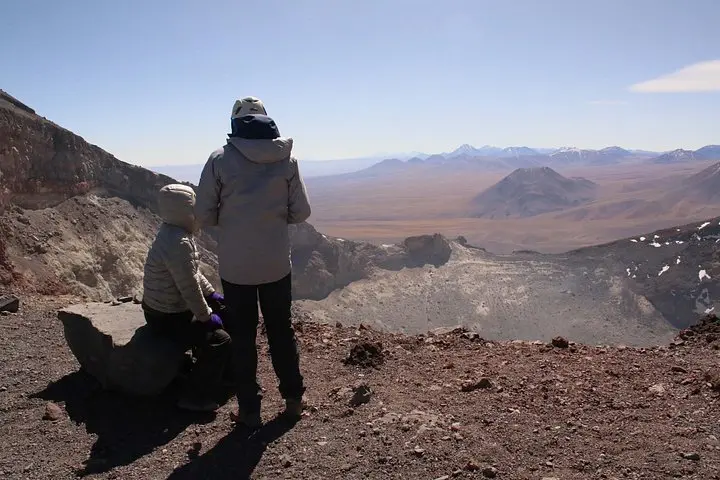
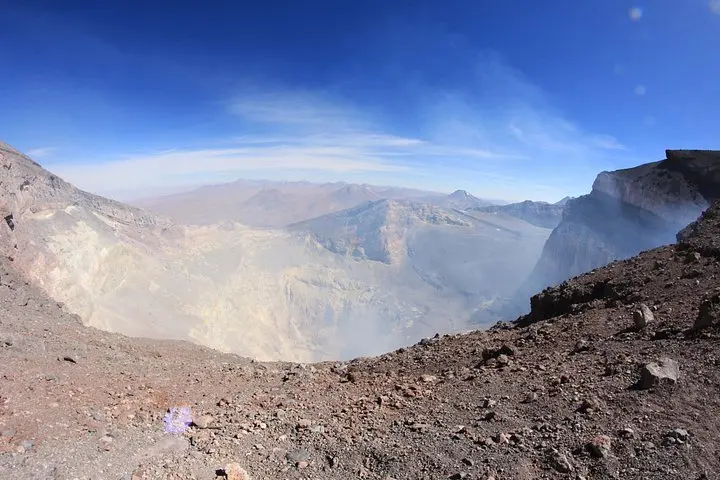
Expect thin air, strong UV and sudden wind; the summit visit often includes steaming vents and sulfurous breath from the earth. The ascent is steady but direct—3–4 hours up at a careful, altitude-aware pace, with time to snack and photograph at the crater edge.
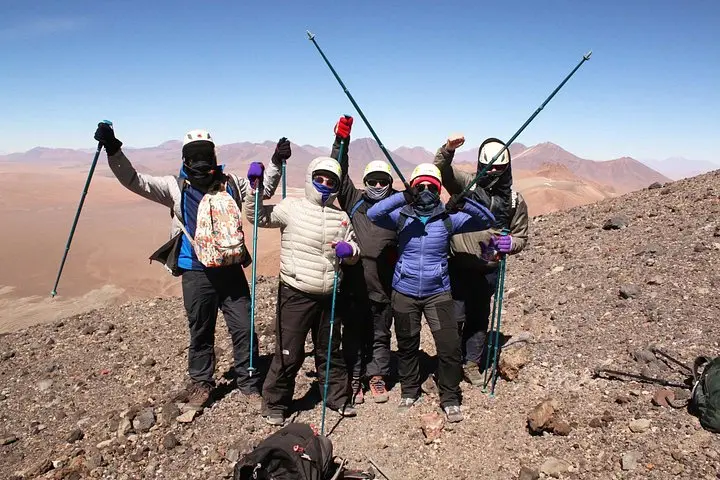
Practical guidance: hydrate and eat before departure, use high-SPF sun protection and layered clothing for large temperature swings, and use trekking poles for balance on scree. If you suffer from cardiovascular issues or are pregnant, this route is not recommended. A private guide handles logistics and navigation; your job is pacing, breathing, and keeping sight of the sky.
The crater area is around 5,500 meters (≈18,000 ft); the organized vehicle stop is usually near 4,900 meters, so expect roughly 500–700 meters of ascent on foot.
No technical climbing skills are required—the route is a strenuous high-altitude hike—but good fitness and acclimatization are essential.
Clear, very sunny conditions are common, but temperatures can swing from below freezing to warm; wind and localized volcanic gases are possible.
This trek is not recommended for those with serious cardiovascular conditions, spinal problems, or pregnancy due to extreme altitude and physical demand.
Anclatourchile operates guided outdoor trips and adventures with an emphasis on safety, stewardship, and memorable experiences.
You step out of the vehicle as the desert air snaps cool against your face and the crater of Láscar looms like an open wound against the sky. Dawn at Laguna Lejía throws the volcano’s silhouette into the water, a hard, clean line that marks where wind and fire have shaped this landscape. Breakfast here is quiet—thin air, bright light, and the distant hiss of fumaroles—before the group moves to the trailhead at roughly 4,900 meters.
You step out of the vehicle as the desert air snaps cool against your face and the crater of Láscar looms like an open wound against the sky. Dawn at Laguna Lejía throws the volcano’s silhouette into the water, a hard, clean line that marks where wind and fire have shaped this landscape. Breakfast here is quiet—thin air, bright light, and the distant hiss of fumaroles—before the group moves to the trailhead at roughly 4,900 meters.
Geology fans will note Láscar’s youth: repeated eruptions have left layers of ash, lava flows and fumarolic fields. The route crosses hardened lava fields and loose scree as you gain approximately 500–700 meters to the rim. Culturally, this part of the Atacama has been a corridor for Andean peoples for millennia; petroglyphs and high-altitude archeological sites nearby speak to long-standing human presence in an extreme environment.
Expect thin air, strong UV and sudden wind; the summit visit often includes steaming vents and sulfurous breath from the earth. The ascent is steady but direct—3–4 hours up at a careful, altitude-aware pace, with time to snack and photograph at the crater edge.
Practical guidance: hydrate and eat before departure, use high-SPF sun protection and layered clothing for large temperature swings, and use trekking poles for balance on scree. If you suffer from cardiovascular issues or are pregnant, this route is not recommended. A private guide handles logistics and navigation; your job is pacing, breathing, and keeping sight of the sky.