THE ADVENTURE COLLECTIVE® · Independent discovery and booking for outdoor travel

Board a stable catamaran from Anaeho'omalu Bay for a 90-minute, naturalist-led whale watch in the Hawaiian Islands Humpback Whale National Marine Sanctuary. Mornings mean calmer seas, a hydrophone for whale song, and a guarantee: see a humpback or return free.
Board a stable catamaran from Anaeho'omalu Bay for a 90-minute, naturalist-led whale watch in the Hawaiian Islands Humpback Whale National Marine Sanctuary. Mornings mean calmer seas, a hydrophone for whale song, and a guarantee: see a humpback or return free.
The catamaran slips off the sand at Anaeho'omalu Bay and the ocean immediately opens: a high, bright morning light, the steady thrum of the engines, and the smell of salt and sunscreen. You stand on deck while marine naturalists scan the horizon; below, a hydrophone feeds whale song through the speaker, making a distant, underwater world suddenly intimate.
Verified experiences and guided adventures in the surrounding area.
Operated by Ocean Sports · Waikoloa, Hawaii
The catamaran slips off the sand at Anaeho'omalu Bay and the ocean immediately opens: a high, bright morning light, the steady thrum of the engines, and the smell of salt and sunscreen. You stand on deck while marine naturalists scan the horizon; below, a hydrophone feeds whale song through the speaker, making a distant, underwater world suddenly intimate.
This stretch of the Kohala Coast sits within the Hawaiian Islands Humpback Whale National Marine Sanctuary, established in 1992 to protect seasonal visitors that travel thousands of miles to breed and calve here each winter. The shoreline itself is lava-formed—black flows smoothed by coral and sea—feeding shallow reef systems where spinner dolphins and green turtles feed alongside reef fish.
Onboard, interpretation is as central as the view: crew explain whale behaviors, local Hawaiian names and cultural respect for the kai (sea), and the practical rules that keep encounters safe. The operation’s guarantee—see a humpback or ride again free—stems from decades of local experience reading migration patterns.
Practical side: the cruise is 90 minutes on a stable catamaran, launching from the A-Bay beach hut in Waikoloa. Mornings offer calmer seas and cleaner photography light; dress in layers for wind, bring seasickness remedies if you’re prone, and keep a pair of binoculars handy. The trip includes snacks and beverages, but bring water and sun protection. Expect interpretive narration, occasional close whale surfacing (approach limits observed), and the odd playful dolphin escort—anchoring an easy, high-reward morning on Hawaii’s winter sea.
Humpback season on the Big Island runs primarily December through April, with peak sightings often between January and March.
The cruise guarantees a humpback sighting—if you don’t see one, the operator offers a complimentary future cruise under their terms.
Yes—infants must sit on an adult’s lap; the trip is stroller-accessible from the beach, and children must be accompanied by an adult.
Tours may be canceled for bad weather; the operator refunds or reschedules bookings per their 24-hour cancellation policy and safety protocols.
Ocean Sports operates guided outdoor trips and adventures with an emphasis on safety, stewardship, and memorable experiences.
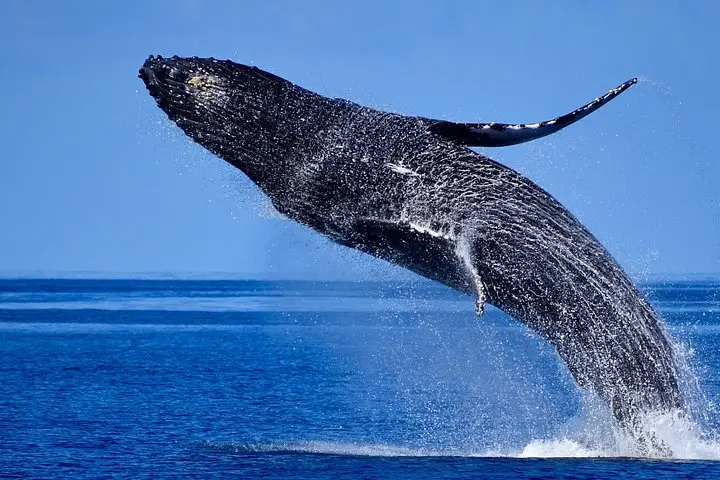
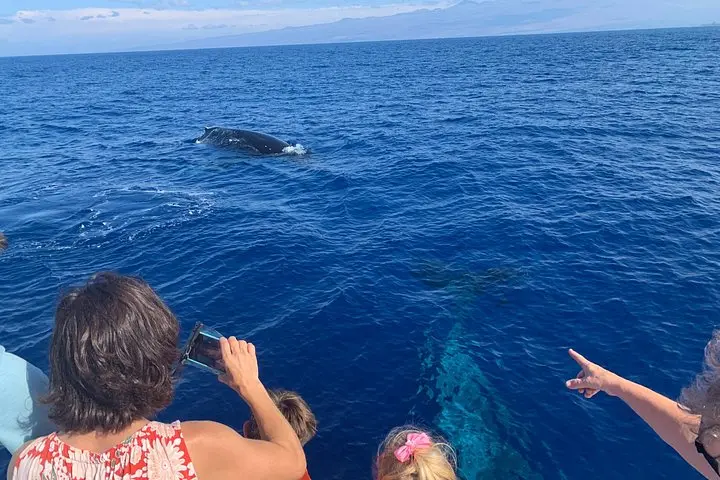
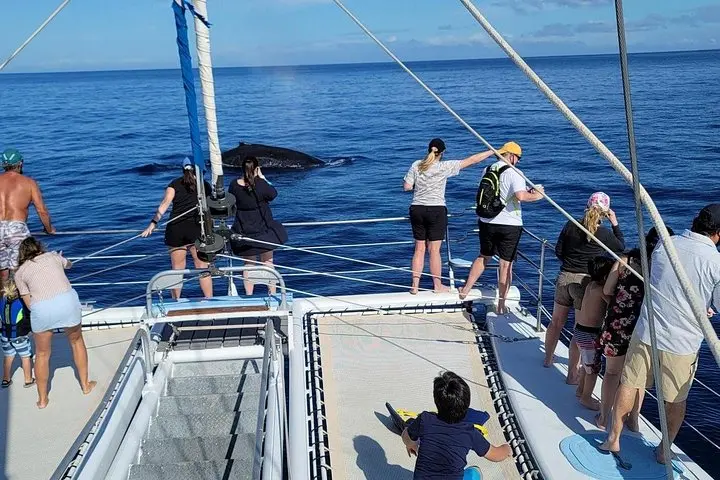
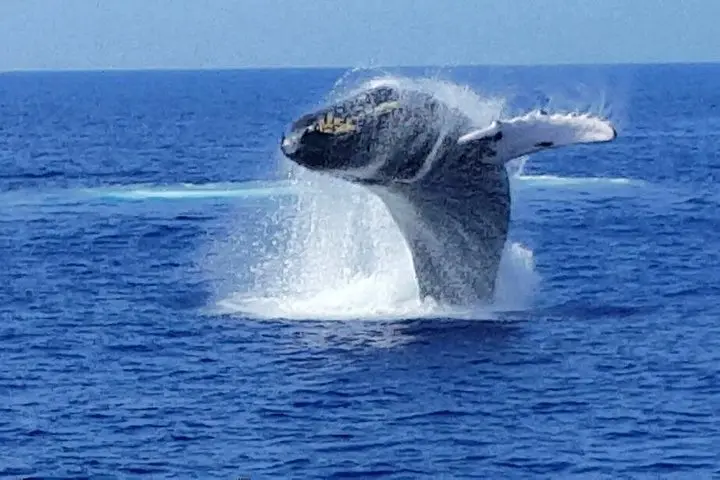
The catamaran slips off the sand at Anaeho'omalu Bay and the ocean immediately opens: a high, bright morning light, the steady thrum of the engines, and the smell of salt and sunscreen. You stand on deck while marine naturalists scan the horizon; below, a hydrophone feeds whale song through the speaker, making a distant, underwater world suddenly intimate.
The catamaran slips off the sand at Anaeho'omalu Bay and the ocean immediately opens: a high, bright morning light, the steady thrum of the engines, and the smell of salt and sunscreen. You stand on deck while marine naturalists scan the horizon; below, a hydrophone feeds whale song through the speaker, making a distant, underwater world suddenly intimate.
This stretch of the Kohala Coast sits within the Hawaiian Islands Humpback Whale National Marine Sanctuary, established in 1992 to protect seasonal visitors that travel thousands of miles to breed and calve here each winter. The shoreline itself is lava-formed—black flows smoothed by coral and sea—feeding shallow reef systems where spinner dolphins and green turtles feed alongside reef fish.
Onboard, interpretation is as central as the view: crew explain whale behaviors, local Hawaiian names and cultural respect for the kai (sea), and the practical rules that keep encounters safe. The operation’s guarantee—see a humpback or ride again free—stems from decades of local experience reading migration patterns.
Practical side: the cruise is 90 minutes on a stable catamaran, launching from the A-Bay beach hut in Waikoloa. Mornings offer calmer seas and cleaner photography light; dress in layers for wind, bring seasickness remedies if you’re prone, and keep a pair of binoculars handy. The trip includes snacks and beverages, but bring water and sun protection. Expect interpretive narration, occasional close whale surfacing (approach limits observed), and the odd playful dolphin escort—anchoring an easy, high-reward morning on Hawaii’s winter sea.