THE ADVENTURE COLLECTIVE® · Independent discovery and booking for outdoor travel

Explore Raufarhólshellir, one of Iceland’s largest lava tubes, on a guided hour-long caving tour from Reykjavík. Learn volcanic geology up close while moving through sculpted basalt passages and winter ice pockets.
Explore Raufarhólshellir, one of Iceland’s largest lava tubes, on a guided hour-long caving tour from Reykjavík. Learn volcanic geology up close while moving through sculpted basalt passages and winter ice pockets.
A cold gust from the tunnel mouth pushes against your jacket as you crouch under a low rim of black glassy basalt. Headlamp cones pick out rippled lava flow ceilings and fractured pillars; the world outside the cave becomes a distant wash of daylight and wind. This is Raufarhólshellir, one of Iceland’s largest accessible lava tubes, where volcanic force has left chambers scored with tumbling rope-like pahoehoe and pockets of winter ice.
Verified experiences and guided adventures in the surrounding area.
Operated by Arctic Adventures · Reykjavík, Capital Region
A cold gust from the tunnel mouth pushes against your jacket as you crouch under a low rim of black glassy basalt. Headlamp cones pick out rippled lava flow ceilings and fractured pillars; the world outside the cave becomes a distant wash of daylight and wind. This is Raufarhólshellir, one of Iceland’s largest accessible lava tubes, where volcanic force has left chambers scored with tumbling rope-like pahoehoe and pockets of winter ice.
Formed during Holocene eruptions that shaped the Reykjanes Peninsula, Raufarhólshellir offers a direct look at lava dynamics — collapsed skylights, flow banding, and sinuous tubes carved by molten rock. The cave sits within a landscape long used by Icelanders for sheep routes and geothermal foraging; the Reykjanes area’s Norse and fishing heritage can still be read in nearby settlements and place names.
On a guided trip you’ll move through uneven terrain, ducking low stretches and stepping across flow ridges while your guide explains geology and safety. Expect cool, damp air, 1–4°C in winter, slightly warmer in summer, with slick rock underfoot in places.
Practical guidance: wear ankle-supporting boots, layered insulated clothing, and bring water — phone signal is intermittent. Tours last about an hour from the meeting point, include helmet and headlamp, and in winter the operator supplies crampons. The experience is compact but immersive: ideal for travelers based in Reykjavík looking to pair a short geology-rich excursion with a longer exploration of southern Iceland.
The guided cave portion lasts about 60 minutes; total booking time includes check-in at the meeting point in Reykjavík.
Many operators allow children; check age restrictions when booking and ensure kids can crouch and walk on uneven ground.
Guides provide helmets, headlamps and, in winter, crampons; bring your own sturdy boots and layers.
The cave has low sections and uneven terrain; it may be difficult for those with limited mobility—check with the operator for specific accessibility options.
Arctic Adventures operates guided outdoor trips and adventures with an emphasis on safety, stewardship, and memorable experiences.
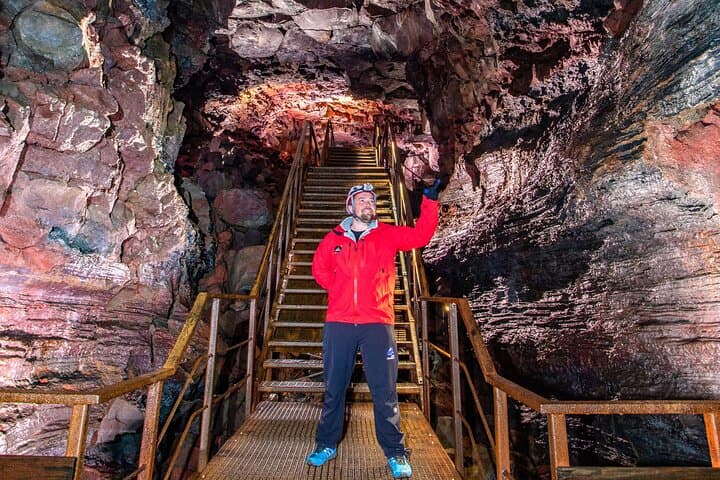
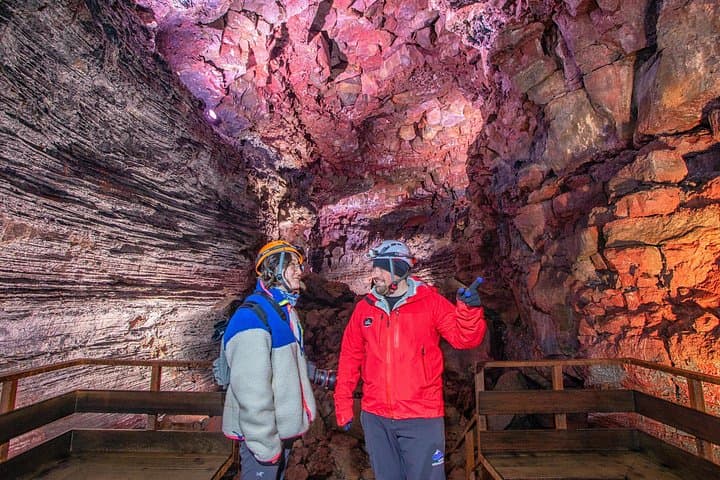
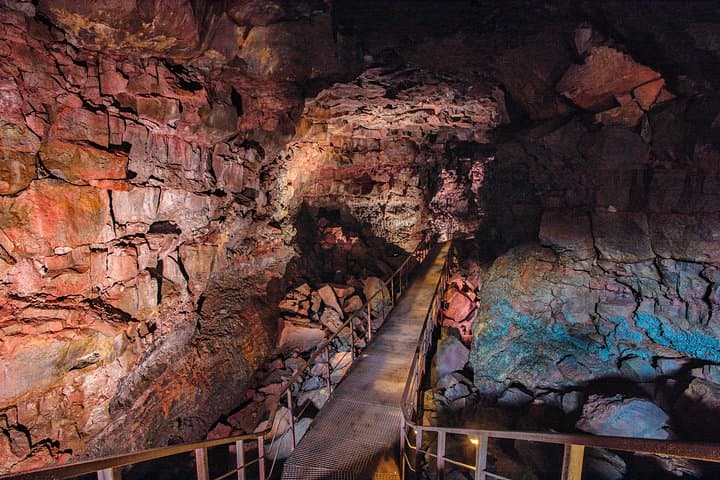
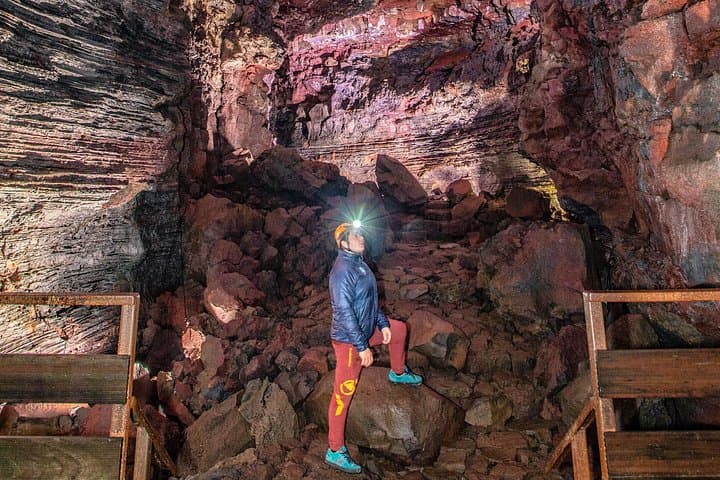
A cold gust from the tunnel mouth pushes against your jacket as you crouch under a low rim of black glassy basalt. Headlamp cones pick out rippled lava flow ceilings and fractured pillars; the world outside the cave becomes a distant wash of daylight and wind. This is Raufarhólshellir, one of Iceland’s largest accessible lava tubes, where volcanic force has left chambers scored with tumbling rope-like pahoehoe and pockets of winter ice.
A cold gust from the tunnel mouth pushes against your jacket as you crouch under a low rim of black glassy basalt. Headlamp cones pick out rippled lava flow ceilings and fractured pillars; the world outside the cave becomes a distant wash of daylight and wind. This is Raufarhólshellir, one of Iceland’s largest accessible lava tubes, where volcanic force has left chambers scored with tumbling rope-like pahoehoe and pockets of winter ice.
Formed during Holocene eruptions that shaped the Reykjanes Peninsula, Raufarhólshellir offers a direct look at lava dynamics — collapsed skylights, flow banding, and sinuous tubes carved by molten rock. The cave sits within a landscape long used by Icelanders for sheep routes and geothermal foraging; the Reykjanes area’s Norse and fishing heritage can still be read in nearby settlements and place names.
On a guided trip you’ll move through uneven terrain, ducking low stretches and stepping across flow ridges while your guide explains geology and safety. Expect cool, damp air, 1–4°C in winter, slightly warmer in summer, with slick rock underfoot in places.
Practical guidance: wear ankle-supporting boots, layered insulated clothing, and bring water — phone signal is intermittent. Tours last about an hour from the meeting point, include helmet and headlamp, and in winter the operator supplies crampons. The experience is compact but immersive: ideal for travelers based in Reykjavík looking to pair a short geology-rich excursion with a longer exploration of southern Iceland.