THE ADVENTURE COLLECTIVE® · Independent discovery and booking for outdoor travel

Cross a 40‑meter waterfall, peer into the turquoise throat of the Verdon, then trade canyon walls for waves of lavender—this full‑day guided loop pairs geological drama with Provençal fragrance. Practical stops, artisan shops in Moustiers‑Sainte‑Marie, and late‑June blooms make it a compact, sensory day trip.
Cross a 40‑meter waterfall, peer into the turquoise throat of the Verdon, then trade canyon walls for waves of lavender—this full‑day guided loop pairs geological drama with Provençal fragrance. Practical stops, artisan shops in Moustiers‑Sainte‑Marie, and late‑June blooms make it a compact, sensory day trip.
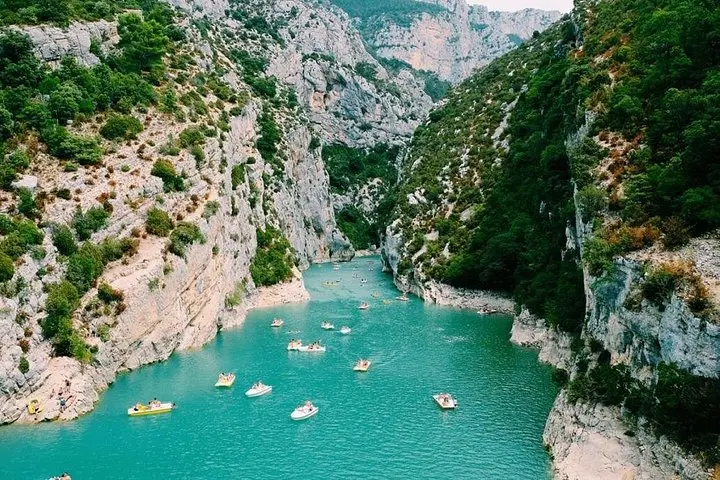
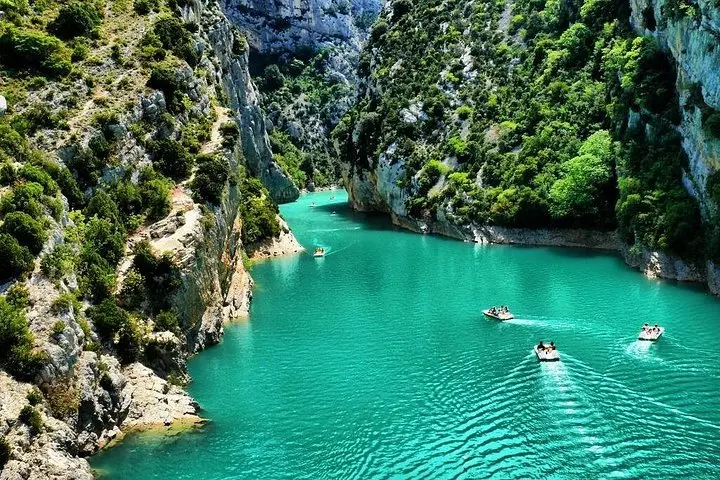
The tour begins with a sudden drop in the road and the sound of water tightening into a roar. Guests lean toward the coach windows as the Gorge du Loup appears—a 40‑meter waterfall plunging into a shadowed pool while the Verdon downstream flashes the improbable turquoise the region is famous for.
Verified experiences and guided adventures in the surrounding area.
Operated by TRUST TOUR · Moustiers-Sainte-Marie, Provence-Alpes-Côte d'Azur
The tour begins with a sudden drop in the road and the sound of water tightening into a roar. Guests lean toward the coach windows as the Gorge du Loup appears—a 40‑meter waterfall plunging into a shadowed pool while the Verdon downstream flashes the improbable turquoise the region is famous for.
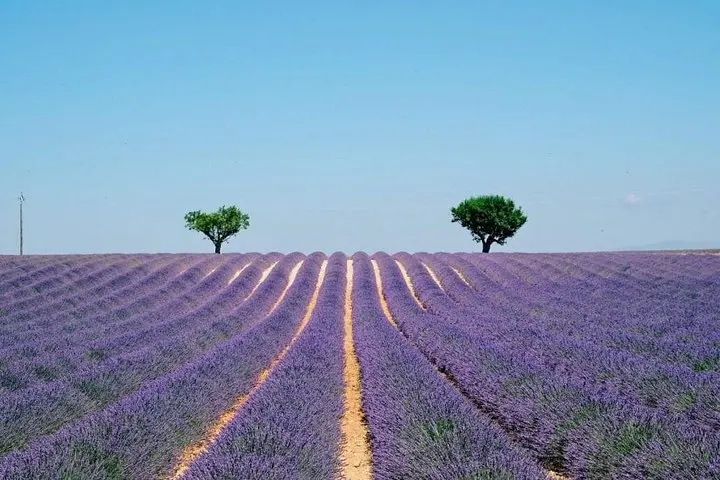
From that first pulse of water the day unfurls in contrasts: sheer limestone walls that seem to dare you to look away, and distant fields of lavender that push forward in neat purple waves and perfume the air. A stop at La Castellane offers a moment to measure the canyon’s scale—rock faces folded by time and weather, a river that has carved its line through limestone for millions of years. Later, the village of Moustiers‑Sainte‑Marie perches under its cliff, a compact network of narrow streets where faience workshops keep a centuries‑old pottery tradition alive.
Geology and human craft run together here. The Verdon Gorge is a calcareous canyon cut mostly during the Pleistocene, its walls scored by ice, water, and tectonic lift. Lavender arrived later in the cultural story—first as a wild herb, then as a regional crop cultivated for fragrance and oil; by the 19th and 20th centuries the Valensole and Plateau de Valensole areas anchored a lavender economy that still draws seasonal harvesters.
Practical notes: this full‑day shared tour runs about 8–9 hours and is paced around several short stops—lookouts, artisan shops in Moustiers, and lavender viewpoints. Travelers should expect mostly road travel with short walks on paved and unpaved surfaces; the supplier rates the fitness level as moderate. Carry water, sun protection, and camera gear; July brings peak lavender bloom but also peak crowds.
Local insights that matter: buy lavender products from small producers rather than roadside mass stalls to support the region’s economy, and resist stepping into fields—harvesters rely on undisturbed rows. Wildlife in the gorge is shy but present—griffon vultures wheel high and you may spot chamois on distant ledges. The area sits inside and adjacent to the Parc naturel régional du Verdon, where trail maintenance and visitor rules protect fragile habitats.
Timing is everything: arrive early in Moustiers for coffee and a quick stroll, book the tour in mid‑June to mid‑July for color, and put the camera away sometimes—this is a day built for looking, not just photographing. With a bit of planning, the run from cliff vistas to lavender plains delivers a precise, sensory snapshot of Provence: raw rock, a brazen river, and fields that smell like summer itself.
About 8–9 hours (480–540 minutes) including transit, multiple short stops, and free time in Moustiers‑Sainte‑Marie.
No—there’s free time in Moustiers to buy lunch at cafés or bring a packed meal.
Peak bloom typically runs mid‑June through mid‑July, but timing varies with elevation and weather.
Supplier offers pickup from many hotels and meeting point options—confirm your pickup location at booking.
Some parts of the route are accessible and the supplier notes stroller access, but uneven surfaces and short walks may limit wheelchair mobility.
Service animals are permitted; check with the operator beforehand for specifics.
TRUST TOUR operates guided outdoor trips and adventures with an emphasis on safety, stewardship, and memorable experiences.
The tour begins with a sudden drop in the road and the sound of water tightening into a roar. Guests lean toward the coach windows as the Gorge du Loup appears—a 40‑meter waterfall plunging into a shadowed pool while the Verdon downstream flashes the improbable turquoise the region is famous for.
The tour begins with a sudden drop in the road and the sound of water tightening into a roar. Guests lean toward the coach windows as the Gorge du Loup appears—a 40‑meter waterfall plunging into a shadowed pool while the Verdon downstream flashes the improbable turquoise the region is famous for.
From that first pulse of water the day unfurls in contrasts: sheer limestone walls that seem to dare you to look away, and distant fields of lavender that push forward in neat purple waves and perfume the air. A stop at La Castellane offers a moment to measure the canyon’s scale—rock faces folded by time and weather, a river that has carved its line through limestone for millions of years. Later, the village of Moustiers‑Sainte‑Marie perches under its cliff, a compact network of narrow streets where faience workshops keep a centuries‑old pottery tradition alive.
Geology and human craft run together here. The Verdon Gorge is a calcareous canyon cut mostly during the Pleistocene, its walls scored by ice, water, and tectonic lift. Lavender arrived later in the cultural story—first as a wild herb, then as a regional crop cultivated for fragrance and oil; by the 19th and 20th centuries the Valensole and Plateau de Valensole areas anchored a lavender economy that still draws seasonal harvesters.
Practical notes: this full‑day shared tour runs about 8–9 hours and is paced around several short stops—lookouts, artisan shops in Moustiers, and lavender viewpoints. Travelers should expect mostly road travel with short walks on paved and unpaved surfaces; the supplier rates the fitness level as moderate. Carry water, sun protection, and camera gear; July brings peak lavender bloom but also peak crowds.
Local insights that matter: buy lavender products from small producers rather than roadside mass stalls to support the region’s economy, and resist stepping into fields—harvesters rely on undisturbed rows. Wildlife in the gorge is shy but present—griffon vultures wheel high and you may spot chamois on distant ledges. The area sits inside and adjacent to the Parc naturel régional du Verdon, where trail maintenance and visitor rules protect fragile habitats.
Timing is everything: arrive early in Moustiers for coffee and a quick stroll, book the tour in mid‑June to mid‑July for color, and put the camera away sometimes—this is a day built for looking, not just photographing. With a bit of planning, the run from cliff vistas to lavender plains delivers a precise, sensory snapshot of Provence: raw rock, a brazen river, and fields that smell like summer itself.