THE ADVENTURE COLLECTIVE® · Independent discovery and booking for outdoor travel

Learn traditional Parian dances in Marpissa village with local instructors, a welcome tasting of local spirit, and a take-home guide to each dance. This one-hour, low-impact class blends practical instruction with cultural context in a newly constructed, air-conditioned center.
Learn traditional Parian dances in Marpissa village with local instructors, a welcome tasting of local spirit, and a take-home guide to each dance. This one-hour, low-impact class blends practical instruction with cultural context in a newly constructed, air-conditioned center.
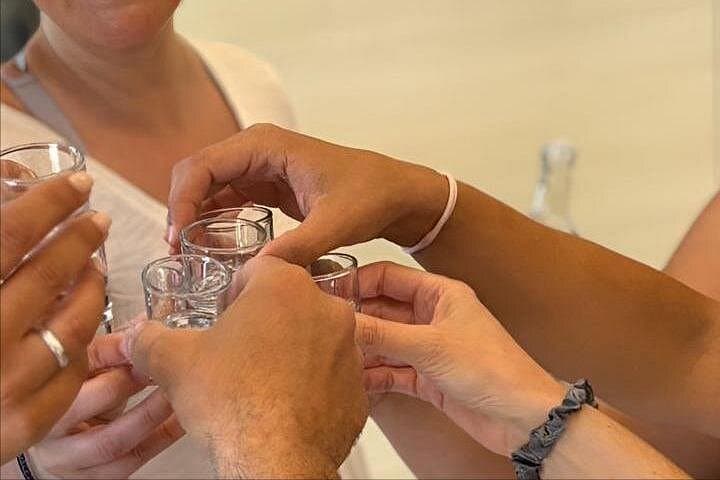
You step off the narrow lane into a sun-warmed square; whitewashed houses shade the edges while an open, purpose-built hall hums with bouzouki and clapping. The instructor greets you in Greek and English, pours a small shot of local spirit, and the room shifts from tourist curiosity to communal rhythm.
Verified experiences and guided adventures in the surrounding area.
Operated by In Balance Paros · Marpissa, South Aegean
You step off the narrow lane into a sun-warmed square; whitewashed houses shade the edges while an open, purpose-built hall hums with bouzouki and clapping. The instructor greets you in Greek and English, pours a small shot of local spirit, and the room shifts from tourist curiosity to communal rhythm.
Paros has long been defined by marble quarries and island life where music stitched communities together. Folk dances here evolved from agrarian celebrations and seafaring send-offs—each step encodes a practical beat for harvest, courtship or festivity. The class sits in Marpissa, a village with stone alleys and folk architecture that reflect Cycladic geology: compact, wind-scoured forms and sun-baked limestone that keeps the village cool.
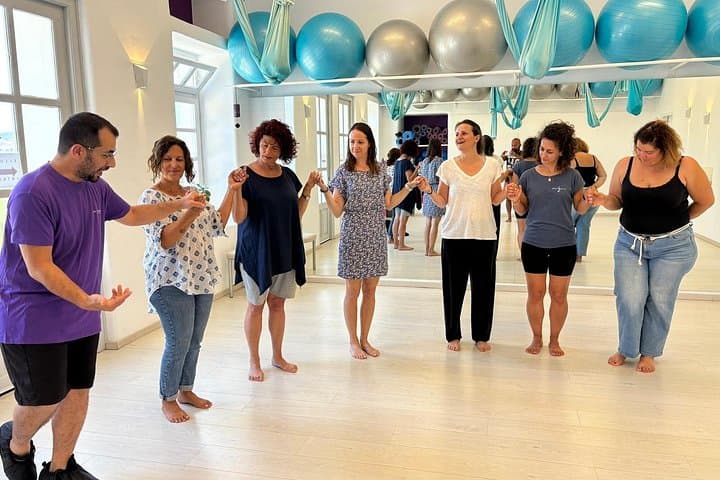
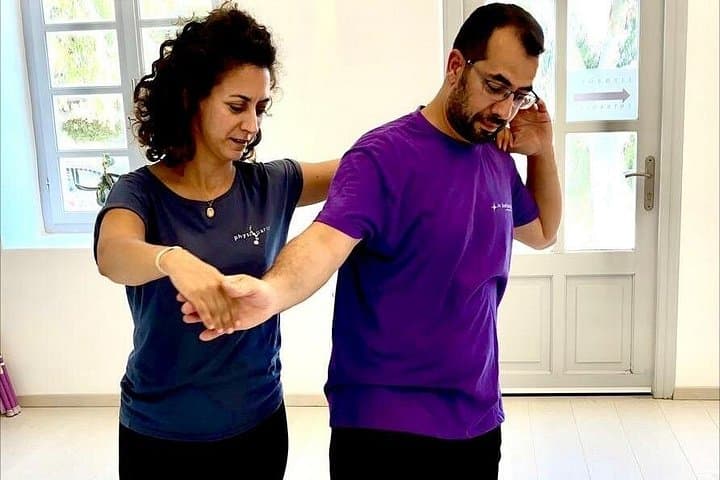
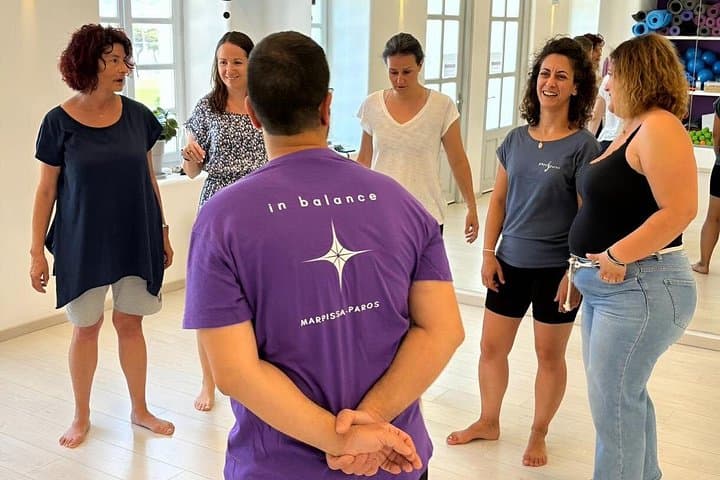
Expect hands-on teaching: basic steps, circle formations, and common cultural cues explained with history. Instructors use repetition and call-and-response, then let dancers try sequences at increasing tempo. The welcome sip of raki (or local non-alcoholic alternative) and a short printed history of the dances are part of the experience, so you leave with context as well as muscle memory.
Practical notes: this is a one-hour, low-impact session suitable for most fitness levels but not recommended for those with serious cardiovascular limits. Wear flat, supportive shoes and breathable clothing, hydrate beforehand, and arrive 10–15 minutes early to find parking or a bus stop. Classes accept solo travelers and groups and run year-round—book in advance during high season to secure a spot.
No—classes are designed for beginners and progress at a gentle pace with repetition and demonstrations.
Instructors typically teach in Greek and English; ask about other languages when booking.
The activity suits most ages, but it’s not recommended for people with serious heart conditions; contact the operator for specific accessibility needs.
All sales are final—bookings are non-refundable, so confirm schedules before purchasing.
In Balance Paros operates guided outdoor trips and adventures with an emphasis on safety, stewardship, and memorable experiences.
You step off the narrow lane into a sun-warmed square; whitewashed houses shade the edges while an open, purpose-built hall hums with bouzouki and clapping. The instructor greets you in Greek and English, pours a small shot of local spirit, and the room shifts from tourist curiosity to communal rhythm.
You step off the narrow lane into a sun-warmed square; whitewashed houses shade the edges while an open, purpose-built hall hums with bouzouki and clapping. The instructor greets you in Greek and English, pours a small shot of local spirit, and the room shifts from tourist curiosity to communal rhythm.
Paros has long been defined by marble quarries and island life where music stitched communities together. Folk dances here evolved from agrarian celebrations and seafaring send-offs—each step encodes a practical beat for harvest, courtship or festivity. The class sits in Marpissa, a village with stone alleys and folk architecture that reflect Cycladic geology: compact, wind-scoured forms and sun-baked limestone that keeps the village cool.
Expect hands-on teaching: basic steps, circle formations, and common cultural cues explained with history. Instructors use repetition and call-and-response, then let dancers try sequences at increasing tempo. The welcome sip of raki (or local non-alcoholic alternative) and a short printed history of the dances are part of the experience, so you leave with context as well as muscle memory.
Practical notes: this is a one-hour, low-impact session suitable for most fitness levels but not recommended for those with serious cardiovascular limits. Wear flat, supportive shoes and breathable clothing, hydrate beforehand, and arrive 10–15 minutes early to find parking or a bus stop. Classes accept solo travelers and groups and run year-round—book in advance during high season to secure a spot.