THE ADVENTURE COLLECTIVE® · Independent discovery and booking for outdoor travel
A practical five-day kiteboarding course at St. Joris Bay teaches kite control, self-rescue, and board riding in learner-friendly shallow water. Steady trade winds and hands-on instruction make this ideal for beginners ready to build independent skills.
A practical five-day kiteboarding course at St. Joris Bay teaches kite control, self-rescue, and board riding in learner-friendly shallow water. Steady trade winds and hands-on instruction make this ideal for beginners ready to build independent skills.
Trade winds braid across St. Joris Bay, nudging turquoise flats into a chessboard of small ripples while instructors call signals through an intercom. You find your kite on the sand, the bar in your hands, and a shallow lagoon that invites early mistakes and quick recoveries — the kind of place where wind feels like a willing teacher.
Verified experiences and guided adventures in the surrounding area.
Operated by Awa Salu Kiteboarding Curacao · Willemstad, Curaçao
Trade winds braid across St. Joris Bay, nudging turquoise flats into a chessboard of small ripples while instructors call signals through an intercom. You find your kite on the sand, the bar in your hands, and a shallow lagoon that invites early mistakes and quick recoveries — the kind of place where wind feels like a willing teacher.
Curaçao’s coastline is a product of coral growth on ancient volcanic foundations; the reefs that ring portions of the island slow swell and create learner-friendly shallows. The bay sits just outside Willemstad’s urban sweep, where fishing and small-scale salt operations shaped local coastal life long before tourism. Kite culture here is social: local riders practice tricks within sight of beginners, and Dutch-Caribbean hospitality keeps instruction pragmatic and safety-focused.
This program is a progressive five-day course (two hours per lesson) that starts with kite control and self-rescue, then moves to board work and safe launching/landing on land. Expect shallow sandbars, occasional reef edges, and steady cross-onshore trade winds — conditions suited to building confidence quickly. Instructors provide current-season kite gear, rash guards, water shoes, an intercom radio, and sunscreen; you must be able to swim and have moderate fitness.
Practical guidance: arrive hydrated, apply reef-safe sunscreen, and wear snug water shoes for reef sections. Plan lessons mid-morning or late afternoon for stable wind and fewer boats. Listen close during self-rescue drills — those techniques extend every minute you can ride independently. Leave no gear or litter on the beach and give reefs space: the bay rewards patience with consistent progress and long, controlled runs.
No — the program is designed for beginners; instruction begins with kite control and self-rescue before moving to the board.
Travelers must be able to swim and have moderate fitness; not recommended for pregnant guests, those with serious heart or spinal conditions.
The course runs five lessons of approximately two hours each, focused on progressive skill building.
Lessons may be canceled for unsafe wind or weather; operators typically allow full refunds if canceled at least 24 hours prior or reschedule based on conditions.
Awa Salu Kiteboarding Curacao operates guided outdoor trips and adventures with an emphasis on safety, stewardship, and memorable experiences.
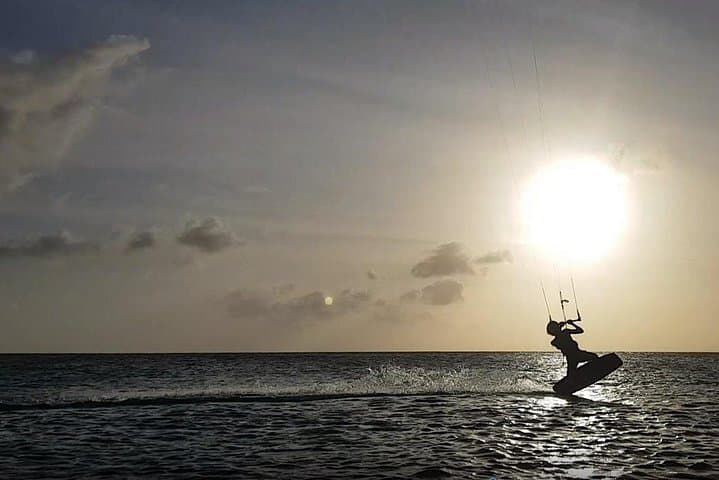
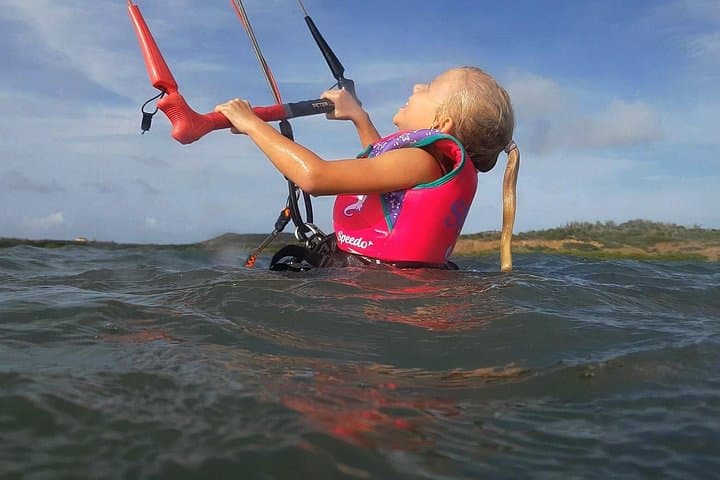
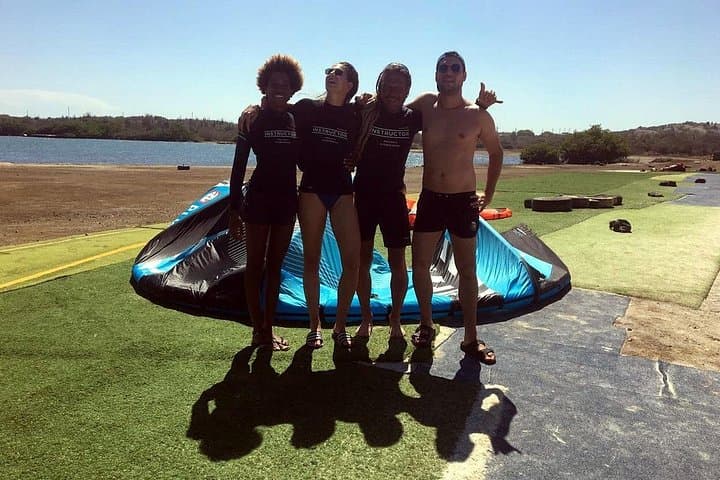
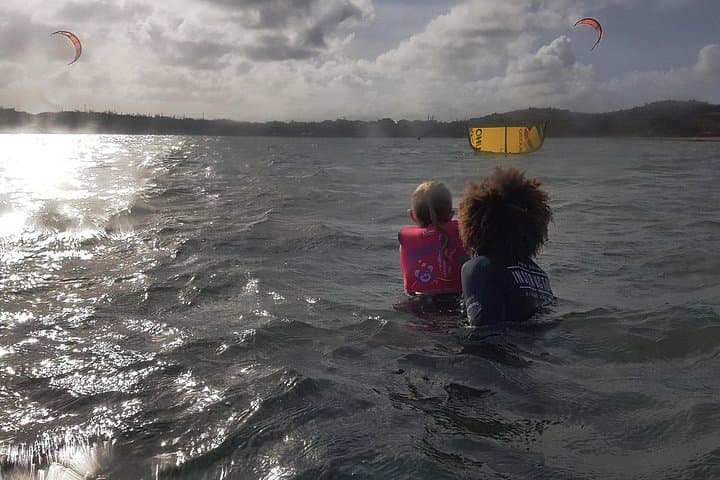
Trade winds braid across St. Joris Bay, nudging turquoise flats into a chessboard of small ripples while instructors call signals through an intercom. You find your kite on the sand, the bar in your hands, and a shallow lagoon that invites early mistakes and quick recoveries — the kind of place where wind feels like a willing teacher.
Trade winds braid across St. Joris Bay, nudging turquoise flats into a chessboard of small ripples while instructors call signals through an intercom. You find your kite on the sand, the bar in your hands, and a shallow lagoon that invites early mistakes and quick recoveries — the kind of place where wind feels like a willing teacher.
Curaçao’s coastline is a product of coral growth on ancient volcanic foundations; the reefs that ring portions of the island slow swell and create learner-friendly shallows. The bay sits just outside Willemstad’s urban sweep, where fishing and small-scale salt operations shaped local coastal life long before tourism. Kite culture here is social: local riders practice tricks within sight of beginners, and Dutch-Caribbean hospitality keeps instruction pragmatic and safety-focused.
This program is a progressive five-day course (two hours per lesson) that starts with kite control and self-rescue, then moves to board work and safe launching/landing on land. Expect shallow sandbars, occasional reef edges, and steady cross-onshore trade winds — conditions suited to building confidence quickly. Instructors provide current-season kite gear, rash guards, water shoes, an intercom radio, and sunscreen; you must be able to swim and have moderate fitness.
Practical guidance: arrive hydrated, apply reef-safe sunscreen, and wear snug water shoes for reef sections. Plan lessons mid-morning or late afternoon for stable wind and fewer boats. Listen close during self-rescue drills — those techniques extend every minute you can ride independently. Leave no gear or litter on the beach and give reefs space: the bay rewards patience with consistent progress and long, controlled runs.
