THE ADVENTURE COLLECTIVE® · Independent discovery and booking for outdoor travel

Learn to surf Kaanapali Beach in a focused 90-minute private lesson designed for two students and one instructor. Ideal for first-timers, the session includes a land safety briefing, guided water practice, and equipment.
Learn to surf Kaanapali Beach in a focused 90-minute private lesson designed for two students and one instructor. Ideal for first-timers, the session includes a land safety briefing, guided water practice, and equipment.
The Pacific rolls in slow and wide at Kaanapali, silvering in the morning sun as instructors set soft foam boards on the sand and call students through warmup drills.
Verified experiences and guided adventures in the surrounding area.
Operated by Sea Maui Surf · Lahaina, Hawaii
The Pacific rolls in slow and wide at Kaanapali, silvering in the morning sun as instructors set soft foam boards on the sand and call students through warmup drills.
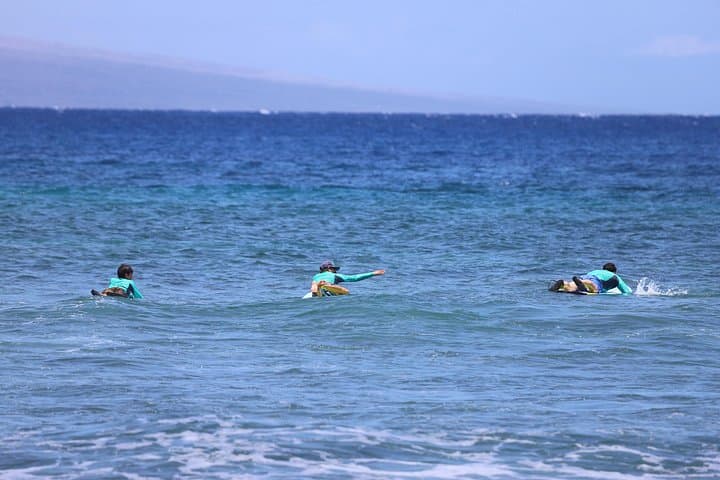
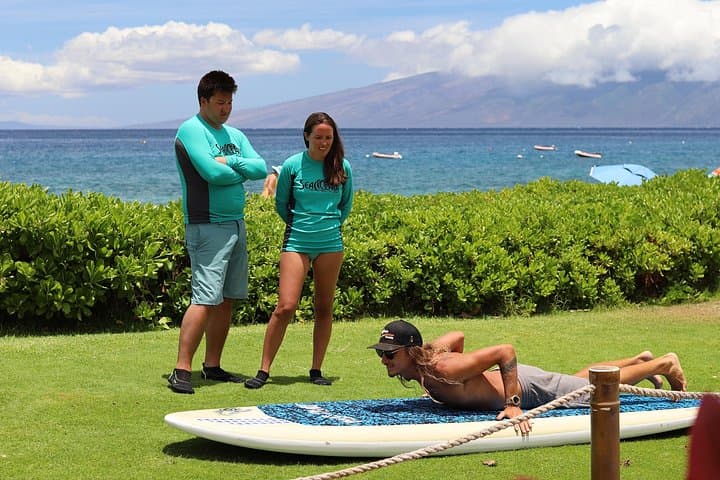
A lesson begins on land — how current and wind shape a wave, where the takeoff zone sits, and basic pop-up mechanics — then moves into waist-deep water where the instructor keeps the session focused on two students at a time. That intimacy speeds learning: you get more one-on-one feedback, quicker corrective adjustments and a safer environment for a first stand-up.
Kaanapali’s shoreline has a sandbar-protected reef system formed from ancient lava flows and coral growth; historically the area was an important fishing and canoe landing zone for the people of Maui. Today Whalers Village marks the western edge of a tourist corridor, but mornings still belong to the ocean and the native birds that tip the skyline.
Practical details are simple: the private 90-minute lesson covers ocean-safety, board handling, and repeated attempts at standing with instructor assistance. Expect gentle beach breaks and variable wind — mornings are typically calmer.
Bring a reef-safe sunscreen, a snug swimsuit, and hydrate beforehand; instructors provide rashguards, boards and reef booties. Non-swimmers should be honest about comfort in shoulder-deep water; the best progress happens with steady balance practice and patience. For couples or parent-child pairs, this semi-private format is efficient, safe and built around playful repetition that helps you catch your first riding wave.
No — these lessons are tailored for beginners; instructors start on land with safety and technique before entering the water.
A snug swimsuit or boardshorts and a rashguard are best; instructors provide boards, rashguards and reef booties when needed.
Yes — parent-child pairs are common, but bookings require age and weight details to choose appropriate boards and ensure safety.
Lessons are cancellable for a full refund at least 24 hours prior; operators may cancel if conditions are unsafe and offer alternatives or refunds.
Sea Maui Surf operates guided outdoor trips and adventures with an emphasis on safety, stewardship, and memorable experiences.
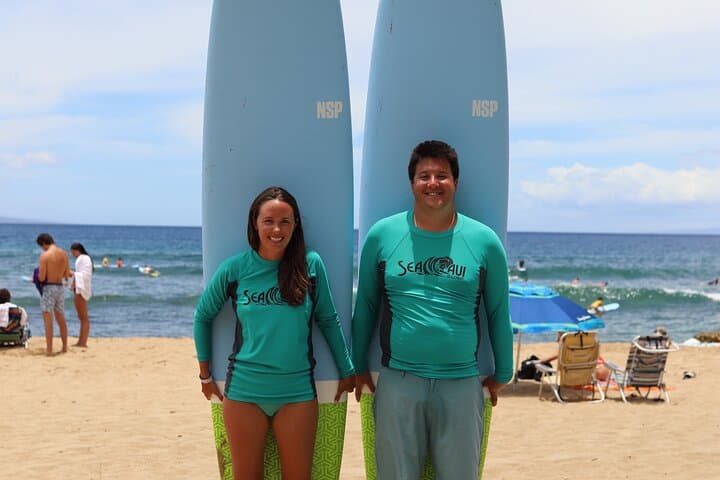
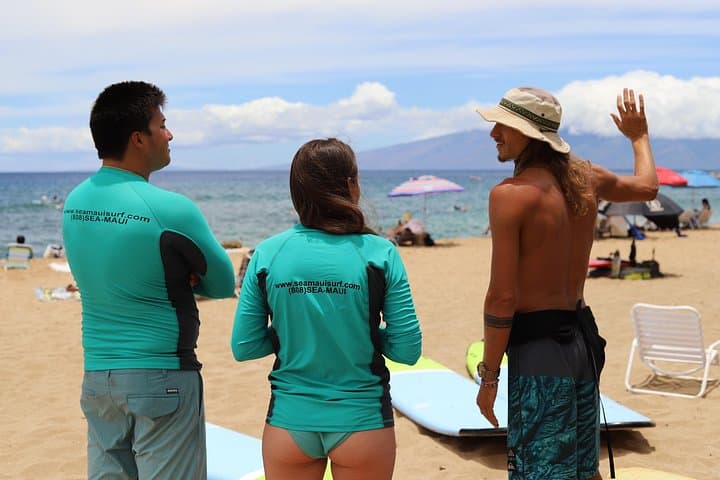
The Pacific rolls in slow and wide at Kaanapali, silvering in the morning sun as instructors set soft foam boards on the sand and call students through warmup drills.
The Pacific rolls in slow and wide at Kaanapali, silvering in the morning sun as instructors set soft foam boards on the sand and call students through warmup drills.
A lesson begins on land — how current and wind shape a wave, where the takeoff zone sits, and basic pop-up mechanics — then moves into waist-deep water where the instructor keeps the session focused on two students at a time. That intimacy speeds learning: you get more one-on-one feedback, quicker corrective adjustments and a safer environment for a first stand-up.
Kaanapali’s shoreline has a sandbar-protected reef system formed from ancient lava flows and coral growth; historically the area was an important fishing and canoe landing zone for the people of Maui. Today Whalers Village marks the western edge of a tourist corridor, but mornings still belong to the ocean and the native birds that tip the skyline.
Practical details are simple: the private 90-minute lesson covers ocean-safety, board handling, and repeated attempts at standing with instructor assistance. Expect gentle beach breaks and variable wind — mornings are typically calmer.
Bring a reef-safe sunscreen, a snug swimsuit, and hydrate beforehand; instructors provide rashguards, boards and reef booties. Non-swimmers should be honest about comfort in shoulder-deep water; the best progress happens with steady balance practice and patience. For couples or parent-child pairs, this semi-private format is efficient, safe and built around playful repetition that helps you catch your first riding wave.