THE ADVENTURE COLLECTIVE® · Independent discovery and booking for outdoor travel

Two-hour beginner surf lessons in Barbados that cover paddling, positioning and popping up with supplied board and rashguard. Lessons meet at different beaches depending on conditions—confirm the location before you go.
Two-hour beginner surf lessons in Barbados that cover paddling, positioning and popping up with supplied board and rashguard. Lessons meet at different beaches depending on conditions—confirm the location before you go.
A morning on a Barbados beach begins with salt on the air and the Atlantic tapping a steady rhythm against coral rock. Students gather on sand that heats quickly under the sun, instructors laying out boards while the ocean sizes up the day—sometimes friendly, sometimes testing. The lesson moves from dry sand technique to paddling and the first wobble of a pop-up, each small victory buoyed by steady coaching.
Verified experiences and guided adventures in the surrounding area.
Operated by Paradise Surf School · Bridgetown, Saint Michael
A morning on a Barbados beach begins with salt on the air and the Atlantic tapping a steady rhythm against coral rock. Students gather on sand that heats quickly under the sun, instructors laying out boards while the ocean sizes up the day—sometimes friendly, sometimes testing. The lesson moves from dry sand technique to paddling and the first wobble of a pop-up, each small victory buoyed by steady coaching.
Barbados' coastline is a product of coral reefs and limestone, which shape both mellow bays ideal for beginners and powerful east-coast breaks favored by experts. Surf culture here blends West African and Caribbean influences with a long history of maritime trade; fishermen and surfers share a pragmatic respect for the sea that locals pass on to visitors. Expect Arawak place names in the landscape and plantation-era landmarks farther inland.
Practically: lessons run about two hours and typically include board and rashguard; meeting beaches vary by daily conditions so confirm meeting points the day before. Learn foundational skills—positioning, paddling, popping up—and practice in waist- to chest-high waves on gentler shores. Wear reef-safe sunscreen, a snug swimsuit or boardshorts, and a fitted rashguard to prevent chafing. Hydrate before and after; tropical sun and exertion add up fast.
For beginners the sea will teach patience and timing—waves will push and let you try again. Pick mornings for smaller winds and cleaner waves, and choose an instructor who emphasizes safety around reefs and currents. This is a low-barrier, high-reward way to meet Barbados' coastline head-on.
Yes—participants should be comfortable in open water and able to float; lessons are not suitable for non-swimmers.
Many schools accept children around 8–10 years old depending on swimming ability and confidence; check with the operator for exact age limits.
Lessons are canceled for poor conditions and you’ll be notified; operators typically reschedule or refund if cancellation occurs within policy windows.
Yes—most lessons include a surfboard and rashguard; bring your own if you prefer a personal fit.
Paradise Surf School operates guided outdoor trips and adventures with an emphasis on safety, stewardship, and memorable experiences.
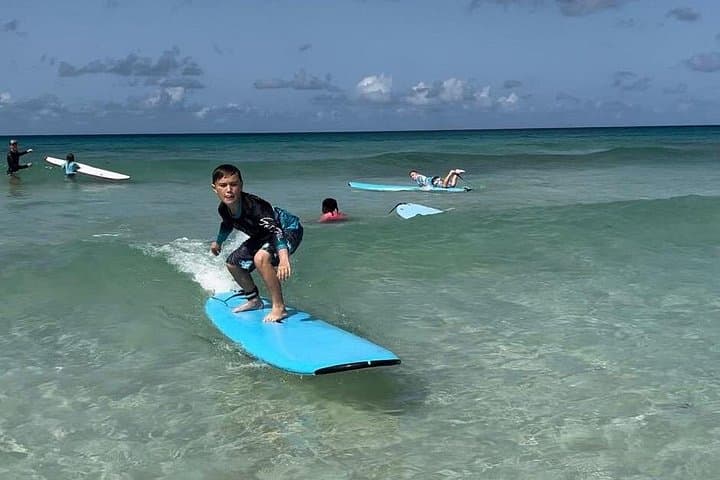
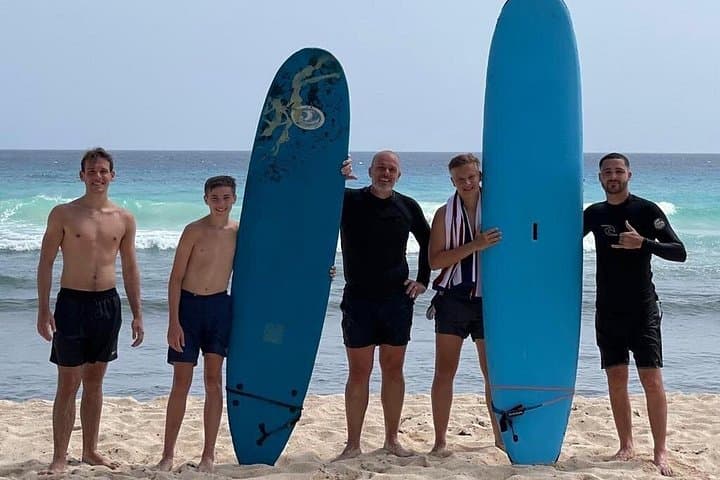
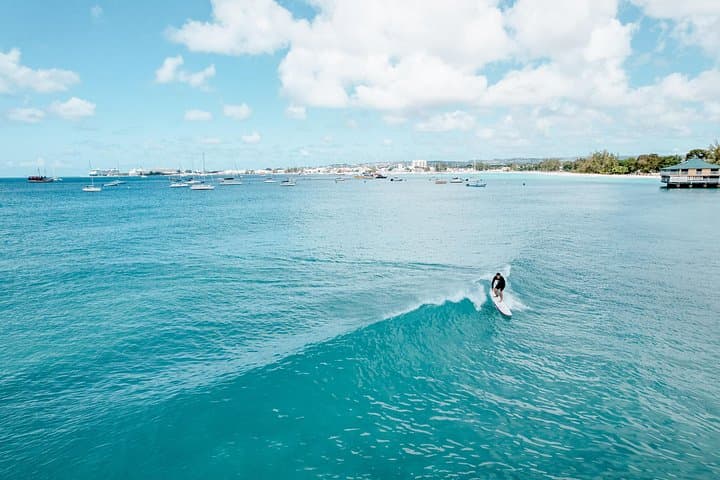
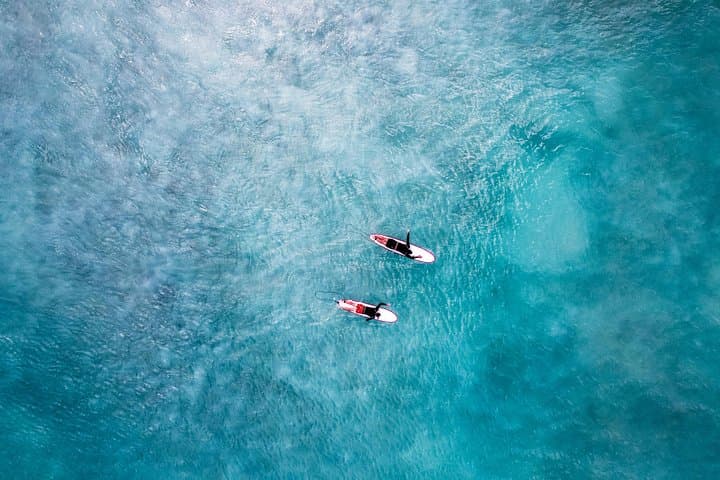
A morning on a Barbados beach begins with salt on the air and the Atlantic tapping a steady rhythm against coral rock. Students gather on sand that heats quickly under the sun, instructors laying out boards while the ocean sizes up the day—sometimes friendly, sometimes testing. The lesson moves from dry sand technique to paddling and the first wobble of a pop-up, each small victory buoyed by steady coaching.
A morning on a Barbados beach begins with salt on the air and the Atlantic tapping a steady rhythm against coral rock. Students gather on sand that heats quickly under the sun, instructors laying out boards while the ocean sizes up the day—sometimes friendly, sometimes testing. The lesson moves from dry sand technique to paddling and the first wobble of a pop-up, each small victory buoyed by steady coaching.
Barbados' coastline is a product of coral reefs and limestone, which shape both mellow bays ideal for beginners and powerful east-coast breaks favored by experts. Surf culture here blends West African and Caribbean influences with a long history of maritime trade; fishermen and surfers share a pragmatic respect for the sea that locals pass on to visitors. Expect Arawak place names in the landscape and plantation-era landmarks farther inland.
Practically: lessons run about two hours and typically include board and rashguard; meeting beaches vary by daily conditions so confirm meeting points the day before. Learn foundational skills—positioning, paddling, popping up—and practice in waist- to chest-high waves on gentler shores. Wear reef-safe sunscreen, a snug swimsuit or boardshorts, and a fitted rashguard to prevent chafing. Hydrate before and after; tropical sun and exertion add up fast.
For beginners the sea will teach patience and timing—waves will push and let you try again. Pick mornings for smaller winds and cleaner waves, and choose an instructor who emphasizes safety around reefs and currents. This is a low-barrier, high-reward way to meet Barbados' coastline head-on.