THE ADVENTURE COLLECTIVE® · Independent discovery and booking for outdoor travel

Two hours in Santa Maria Bay teaches the essentials of wingfoiling: beach drills, big-board balance, and an introduction to foil flight. Reliable winds, shallow reefs, and experienced instructors make Sal a top place to start this fast-growing water sport.
Two hours in Santa Maria Bay teaches the essentials of wingfoiling: beach drills, big-board balance, and an introduction to foil flight. Reliable winds, shallow reefs, and experienced instructors make Sal a top place to start this fast-growing water sport.
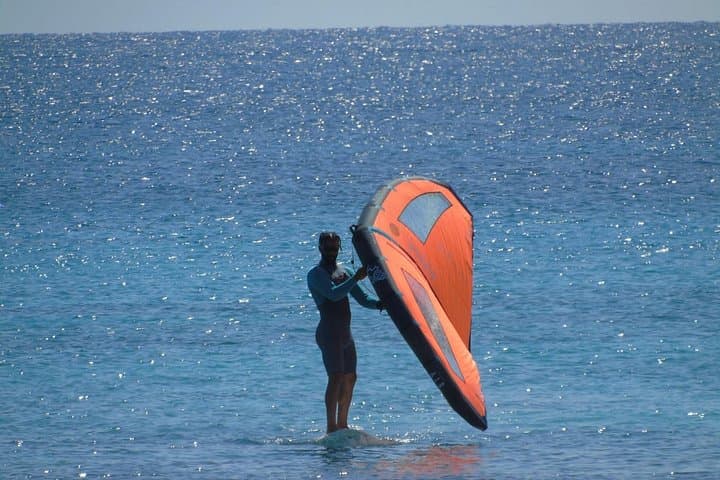
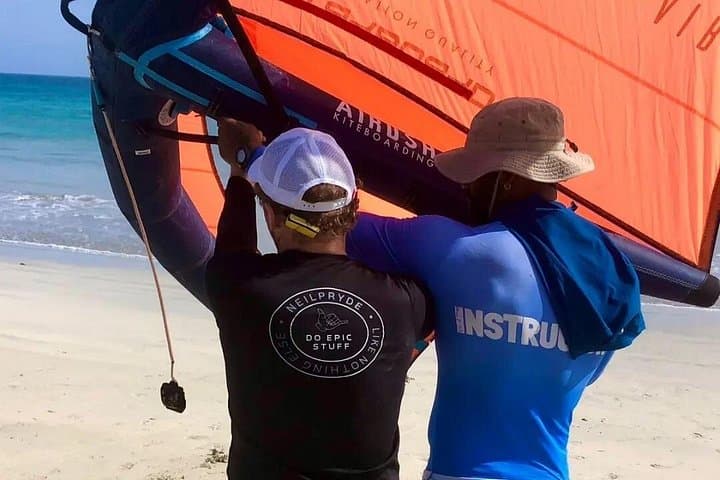
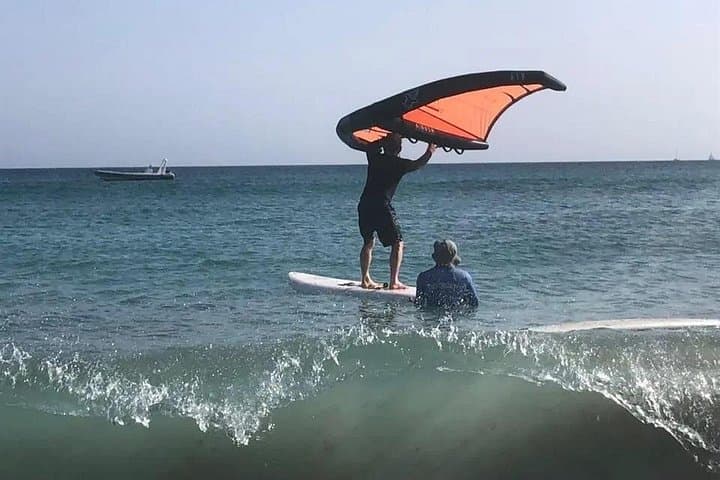
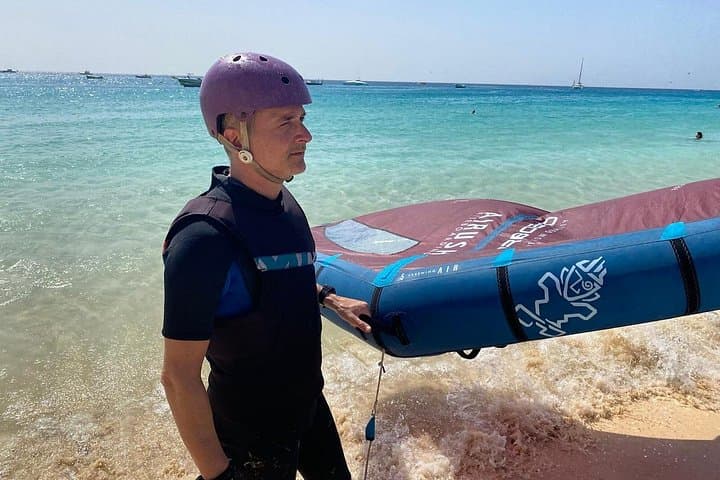
Wind cuts across the flat sweep of Santa Maria beach and the wing tugs like a living thing, daring you off the sand and into the Atlantic. In a two-hour lesson on Sal, instructors start on the shore where the wing becomes an extension of your body—how to trim, drive, and arrest power—before moving to a large, stable board to practice balance and course. The final progression introduces the foil: light pressure, subtle foot shifts, and the dizzying lift when the board finally rises above the water.
Verified experiences and guided adventures in the surrounding area.
Operated by Surf Hub Cabo Verde · Santa Maria, Sal
Wind cuts across the flat sweep of Santa Maria beach and the wing tugs like a living thing, daring you off the sand and into the Atlantic. In a two-hour lesson on Sal, instructors start on the shore where the wing becomes an extension of your body—how to trim, drive, and arrest power—before moving to a large, stable board to practice balance and course. The final progression introduces the foil: light pressure, subtle foot shifts, and the dizzying lift when the board finally rises above the water.
Sal’s volcanic geology has built broad shallow shelves and steady trade winds that make Santa Maria Bay a reliable classroom for learners. The town grew around salt pans and Portuguese-era trade routes; today its compact fishing culture and busy harbor provide a low-key seaside backdrop. Locals are used to wind sports—expect practical, tips-driven instruction rather than showmanship.
Practically, lessons require reasonable swimming ability and a moderate fitness baseline. Plan for morning or late-afternoon sessions when winds are steady but not gusty; midday thermals can spike. Bring reef-safe sunscreen, a snug rash guard, and footwear for hot sand and rocky approaches. Instructors supply wing, board, foil, and safety kit, but personal hydration, a secure waterproof pouch for keys, and an understanding of right-of-way on crowded water make a big difference.
For first-timers this is an accessible, fast-learning progression: beach drills, big-board handling, then foil introduction. The payoff is immediate—your first moments flying a few inches above the blue, with the wind pushing and the island sliding by below.
No—these lessons are designed for complete beginners, though prior board sports help speed progression.
You must be a competent open-water swimmer; instructors expect you to handle being in the water without assistance.
Yes—wing, board, foil, and safety gear are supplied; bring personal sun protection and a water bottle.
Lessons may be canceled for strong gusts or unsafe sea conditions; full refunds are typically available if canceled 24 hours prior.
Surf Hub Cabo Verde operates guided outdoor trips and adventures with an emphasis on safety, stewardship, and memorable experiences.
Wind cuts across the flat sweep of Santa Maria beach and the wing tugs like a living thing, daring you off the sand and into the Atlantic. In a two-hour lesson on Sal, instructors start on the shore where the wing becomes an extension of your body—how to trim, drive, and arrest power—before moving to a large, stable board to practice balance and course. The final progression introduces the foil: light pressure, subtle foot shifts, and the dizzying lift when the board finally rises above the water.
Wind cuts across the flat sweep of Santa Maria beach and the wing tugs like a living thing, daring you off the sand and into the Atlantic. In a two-hour lesson on Sal, instructors start on the shore where the wing becomes an extension of your body—how to trim, drive, and arrest power—before moving to a large, stable board to practice balance and course. The final progression introduces the foil: light pressure, subtle foot shifts, and the dizzying lift when the board finally rises above the water.
Sal’s volcanic geology has built broad shallow shelves and steady trade winds that make Santa Maria Bay a reliable classroom for learners. The town grew around salt pans and Portuguese-era trade routes; today its compact fishing culture and busy harbor provide a low-key seaside backdrop. Locals are used to wind sports—expect practical, tips-driven instruction rather than showmanship.
Practically, lessons require reasonable swimming ability and a moderate fitness baseline. Plan for morning or late-afternoon sessions when winds are steady but not gusty; midday thermals can spike. Bring reef-safe sunscreen, a snug rash guard, and footwear for hot sand and rocky approaches. Instructors supply wing, board, foil, and safety kit, but personal hydration, a secure waterproof pouch for keys, and an understanding of right-of-way on crowded water make a big difference.
For first-timers this is an accessible, fast-learning progression: beach drills, big-board handling, then foil introduction. The payoff is immediate—your first moments flying a few inches above the blue, with the wind pushing and the island sliding by below.