THE ADVENTURE COLLECTIVE® · Independent discovery and booking for outdoor travel

A focused private walking tour through Bloemfontein’s military landmarks—Woman’s War Memorial, War Museum of the Boer Republics and Queen’s Fort—offering two hours of curated history and primary‑source interpretation. Ideal for history enthusiasts seeking a quiet, in‑depth experience.
A focused private walking tour through Bloemfontein’s military landmarks—Woman’s War Memorial, War Museum of the Boer Republics and Queen’s Fort—offering two hours of curated history and primary‑source interpretation. Ideal for history enthusiasts seeking a quiet, in‑depth experience.
You step off a quiet street in Bloemfontein and into a city whose stones remember conflict: the Woman’s War Memorial rises in pale stone, a hush that hangs where stories of resilience unfolded. The tour threads through museum halls that keep uniforms, letters and field maps under careful light, and ends at Queen’s Fort where ramparts still hold the weight of strategy and duty.
Verified experiences and guided adventures in the surrounding area.
Operated by Opatrip South Africa · Bloemfontein, Free State
You step off a quiet street in Bloemfontein and into a city whose stones remember conflict: the Woman’s War Memorial rises in pale stone, a hush that hangs where stories of resilience unfolded. The tour threads through museum halls that keep uniforms, letters and field maps under careful light, and ends at Queen’s Fort where ramparts still hold the weight of strategy and duty.
Bloemfontein was a strategic center during the Anglo‑Boer Wars and later developed as South Africa’s judicial capital. The War Museum of the Boer Republics presents artifacts and period context; the Woman’s War Memorial documents the civilian suffering in British concentration camps; Queen’s Fort chronicles military organization and local defense. Together they map a regional history shaped by imperial conflict, Afrikaner civic identity and 19th–20th century military technology.
Expect a paced, two‑hour private walk with focused exhibits rather than strenuous hiking. Surfaces are paved; some museum rooms are dim to protect artifacts. Guides typically provide primary‑source readings, timelines and contextual commentary that connect local stories to national history.
Practical notes: bring sun protection and water—Free State sun can be sharp even on short outings. Aim for morning or late afternoon to avoid peak heat and to catch softer light on the memorials. Photography is usually allowed but respect signage and any restricted exhibits. This private format suits families, scholars and veterans’ groups looking for a concentrated, respectful exploration of Bloemfontein’s military past.
The private itinerary runs about two hours and covers three main sites with time for explanation and photos.
This tour description does not specify admission; check booking details or bring cash/card for museum entry if required.
Yes—physical demands are low, but parents should be prepared to explain sensitive historical material about war and civilian suffering.
Museum galleries are generally accessible, but Queen’s Fort has older stone paths; contact the operator in advance for specific accessibility arrangements.
Opatrip South Africa operates guided outdoor trips and adventures with an emphasis on safety, stewardship, and memorable experiences.
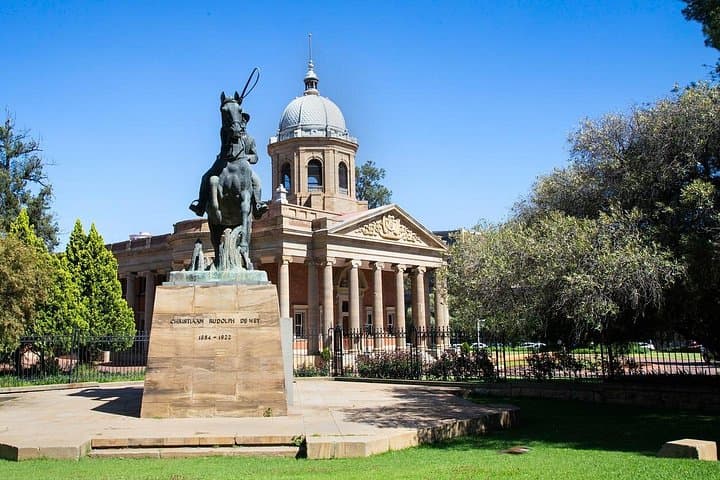

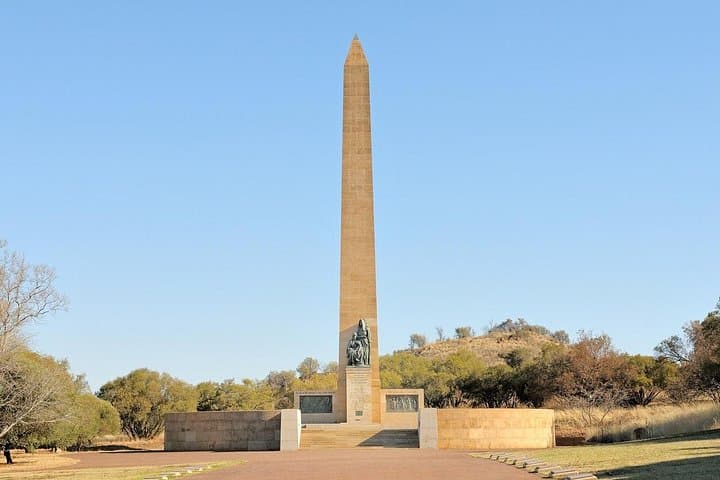

You step off a quiet street in Bloemfontein and into a city whose stones remember conflict: the Woman’s War Memorial rises in pale stone, a hush that hangs where stories of resilience unfolded. The tour threads through museum halls that keep uniforms, letters and field maps under careful light, and ends at Queen’s Fort where ramparts still hold the weight of strategy and duty.
You step off a quiet street in Bloemfontein and into a city whose stones remember conflict: the Woman’s War Memorial rises in pale stone, a hush that hangs where stories of resilience unfolded. The tour threads through museum halls that keep uniforms, letters and field maps under careful light, and ends at Queen’s Fort where ramparts still hold the weight of strategy and duty.
Bloemfontein was a strategic center during the Anglo‑Boer Wars and later developed as South Africa’s judicial capital. The War Museum of the Boer Republics presents artifacts and period context; the Woman’s War Memorial documents the civilian suffering in British concentration camps; Queen’s Fort chronicles military organization and local defense. Together they map a regional history shaped by imperial conflict, Afrikaner civic identity and 19th–20th century military technology.
Expect a paced, two‑hour private walk with focused exhibits rather than strenuous hiking. Surfaces are paved; some museum rooms are dim to protect artifacts. Guides typically provide primary‑source readings, timelines and contextual commentary that connect local stories to national history.
Practical notes: bring sun protection and water—Free State sun can be sharp even on short outings. Aim for morning or late afternoon to avoid peak heat and to catch softer light on the memorials. Photography is usually allowed but respect signage and any restricted exhibits. This private format suits families, scholars and veterans’ groups looking for a concentrated, respectful exploration of Bloemfontein’s military past.