THE ADVENTURE COLLECTIVE® · Independent discovery and booking for outdoor travel

A relaxed 3-night Nile cruise from Aswan to Luxor that pairs on-board comfort with guided visits to Philae, Kom Ombo, Edfu and Luxor’s necropolis. Ideal for travelers who want concentrated ancient history with minimal transit stress.
A relaxed 3-night Nile cruise from Aswan to Luxor that pairs on-board comfort with guided visits to Philae, Kom Ombo, Edfu and Luxor’s necropolis. Ideal for travelers who want concentrated ancient history with minimal transit stress.
You step aboard as the river takes the lead: the Nile pushes the hull away from Aswan’s sun-washed quay and the warm breeze flattens the palm fronds. On deck, laundry lines and feluccas glide past, and the river’s current dares you to slow down and watch local life unfold — farmers, children, and herons sharing the slim green ribbon of water.
Verified experiences and guided adventures in the surrounding area.
Operated by Luxor Travels · Aswan, Aswan Governorate
You step aboard as the river takes the lead: the Nile pushes the hull away from Aswan’s sun-washed quay and the warm breeze flattens the palm fronds. On deck, laundry lines and feluccas glide past, and the river’s current dares you to slow down and watch local life unfold — farmers, children, and herons sharing the slim green ribbon of water.
This short cruise threads through 4,000 years of human history. The itinerary moves from Philae’s island temple to Kom Ombo’s twin shrines and the compact, well-preserved temple of Edfu before arriving at Luxor’s monumental east and west banks. Geology here is simple and direct: the Nile carved a fertile floodplain into a desert spine, feeding ancient settlements and giving rise to the mudbrick and sandstone monuments that survive today. The High Dam and Lake Nasser are modern chapters in the river’s story, reshaping ecology and agriculture downstream.
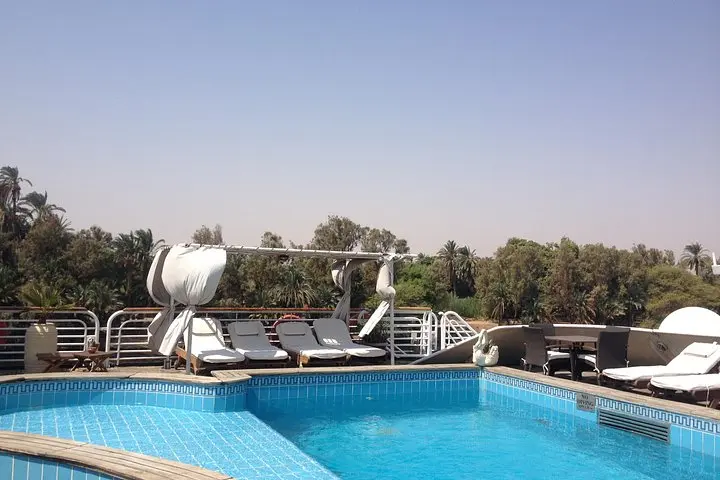
Culture is immediate — bartering on the banks, the cadence of the Arabic call to prayer, and the Egyptologist’s voice explaining hieroglyphs. Between site visits there’s time for the ship’s sun deck, pool, and shaded lounges.
Practical guidance: pack sun protection and comfortable walking shoes for uneven temple floors and steps. Mornings are best for photography and optional early tours (Abu Simbel is extra and begins before dawn). Bring small local currency for tips, bottled water for long excursions, and a light layer for breezy evenings on deck. Expect relaxed pacing but daily walks of up to a few kilometers at archaeological sites.
No — Abu Simbel is offered as an optional, extra-cost excursion that requires an early morning departure and additional transportation.
Yes, a qualified Egyptologist accompanies the itinerary and provides guided visits at major archaeological sites listed in the program.
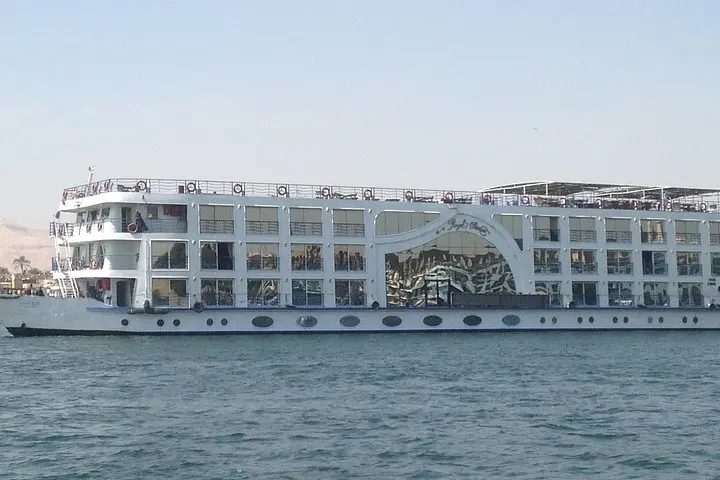
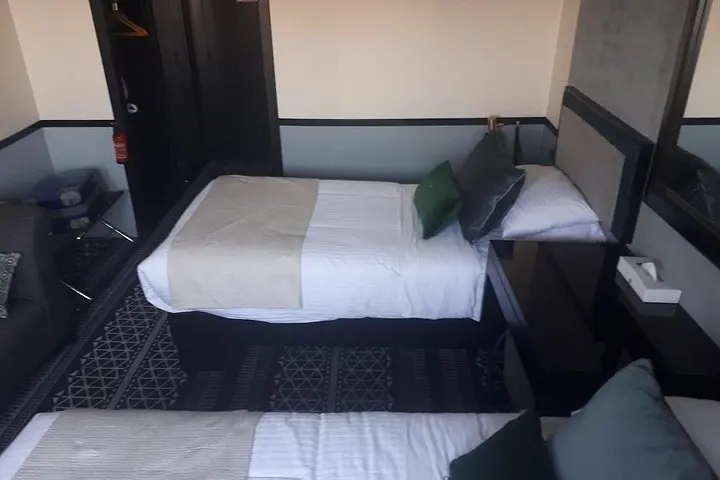
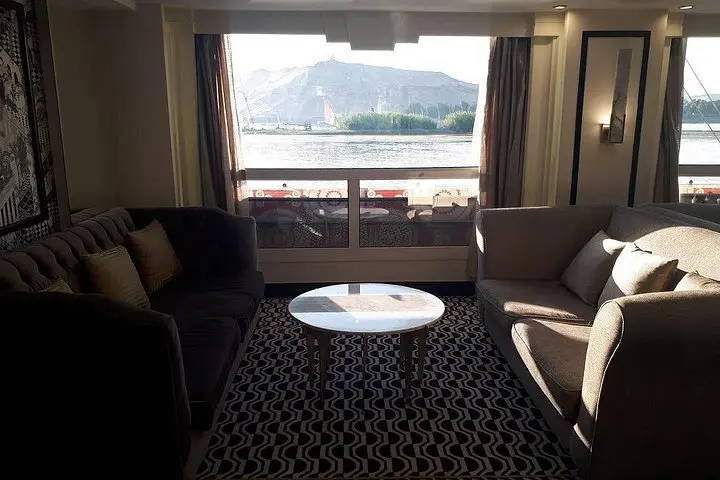
Cabins are en-suite with climate control, TV and minibar; the ship also features a sundeck, pool, dining room and lounge areas.
Yes — full board is included with breakfasts, lunches and dinners as specified in the itinerary; special dietary requests should be noted in advance.
Luxor Travels operates guided outdoor trips and adventures with an emphasis on safety, stewardship, and memorable experiences.
You step aboard as the river takes the lead: the Nile pushes the hull away from Aswan’s sun-washed quay and the warm breeze flattens the palm fronds. On deck, laundry lines and feluccas glide past, and the river’s current dares you to slow down and watch local life unfold — farmers, children, and herons sharing the slim green ribbon of water.
You step aboard as the river takes the lead: the Nile pushes the hull away from Aswan’s sun-washed quay and the warm breeze flattens the palm fronds. On deck, laundry lines and feluccas glide past, and the river’s current dares you to slow down and watch local life unfold — farmers, children, and herons sharing the slim green ribbon of water.
This short cruise threads through 4,000 years of human history. The itinerary moves from Philae’s island temple to Kom Ombo’s twin shrines and the compact, well-preserved temple of Edfu before arriving at Luxor’s monumental east and west banks. Geology here is simple and direct: the Nile carved a fertile floodplain into a desert spine, feeding ancient settlements and giving rise to the mudbrick and sandstone monuments that survive today. The High Dam and Lake Nasser are modern chapters in the river’s story, reshaping ecology and agriculture downstream.
Culture is immediate — bartering on the banks, the cadence of the Arabic call to prayer, and the Egyptologist’s voice explaining hieroglyphs. Between site visits there’s time for the ship’s sun deck, pool, and shaded lounges.
Practical guidance: pack sun protection and comfortable walking shoes for uneven temple floors and steps. Mornings are best for photography and optional early tours (Abu Simbel is extra and begins before dawn). Bring small local currency for tips, bottled water for long excursions, and a light layer for breezy evenings on deck. Expect relaxed pacing but daily walks of up to a few kilometers at archaeological sites.