THE ADVENTURE COLLECTIVE® · Independent discovery and booking for outdoor travel

A focused three-hour boat snorkel from Nusa Lembongan that targets Manta Bay, Toya Pakeh Wall and the island’s mangrove reefs. Expect clear water, coral terraces, and a good chance to see manta rays—sightings aren’t guaranteed, but local guides maximize your window.
A focused three-hour boat snorkel from Nusa Lembongan that targets Manta Bay, Toya Pakeh Wall and the island’s mangrove reefs. Expect clear water, coral terraces, and a good chance to see manta rays—sightings aren’t guaranteed, but local guides maximize your window.
Salt air and the slap of small waves set the tempo before you step aboard: a three-hour boat run around the southeast shelf of Nusa Lembongan and nearby Nusa Penida that puts you in front of coral walls, shallow plateaus and the slow ballet of manta rays.
Verified experiences and guided adventures in the surrounding area.
Operated by Halo Bike Cycling Tour · Nusa Lembongan, Bali
Salt air and the slap of small waves set the tempo before you step aboard: a three-hour boat run around the southeast shelf of Nusa Lembongan and nearby Nusa Penida that puts you in front of coral walls, shallow plateaus and the slow ballet of manta rays.
The channel between Bali and Nusa Penida is geologically young—volcanic ridges and steep drop-offs created by tectonic uplift—and that complexity concentrates plankton and marine life. Local fishing villages on Lembongan and Ceningan have long read these currents for livelihood; today guides pair that local knowledge with briefings on reef etiquette and safety.
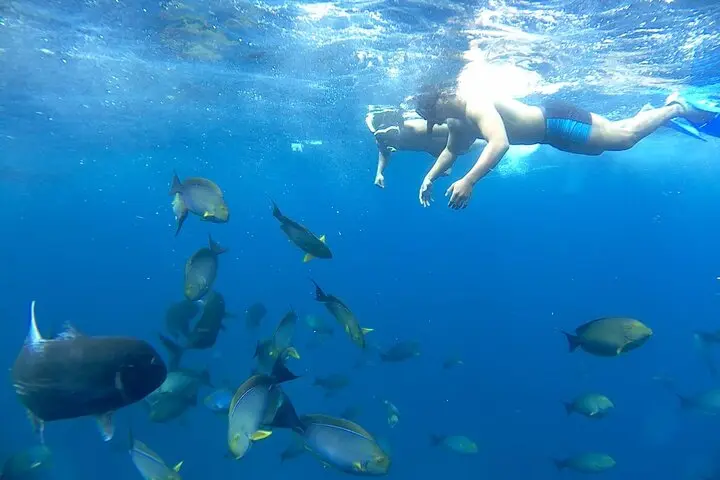
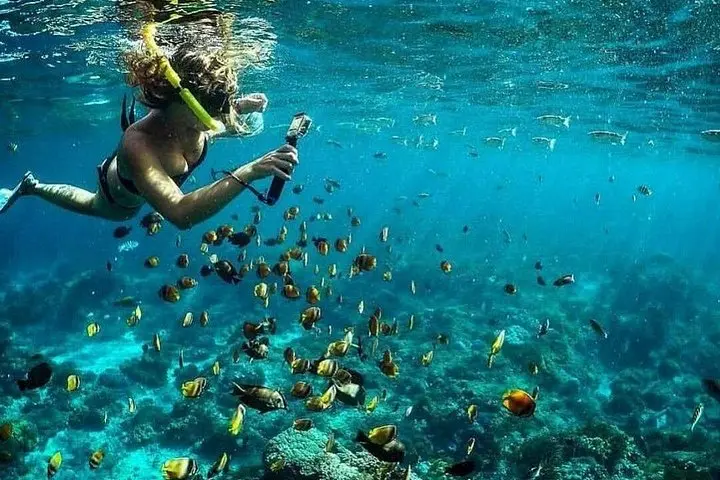
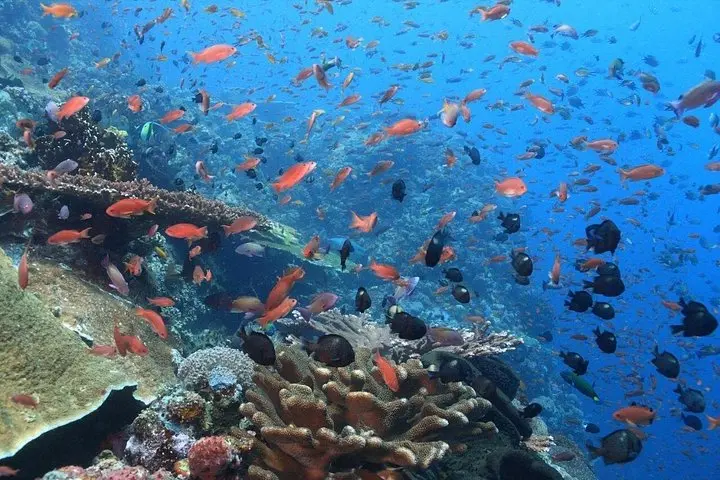
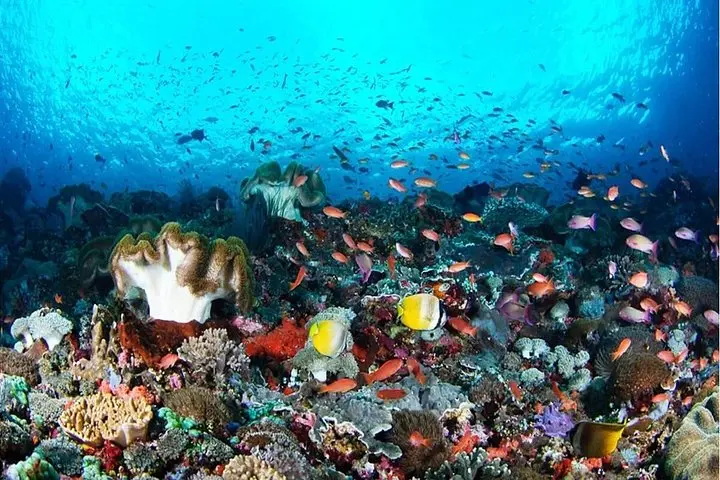
Expect bright, clear water at Toya Pakeh where coral terraces step down from 4–6 m to 40 m, contrasting with the shallow, fish-rich mangrove flats around Lembongan. Manta Bay and nearby Manta Point are cleaning and feeding hotspots, where gentle mantas ride nutrient-rich flows. The mangroves, occupying small sheltered bays, offer a grounded counterpoint: roots, mudskippers and juvenile fish.
Practically, plan for sun and spray—short sessions at each site (roughly 40–50 minutes) mean you’ll rotate between snorkeling and brief boat rests. Guides supply masks, fins, life vests and local safety instruction; non-swimmers can participate with flotation and buddy support. Bring reef-safe sunscreen, a snug mask, and a waterproof camera; pay attention to guide signals if currents pick up. Morning departures usually offer the calmest seas and best visibility. Above all, give wildlife space: mantas and reef communities are wild, unpredictable, and best approached with patience and respect.
No—mantas are wild animals. Guides visit Manta Bay and Manta Point where sightings are statistically higher, but encounters depend on currents and plankton.
Yes—life vests and guide assistance are provided so non-swimmers can enjoy surface snorkeling in shallow areas.
The outing is approximately 3 hours with three main snorkel stops: Manta Bay (or Manta Point), Toya Pakeh Wall, and Mangrove Point, plus brief boat transitions.
Yes—free pickup and drop-off are offered on Nusa Lembongan; guests on Nusa Ceningan meet at the Yellow Bridge at the scheduled time.
Halo Bike Cycling Tour operates guided outdoor trips and adventures with an emphasis on safety, stewardship, and memorable experiences.
Salt air and the slap of small waves set the tempo before you step aboard: a three-hour boat run around the southeast shelf of Nusa Lembongan and nearby Nusa Penida that puts you in front of coral walls, shallow plateaus and the slow ballet of manta rays.
Salt air and the slap of small waves set the tempo before you step aboard: a three-hour boat run around the southeast shelf of Nusa Lembongan and nearby Nusa Penida that puts you in front of coral walls, shallow plateaus and the slow ballet of manta rays.
The channel between Bali and Nusa Penida is geologically young—volcanic ridges and steep drop-offs created by tectonic uplift—and that complexity concentrates plankton and marine life. Local fishing villages on Lembongan and Ceningan have long read these currents for livelihood; today guides pair that local knowledge with briefings on reef etiquette and safety.
Expect bright, clear water at Toya Pakeh where coral terraces step down from 4–6 m to 40 m, contrasting with the shallow, fish-rich mangrove flats around Lembongan. Manta Bay and nearby Manta Point are cleaning and feeding hotspots, where gentle mantas ride nutrient-rich flows. The mangroves, occupying small sheltered bays, offer a grounded counterpoint: roots, mudskippers and juvenile fish.
Practically, plan for sun and spray—short sessions at each site (roughly 40–50 minutes) mean you’ll rotate between snorkeling and brief boat rests. Guides supply masks, fins, life vests and local safety instruction; non-swimmers can participate with flotation and buddy support. Bring reef-safe sunscreen, a snug mask, and a waterproof camera; pay attention to guide signals if currents pick up. Morning departures usually offer the calmest seas and best visibility. Above all, give wildlife space: mantas and reef communities are wild, unpredictable, and best approached with patience and respect.