THE ADVENTURE COLLECTIVE® · Independent discovery and booking for outdoor travel

Ascending Kilimanjaro via the Lemosho Route is an ecosystem-by-ecosystem journey from rainforest to ice-capped summit. This eight-day itinerary balances acclimatization with scenic camps and a pre-dawn summit push to Uhuru Peak.
Ascending Kilimanjaro via the Lemosho Route is an ecosystem-by-ecosystem journey from rainforest to ice-capped summit. This eight-day itinerary balances acclimatization with scenic camps and a pre-dawn summit push to Uhuru Peak.
You step out of the transfer van into a cool, humming forest; clouds press against mossy trunks and the trail ahead threads upward through high timber fences that once kept buffalo from village fields. The Lemosho Route begins in rainforest, rises through moorland and giant heathers, crosses the Shira Plateau, and finishes on the rocky, wind-scoured summit ridge of Kibo where Uhuru Peak perches at 5,895 m.
Verified experiences and guided adventures in the surrounding area.
Operated by Safari G.O.A.T.S · Moshi, Kilimanjaro Region
You step out of the transfer van into a cool, humming forest; clouds press against mossy trunks and the trail ahead threads upward through high timber fences that once kept buffalo from village fields. The Lemosho Route begins in rainforest, rises through moorland and giant heathers, crosses the Shira Plateau, and finishes on the rocky, wind-scoured summit ridge of Kibo where Uhuru Peak perches at 5,895 m.
Geologically Kilimanjaro is a dormant stratovolcano made of three cones—Shira, Mawenzi and Kibo—whose ice-capped crater and volcanic plugs like Lava Tower punctuate the high route. The mountain sits on ancestral Chagga land; villages on the lower slopes carry long histories of agriculture and mountain-guiding that shape modern trek logistics and porter culture.
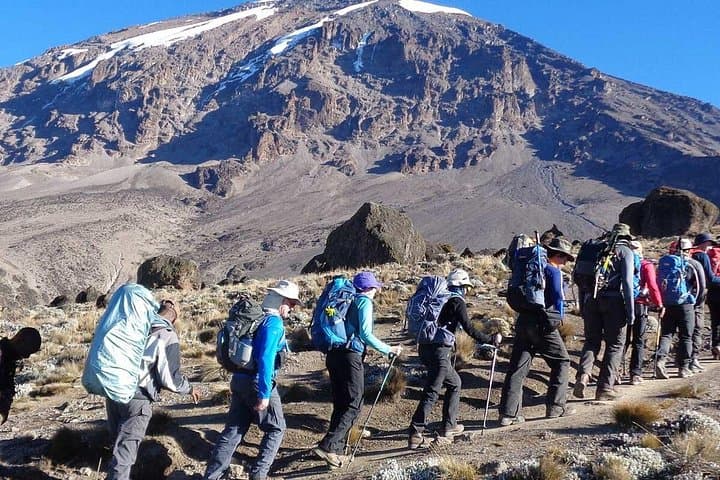
Expect a steady progression of ecosystems: dense rainforest with monkeys and sunbirds, an open moorland of lobelia and heather, then barren scree and stones where glaciers retreat each season. Nights are in tents or basic huts; summit night is an alpine, pre-dawn push beginning around midnight.
Practical guidance: pace yourself for altitude—take rest days and hydrate; use trekking poles on scree; layer for extreme temperature swings; and budget for park fees and experienced guides. Bring footwear with good ankle support, a warm insulated jacket for summit night, and a headlamp for the hours above 4,500 m. Leave no trace, tip porters fairly, and allow extra acclimatization time—Kilimanjaro rewards patience as much as stamina.
No; the Lemosho Route is a non-technical trek to Uhuru Peak, but it requires strong fitness and acclimatization practices.
Dry months (January–March, June–October) have more stable weather and clearer summit windows, though climbs occur year-round.
Acute mountain sickness is common on Kibo; proper acclimatization, hydration, slow pacing and communicating symptoms to guides are crucial.
Climb requires national park entry permits, camping fees and registered guides; operators typically handle bookings and payments in advance.
Safari G.O.A.T.S operates guided outdoor trips and adventures with an emphasis on safety, stewardship, and memorable experiences.
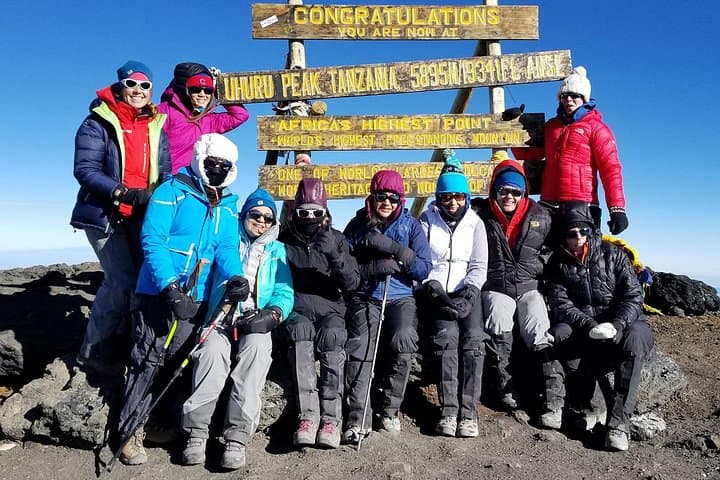

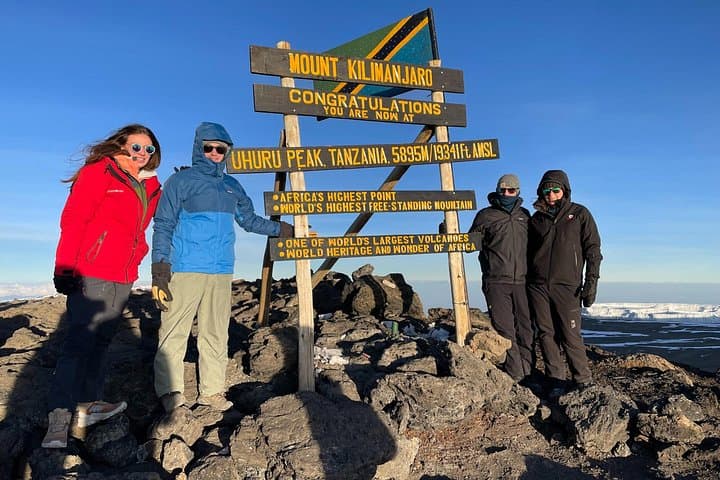
You step out of the transfer van into a cool, humming forest; clouds press against mossy trunks and the trail ahead threads upward through high timber fences that once kept buffalo from village fields. The Lemosho Route begins in rainforest, rises through moorland and giant heathers, crosses the Shira Plateau, and finishes on the rocky, wind-scoured summit ridge of Kibo where Uhuru Peak perches at 5,895 m.
You step out of the transfer van into a cool, humming forest; clouds press against mossy trunks and the trail ahead threads upward through high timber fences that once kept buffalo from village fields. The Lemosho Route begins in rainforest, rises through moorland and giant heathers, crosses the Shira Plateau, and finishes on the rocky, wind-scoured summit ridge of Kibo where Uhuru Peak perches at 5,895 m.
Geologically Kilimanjaro is a dormant stratovolcano made of three cones—Shira, Mawenzi and Kibo—whose ice-capped crater and volcanic plugs like Lava Tower punctuate the high route. The mountain sits on ancestral Chagga land; villages on the lower slopes carry long histories of agriculture and mountain-guiding that shape modern trek logistics and porter culture.
Expect a steady progression of ecosystems: dense rainforest with monkeys and sunbirds, an open moorland of lobelia and heather, then barren scree and stones where glaciers retreat each season. Nights are in tents or basic huts; summit night is an alpine, pre-dawn push beginning around midnight.
Practical guidance: pace yourself for altitude—take rest days and hydrate; use trekking poles on scree; layer for extreme temperature swings; and budget for park fees and experienced guides. Bring footwear with good ankle support, a warm insulated jacket for summit night, and a headlamp for the hours above 4,500 m. Leave no trace, tip porters fairly, and allow extra acclimatization time—Kilimanjaro rewards patience as much as stamina.