THE ADVENTURE COLLECTIVE® · Independent discovery and booking for outdoor travel

Seven days on the Lemosho Route is a study in altitude management and volcanic scenery—rainforest to scree, remote camps to a predawn push for Uhuru Peak. This guide lays out what to expect, how to prepare, and where the route reveals Kilimanjaro at its best.
Seven days on the Lemosho Route is a study in altitude management and volcanic scenery—rainforest to scree, remote camps to a predawn push for Uhuru Peak. This guide lays out what to expect, how to prepare, and where the route reveals Kilimanjaro at its best.
The morning air in Moshi is humid and bright, the town still groggy while porter crews pack sleeping bags and gas cylinders into a careful chaos of duffels. By mid-morning you leave the coffee fields behind and drive to Londorossi Gate, where the forest swallows sound and the trail begins: dripping ferns, root-strewn paths and the steady breath of the mountain above.
Verified experiences and guided adventures in the surrounding area.
Operated by Exceed Expectations Tours & Safari · Moshi, Kilimanjaro
The morning air in Moshi is humid and bright, the town still groggy while porter crews pack sleeping bags and gas cylinders into a careful chaos of duffels. By mid-morning you leave the coffee fields behind and drive to Londorossi Gate, where the forest swallows sound and the trail begins: dripping ferns, root-strewn paths and the steady breath of the mountain above.
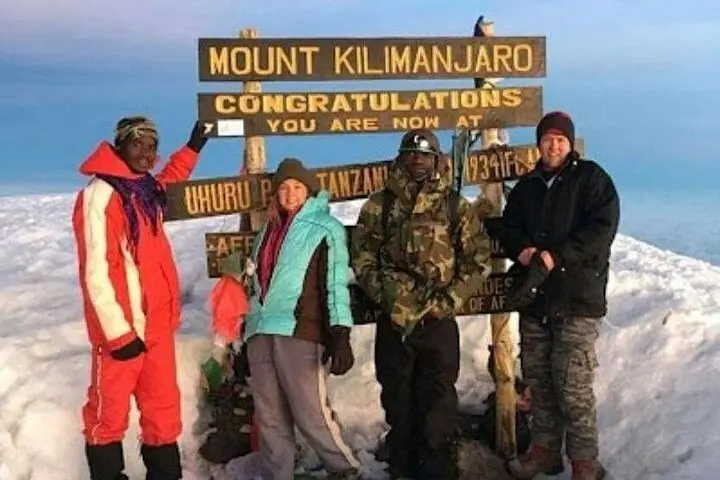
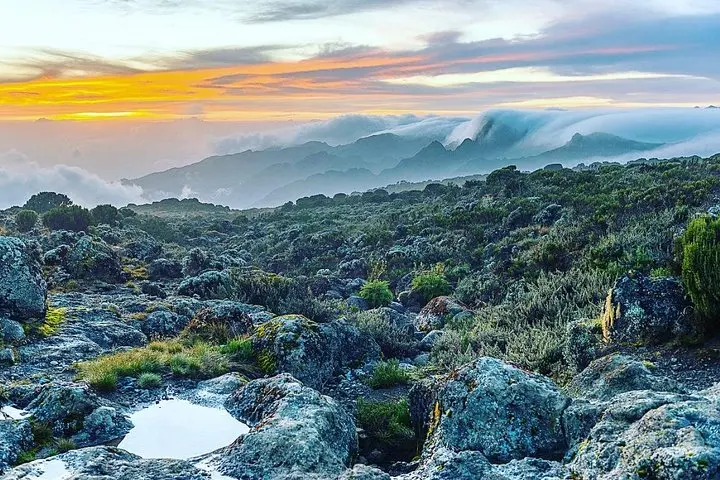
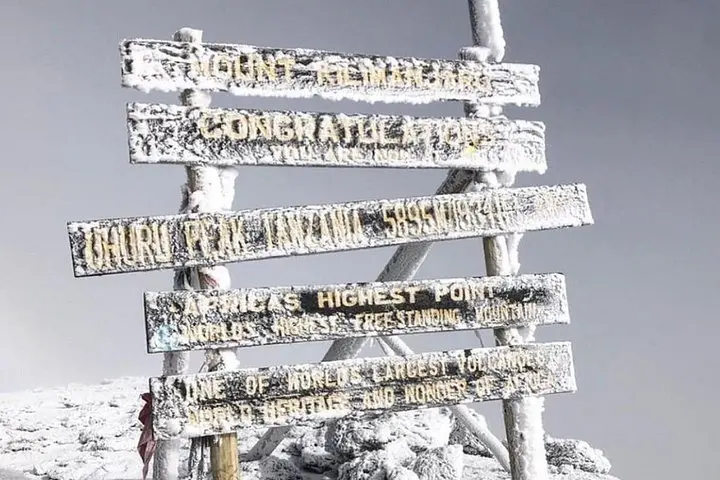
Over seven days the Lemosho Route reads like a study in elevation zones. The first two days climb through montane rainforest into heather and moorland, crossing the broad Shira Plateau and its wind-sculpted volcanic outcrops. You’ll pass the Lava Tower at about 4,640 m, a dramatic volcanic plug that offers a hard-earned lunch stop before a steep descent into Barranco Valley. From Karanga the route climbs to Barafu Camp, a barren arena of scree and wind where preparation for the midnight summit push begins. The final ascent—4–5 hours of steep scree to Stella Point (5,739 m) and then the short ridge to Uhuru Peak (5,895 m)—is a test of pace, rhythm and altitude tolerance. Return follows a long, restorative descent through alpine desert and then back into the rainforest to Mweka Gate.
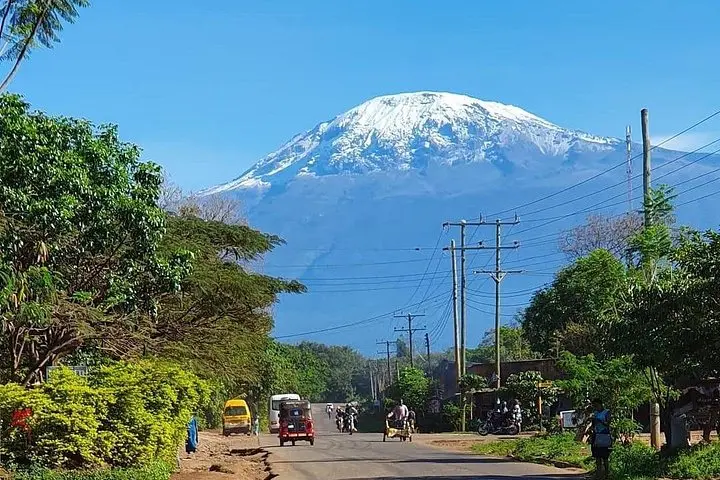
Geologically Kilimanjaro is a trio of volcanic cones—Kibo, Mawenzi and Shira—Kibo holding the summit crater and remaining ice fields, fading but still dramatic. Culturally the climb is threaded with Chagga history and the logistics of local mountain communities: porters, guides and cooks are essential, and their knowledge of weather and trail conditions shapes every summit bid.
Practical guide: plan for roughly 65–75 km round-trip and a net elevation gain from Londorossi (~2,100 m) to Uhuru (~5,895 m) of about 3,700–3,900 m. Expect mixed terrain—muddy forest tracks, high-altitude moorland, rocky ridges and loose scree. The standard 7-day itinerary prioritizes acclimatization; stick to the guide’s pacing and avoid rapid ascents. Summit night starts between 23:00–00:00; allow 6–10 hours for the round trip from Barafu to Uhuru and down to Millennium Camp. Water treatment, layering for cold nights, and a reliable headlamp are non-negotiables. Altitude is the real challenge—know the symptoms of AMS and communicate early with guides.
This route rewards patience with wide-angle panoramas of Mawenzi, collapsing glaciers and a final sunlight reveal above the clouds. Book through reputable operators who invest in porter welfare and follow park rules; the mountain gives no favors to haste, but it will give you one of the most elemental summits in Africa when you arrive prepared.
The 7-day Lemosho itinerary covers roughly 65–75 km round-trip with a net gain from gate (~2,100 m) to Uhuru Peak (5,895 m) of about 3,700–3,900 m.
The summit night is strenuous: a cold, long ascent over loose scree with limited oxygen; expect 4–6 hours to Stella Point and another hour to Uhuru depending on pace and conditions.
Camps are basic tents on established sites; toilet shelters or chemical toilets are typical but facilities are primitive—pack hygiene items and toilet paper.
The most reliable weather windows are late June–October and late December–February; avoid long rains (March–May) when trails become muddy and visibility drops.
AMS is common; reputable operators provide acclimatization days, monitor symptoms, and enforce descent if needed—carry and know how to use acetazolamide only under medical advice.
Typical packages include park fees, guided services, meals on trek, and porters for equipment; confirm details and tipping policy when you book.
Exceed Expectations Tours & Safari operates guided outdoor trips and adventures with an emphasis on safety, stewardship, and memorable experiences.
The morning air in Moshi is humid and bright, the town still groggy while porter crews pack sleeping bags and gas cylinders into a careful chaos of duffels. By mid-morning you leave the coffee fields behind and drive to Londorossi Gate, where the forest swallows sound and the trail begins: dripping ferns, root-strewn paths and the steady breath of the mountain above.
The morning air in Moshi is humid and bright, the town still groggy while porter crews pack sleeping bags and gas cylinders into a careful chaos of duffels. By mid-morning you leave the coffee fields behind and drive to Londorossi Gate, where the forest swallows sound and the trail begins: dripping ferns, root-strewn paths and the steady breath of the mountain above.
Over seven days the Lemosho Route reads like a study in elevation zones. The first two days climb through montane rainforest into heather and moorland, crossing the broad Shira Plateau and its wind-sculpted volcanic outcrops. You’ll pass the Lava Tower at about 4,640 m, a dramatic volcanic plug that offers a hard-earned lunch stop before a steep descent into Barranco Valley. From Karanga the route climbs to Barafu Camp, a barren arena of scree and wind where preparation for the midnight summit push begins. The final ascent—4–5 hours of steep scree to Stella Point (5,739 m) and then the short ridge to Uhuru Peak (5,895 m)—is a test of pace, rhythm and altitude tolerance. Return follows a long, restorative descent through alpine desert and then back into the rainforest to Mweka Gate.
Geologically Kilimanjaro is a trio of volcanic cones—Kibo, Mawenzi and Shira—Kibo holding the summit crater and remaining ice fields, fading but still dramatic. Culturally the climb is threaded with Chagga history and the logistics of local mountain communities: porters, guides and cooks are essential, and their knowledge of weather and trail conditions shapes every summit bid.
Practical guide: plan for roughly 65–75 km round-trip and a net elevation gain from Londorossi (~2,100 m) to Uhuru (~5,895 m) of about 3,700–3,900 m. Expect mixed terrain—muddy forest tracks, high-altitude moorland, rocky ridges and loose scree. The standard 7-day itinerary prioritizes acclimatization; stick to the guide’s pacing and avoid rapid ascents. Summit night starts between 23:00–00:00; allow 6–10 hours for the round trip from Barafu to Uhuru and down to Millennium Camp. Water treatment, layering for cold nights, and a reliable headlamp are non-negotiables. Altitude is the real challenge—know the symptoms of AMS and communicate early with guides.
This route rewards patience with wide-angle panoramas of Mawenzi, collapsing glaciers and a final sunlight reveal above the clouds. Book through reputable operators who invest in porter welfare and follow park rules; the mountain gives no favors to haste, but it will give you one of the most elemental summits in Africa when you arrive prepared.