THE ADVENTURE COLLECTIVE® · Independent discovery and booking for outdoor travel

Take the western approach on the Lemosho Route: eight days of rainforest, Shira Plateau expanses, lava towers and a summit-night push to Uhuru Peak. This private trek balances acclimatization with bold alpine terrain for a higher-success Kilimanjaro climb.
Take the western approach on the Lemosho Route: eight days of rainforest, Shira Plateau expanses, lava towers and a summit-night push to Uhuru Peak. This private trek balances acclimatization with bold alpine terrain for a higher-success Kilimanjaro climb.
At 11:30 p.m., the headlamps of your small team pick their way across Barafu Camp — a scatter of tents on an alien, wind-scoured ridge. The air is thin and cold; the mountain feels like a machine, slowly turning the night into the first hard light on Stella Point. That last hour, over loose scree and beneath towering ice cliffs, compresses everything the Lemosho Route has offered over eight days: the hush of rainforest, the wide, cold plateau, the sudden drama of lava and glacier.
Verified experiences and guided adventures in the surrounding area.
Operated by Einoti Safaris Company Limited · Moshi, Kilimanjaro Region
At 11:30 p.m., the headlamps of your small team pick their way across Barafu Camp — a scatter of tents on an alien, wind-scoured ridge. The air is thin and cold; the mountain feels like a machine, slowly turning the night into the first hard light on Stella Point. That last hour, over loose scree and beneath towering ice cliffs, compresses everything the Lemosho Route has offered over eight days: the hush of rainforest, the wide, cold plateau, the sudden drama of lava and glacier.
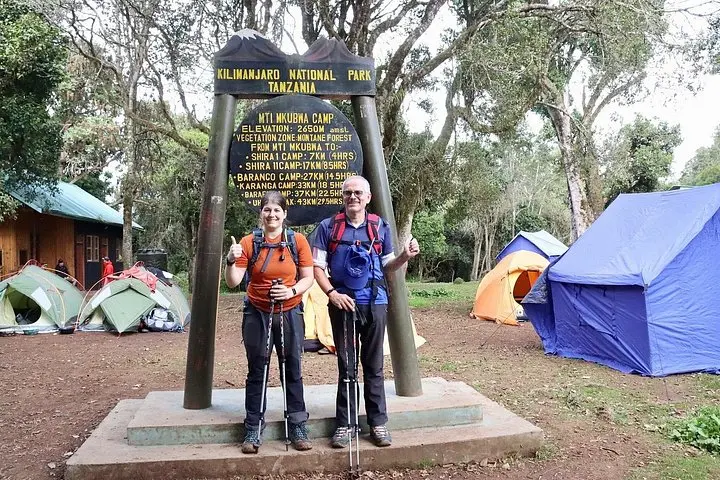
The Lemosho Route approaches Kilimanjaro from the west and is often praised for its scenic variety. It begins at Londorossi Gate (≈2,385 m) and moves through montane rain forest where colobus and blue monkeys make their presence known, onto the grassy Shira Plateau and then across lava ridges and scree to Barafu and the summit at Uhuru Peak (5,895 m). Geologically, Kilimanjaro is a stratovolcano with three volcanic cones—Kibo, Mawenzi and Shira—shaped by ancient eruptions and recent glacial retreat. Culturally, guides and porters—often from the local Chagga and Meru communities—bring as much of the mountain’s story as they do your gear.
Over eight days you gain roughly 3,510 m in elevation, moving from dense forest trails to alpine desert and icy crater rim. Typical daily hikes are 4–6 hours until summit day, which runs 12–16 hours round-trip from Barafu. The itinerary spaces ascent to maximize acclimatization: Shira Plateau walks, a climb to Lava Tower (4,640 m) and an afternoon acclimatization hike from Karanga Camp help your body adapt to thinner air.
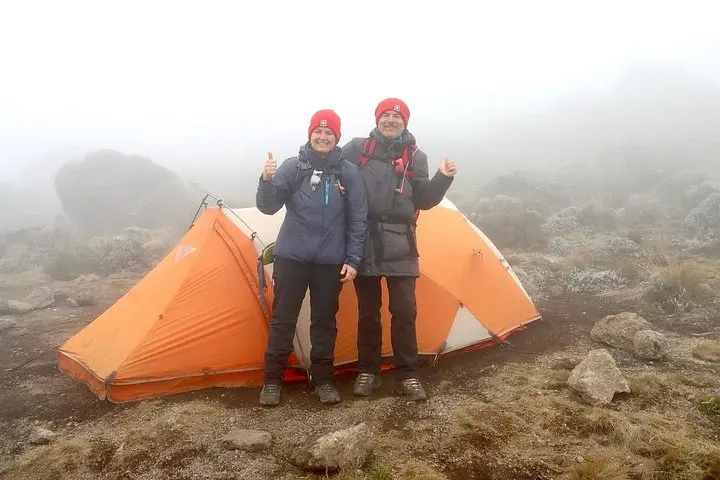
Practical preparation matters. Expect muddy, root-strewn forest early on, then ankle-testing scree higher up. Hydration and layering are non-negotiable: drink regularly, sleep warm, and ration energy for the summit push. Trekking poles spare knees on steep descents; a lightweight down and water-resistant shell are essentials for summit-night temperatures that can drop well below freezing. If you use medication for altitude, bring prescriptions and discuss plans with your doctor ahead of travel.
Logistics are straightforward: private transfers pick you up in Moshi, porters carry tents and most gear, and you sleep in four-season tents on mountain camps. Leave no trace practices are standard and tipping porters and guides for multi-day climbs is customary.
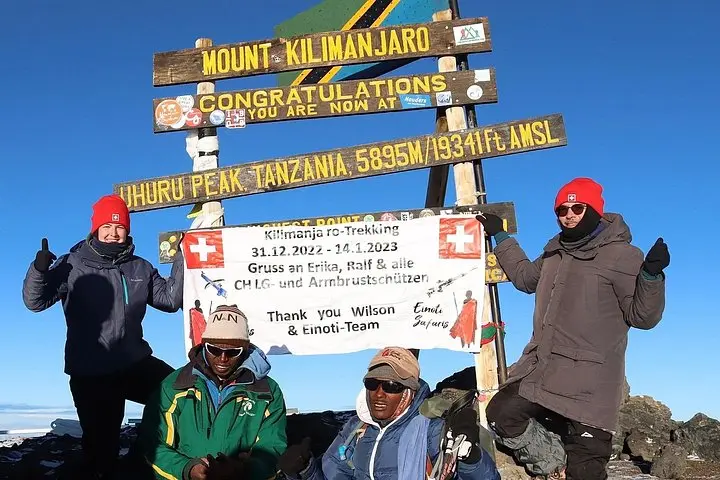
When you stand on Uhuru Peak, the vista is simultaneously intimate and immense: Mawenzi’s jagged teeth, the curvature of the plateau beneath, and the plains of Tanzania rolling toward the Rift Valley. The Lemosho Route is a measured ascent—beautiful, demanding, and very human in the way it asks you to trade comfort for a summit worth earning.
The summit day starts around midnight from Barafu: 4–6 hours up to the crater rim, another hour to Uhuru Peak, then a long descent to Mweka—expect 12–16 hours and significant elevation change.
No technical climbing is required on the Lemosho Route—routes are trekking paths, though crampons are not typically necessary for the standard summit route.
Yes—this tour provides professional guides, cooks and porters who carry group equipment and most personal gear; bring a small daypack for summit essentials.
The driest windows are January–February and June–October. Both offer more stable weather, but the mountain can be climbed year-round with variable conditions.
This tour includes park and camping fees as part of the package, along with meals on the mountain and transfer logistics noted in the itinerary.
Altitude affects individuals differently; the itinerary is designed to help acclimatize, but symptoms can still occur—inform guides early and avoid rapid ascent.
Einoti Safaris Company Limited operates guided outdoor trips and adventures with an emphasis on safety, stewardship, and memorable experiences.
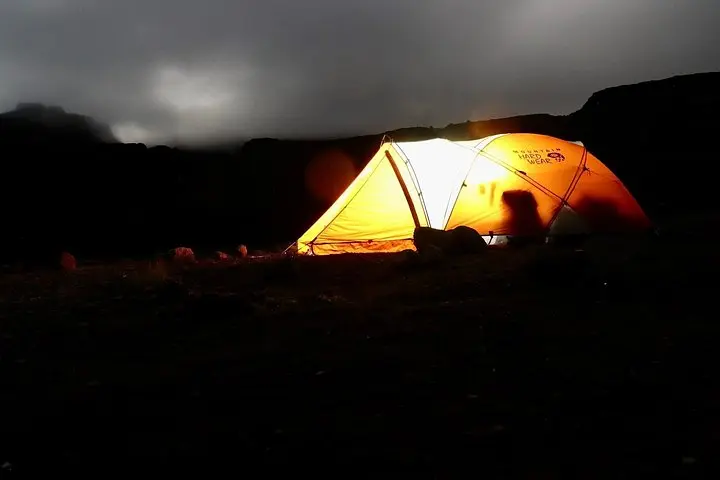
At 11:30 p.m., the headlamps of your small team pick their way across Barafu Camp — a scatter of tents on an alien, wind-scoured ridge. The air is thin and cold; the mountain feels like a machine, slowly turning the night into the first hard light on Stella Point. That last hour, over loose scree and beneath towering ice cliffs, compresses everything the Lemosho Route has offered over eight days: the hush of rainforest, the wide, cold plateau, the sudden drama of lava and glacier.
At 11:30 p.m., the headlamps of your small team pick their way across Barafu Camp — a scatter of tents on an alien, wind-scoured ridge. The air is thin and cold; the mountain feels like a machine, slowly turning the night into the first hard light on Stella Point. That last hour, over loose scree and beneath towering ice cliffs, compresses everything the Lemosho Route has offered over eight days: the hush of rainforest, the wide, cold plateau, the sudden drama of lava and glacier.
The Lemosho Route approaches Kilimanjaro from the west and is often praised for its scenic variety. It begins at Londorossi Gate (≈2,385 m) and moves through montane rain forest where colobus and blue monkeys make their presence known, onto the grassy Shira Plateau and then across lava ridges and scree to Barafu and the summit at Uhuru Peak (5,895 m). Geologically, Kilimanjaro is a stratovolcano with three volcanic cones—Kibo, Mawenzi and Shira—shaped by ancient eruptions and recent glacial retreat. Culturally, guides and porters—often from the local Chagga and Meru communities—bring as much of the mountain’s story as they do your gear.
Over eight days you gain roughly 3,510 m in elevation, moving from dense forest trails to alpine desert and icy crater rim. Typical daily hikes are 4–6 hours until summit day, which runs 12–16 hours round-trip from Barafu. The itinerary spaces ascent to maximize acclimatization: Shira Plateau walks, a climb to Lava Tower (4,640 m) and an afternoon acclimatization hike from Karanga Camp help your body adapt to thinner air.
Practical preparation matters. Expect muddy, root-strewn forest early on, then ankle-testing scree higher up. Hydration and layering are non-negotiable: drink regularly, sleep warm, and ration energy for the summit push. Trekking poles spare knees on steep descents; a lightweight down and water-resistant shell are essentials for summit-night temperatures that can drop well below freezing. If you use medication for altitude, bring prescriptions and discuss plans with your doctor ahead of travel.
Logistics are straightforward: private transfers pick you up in Moshi, porters carry tents and most gear, and you sleep in four-season tents on mountain camps. Leave no trace practices are standard and tipping porters and guides for multi-day climbs is customary.
When you stand on Uhuru Peak, the vista is simultaneously intimate and immense: Mawenzi’s jagged teeth, the curvature of the plateau beneath, and the plains of Tanzania rolling toward the Rift Valley. The Lemosho Route is a measured ascent—beautiful, demanding, and very human in the way it asks you to trade comfort for a summit worth earning.