THE ADVENTURE COLLECTIVE® · Independent discovery and booking for outdoor travel

Choose the Lemosho Route for a longer, scenery-rich approach to Uhuru Peak—extra acclimatization, varied ecosystems and quieter trails make it one of Kilimanjaro’s most successful summit options.
Choose the Lemosho Route for a longer, scenery-rich approach to Uhuru Peak—extra acclimatization, varied ecosystems and quieter trails make it one of Kilimanjaro’s most successful summit options.
A thin blue light slices the moorland as your guide checks the headlamp one last time. Below, the rainforest breathes in heavy, wet gusts and giant lobelias rise like prehistoric sculptures out of the mist. Across the skyline, Kibo’s snow-streaked cone waits—silent, enormous, and indifferent to your timetable. This is the Lemosho Route: a quieter, longer approach to Uhuru Peak that trades the crowds for acclimatization and scenery.
Verified experiences and guided adventures in the surrounding area.
Operated by KITONGA TOURS AND SAFARIS CO.LIMITED · Moshi, Kilimanjaro Region
A thin blue light slices the moorland as your guide checks the headlamp one last time. Below, the rainforest breathes in heavy, wet gusts and giant lobelias rise like prehistoric sculptures out of the mist. Across the skyline, Kibo’s snow-streaked cone waits—silent, enormous, and indifferent to your timetable. This is the Lemosho Route: a quieter, longer approach to Uhuru Peak that trades the crowds for acclimatization and scenery.
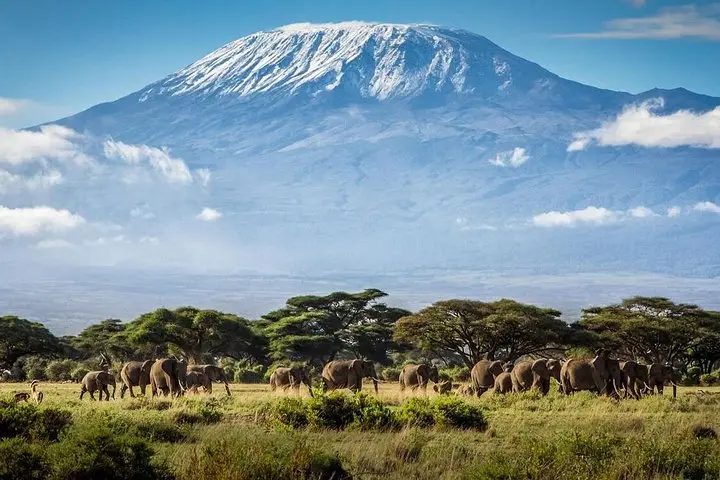
The Lemosho flank opens with rainforest, transitions to heather and moorland, and then to jagged alpine desert—each zone a different ecosystem climbing with you. Geologically, Kilimanjaro is a dormant stratovolcano built of three cones—Kibo, Mawenzi and Shira—whose last major activity shaped the high plateau you cross on the third and fourth days. The mountain sits on the northern edge of Tanzania’s Kilimanjaro Region, where the Chagga people have farmed its lower slopes for centuries; their irrigation towers of banana and coffee remain visible from approach roads and village trails.
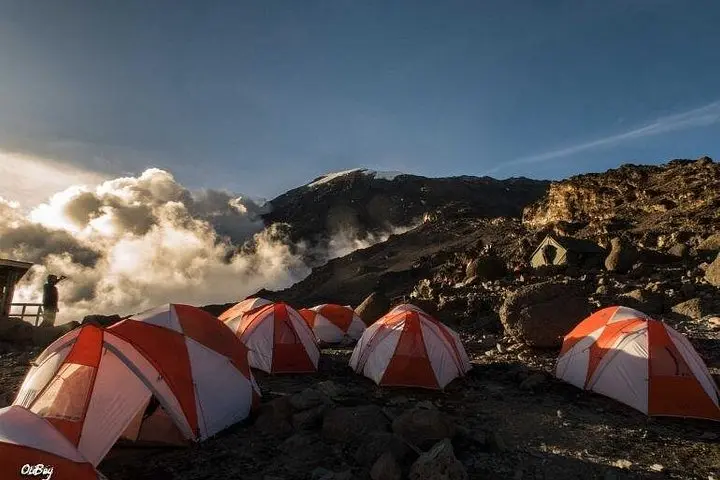
This itinerary is practical in design: eight days on the mountain (ten with arrival and departure), with staged camps that maximize acclimatization. Expect daily distances from roughly 5–10 km in the middle days, with significant elevation gains: Lemosho Glades (2,385 m) to Big Tree Camp (2,780 m), then Shira 1 (3,500 m) and Shira 2 (3,900 m), moving through Barranco and Karanga before reaching Barafu (4,640 m) and making the summit push to Uhuru Peak (5,895 m). The summit day is the longest: roughly 16 km round-trip from Barafu with a midnight start and steep switchbacks in the final hours.
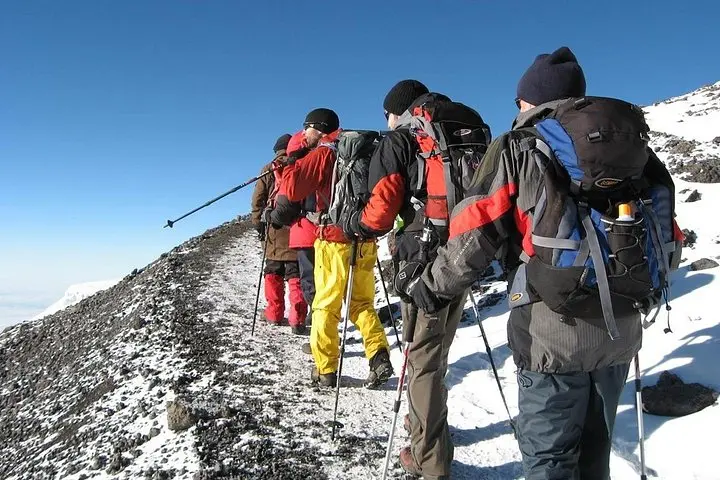
Practical realities matter here: altitude is the antagonist. Guides and a support crew are included—expect tents, three meals a day on the trail, and porterage for most kit. Lemosho’s extra acclimatization days improve summit odds, but hydration, pacing and honest reporting of symptoms are non-negotiable. Footwear should be broken-in, crampons are rarely needed on this route but can be useful in late-season ice, and a 4-season sleeping bag rated to at least -10°C is recommended.
Culturally, tipping porters and guides is customary and important to local livelihoods; the climb also supports conservation—Kilimanjaro National Park requires permits and fees that fund protection and local communities. If you want a route that balances solitude, landscape variety and better altitude strategy, Lemosho remains one of the best approaches to Africa’s highest summit.
No technical climbing skills are required for the Lemosho Route—this is high-altitude trekking—but previous multi-day hiking experience and good fitness significantly improve your chances of summiting.
The main dry season, June–October, offers the most stable weather and highest summit success; a short dry window in January–February is also popular.
Park fees and camping/rescue charges are typically included with this operator, but confirm in writing at booking and carry ID for permit checks.
Summit day is the longest and steepest, with a midnight start and sustained ascent to 5,895 m—expect 10–16 hours of hiking depending on pace and conditions.
Most operators offer hotel storage for extra luggage in Moshi; confirm pickup arrangements for your return day.
Tipping is customary and a major income source for crew—plan a gratuity per climber split among guides and porters, typically given at the end of the trek.
KITONGA TOURS AND SAFARIS CO.LIMITED operates guided outdoor trips and adventures with an emphasis on safety, stewardship, and memorable experiences.
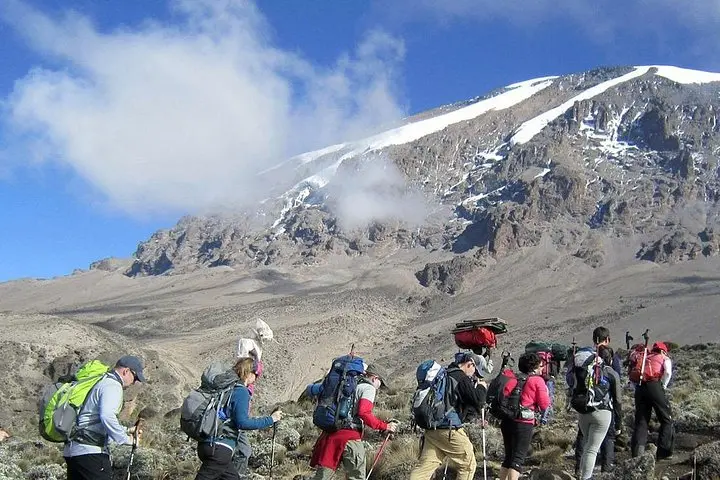
A thin blue light slices the moorland as your guide checks the headlamp one last time. Below, the rainforest breathes in heavy, wet gusts and giant lobelias rise like prehistoric sculptures out of the mist. Across the skyline, Kibo’s snow-streaked cone waits—silent, enormous, and indifferent to your timetable. This is the Lemosho Route: a quieter, longer approach to Uhuru Peak that trades the crowds for acclimatization and scenery.
A thin blue light slices the moorland as your guide checks the headlamp one last time. Below, the rainforest breathes in heavy, wet gusts and giant lobelias rise like prehistoric sculptures out of the mist. Across the skyline, Kibo’s snow-streaked cone waits—silent, enormous, and indifferent to your timetable. This is the Lemosho Route: a quieter, longer approach to Uhuru Peak that trades the crowds for acclimatization and scenery.
The Lemosho flank opens with rainforest, transitions to heather and moorland, and then to jagged alpine desert—each zone a different ecosystem climbing with you. Geologically, Kilimanjaro is a dormant stratovolcano built of three cones—Kibo, Mawenzi and Shira—whose last major activity shaped the high plateau you cross on the third and fourth days. The mountain sits on the northern edge of Tanzania’s Kilimanjaro Region, where the Chagga people have farmed its lower slopes for centuries; their irrigation towers of banana and coffee remain visible from approach roads and village trails.
This itinerary is practical in design: eight days on the mountain (ten with arrival and departure), with staged camps that maximize acclimatization. Expect daily distances from roughly 5–10 km in the middle days, with significant elevation gains: Lemosho Glades (2,385 m) to Big Tree Camp (2,780 m), then Shira 1 (3,500 m) and Shira 2 (3,900 m), moving through Barranco and Karanga before reaching Barafu (4,640 m) and making the summit push to Uhuru Peak (5,895 m). The summit day is the longest: roughly 16 km round-trip from Barafu with a midnight start and steep switchbacks in the final hours.
Practical realities matter here: altitude is the antagonist. Guides and a support crew are included—expect tents, three meals a day on the trail, and porterage for most kit. Lemosho’s extra acclimatization days improve summit odds, but hydration, pacing and honest reporting of symptoms are non-negotiable. Footwear should be broken-in, crampons are rarely needed on this route but can be useful in late-season ice, and a 4-season sleeping bag rated to at least -10°C is recommended.
Culturally, tipping porters and guides is customary and important to local livelihoods; the climb also supports conservation—Kilimanjaro National Park requires permits and fees that fund protection and local communities. If you want a route that balances solitude, landscape variety and better altitude strategy, Lemosho remains one of the best approaches to Africa’s highest summit.