THE ADVENTURE COLLECTIVE® · Independent discovery and booking for outdoor travel

Solve clues on a self-guided walk through Letchworth, the world’s first Garden City. Explore tree-lined avenues, heritage sites, and a unique mix of civic architecture while uncovering the town’s founding story.
Solve clues on a self-guided walk through Letchworth, the world’s first Garden City. Explore tree-lined avenues, heritage sites, and a unique mix of civic architecture while uncovering the town’s founding story.
You step off the train onto a platform that still remembers steam timetables and follow a route through streets lined with mature plane and lime trees. The puzzle begins in the gentle hum of a small English town: floral beds, wide pavements, and the occasional black squirrel darting between curbs. Clues lead you past a 1930s cinema façade, through Broadway Gardens, and to the solid stone of St Mary’s — each stop asking a question that teases out Letchworth’s origin story.
Verified experiences and guided adventures in the surrounding area.
Operated by Questo · Letchworth Garden City, Hertfordshire
You step off the train onto a platform that still remembers steam timetables and follow a route through streets lined with mature plane and lime trees. The puzzle begins in the gentle hum of a small English town: floral beds, wide pavements, and the occasional black squirrel darting between curbs. Clues lead you past a 1930s cinema façade, through Broadway Gardens, and to the solid stone of St Mary’s — each stop asking a question that teases out Letchworth’s origin story.
Founded on Ebenezer Howard’s early-20th-century Garden City principles, Letchworth was designed to combine housing, work, and green space. The town’s layout reflects an architectural and social experiment — civic buildings placed to frame squares, generous verges for trees, and linked public gardens funded in later years by heritage grants. Along the way you’ll encounter municipal architecture by Unwin and Parker, a mission church from 1908, and the International Garden Cities Institute where planning sketches still hang.
Practical guidance: the game is entirely self-guided and mobile-friendly but printable options exist; expect mostly flat pavement with some short gravel paths in parks. Allow 60–90 minutes if you move steadily, longer if you stop for photos or a café. Wear comfortable shoes for urban walking, bring a lightweight waterproof, and carry a charged phone or a printed clue sheet — the experience is private and contact-free, so you set the pace. This is a low-impact way to explore local history while enjoying thoughtfully preserved green spaces.
The suggested beginning is the International Garden Cities Institute on Norton Way South, but the game is flexible — you can start anywhere on the route.
Yes — puzzles are family-friendly and the route is pram-accessible; younger children may need help with some clues.
No — the game can be played offline once downloaded or with a printed clue sheet.
The route is largely on level pavements and is stroller-accessible; some historic sites have limited step-free access.
Questo operates guided outdoor trips and adventures with an emphasis on safety, stewardship, and memorable experiences.
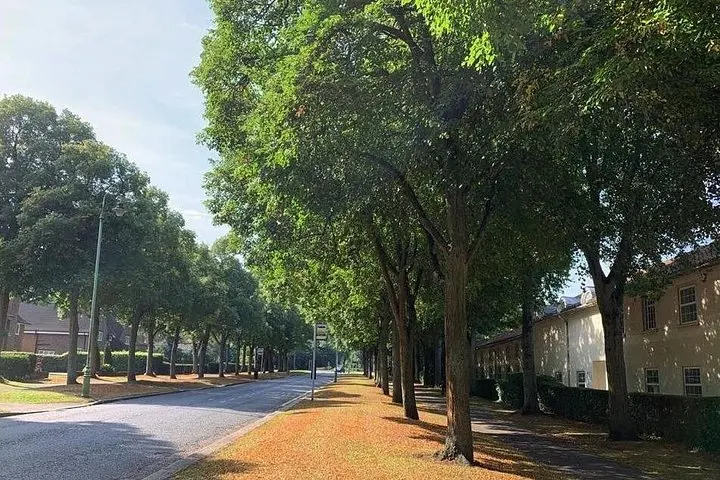
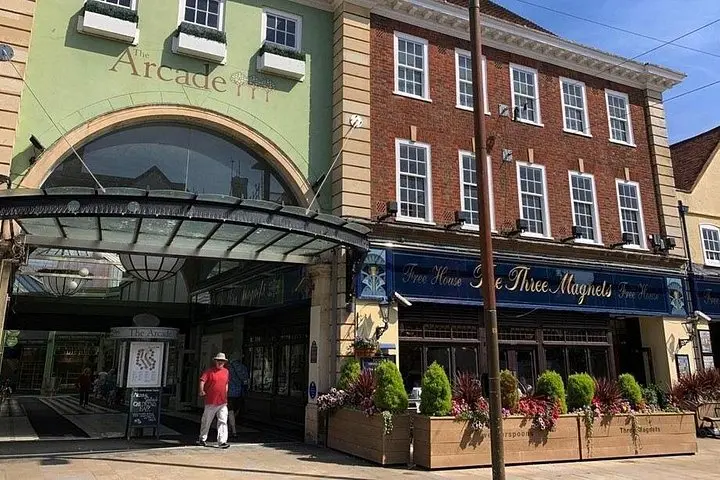

You step off the train onto a platform that still remembers steam timetables and follow a route through streets lined with mature plane and lime trees. The puzzle begins in the gentle hum of a small English town: floral beds, wide pavements, and the occasional black squirrel darting between curbs. Clues lead you past a 1930s cinema façade, through Broadway Gardens, and to the solid stone of St Mary’s — each stop asking a question that teases out Letchworth’s origin story.
You step off the train onto a platform that still remembers steam timetables and follow a route through streets lined with mature plane and lime trees. The puzzle begins in the gentle hum of a small English town: floral beds, wide pavements, and the occasional black squirrel darting between curbs. Clues lead you past a 1930s cinema façade, through Broadway Gardens, and to the solid stone of St Mary’s — each stop asking a question that teases out Letchworth’s origin story.
Founded on Ebenezer Howard’s early-20th-century Garden City principles, Letchworth was designed to combine housing, work, and green space. The town’s layout reflects an architectural and social experiment — civic buildings placed to frame squares, generous verges for trees, and linked public gardens funded in later years by heritage grants. Along the way you’ll encounter municipal architecture by Unwin and Parker, a mission church from 1908, and the International Garden Cities Institute where planning sketches still hang.
Practical guidance: the game is entirely self-guided and mobile-friendly but printable options exist; expect mostly flat pavement with some short gravel paths in parks. Allow 60–90 minutes if you move steadily, longer if you stop for photos or a café. Wear comfortable shoes for urban walking, bring a lightweight waterproof, and carry a charged phone or a printed clue sheet — the experience is private and contact-free, so you set the pace. This is a low-impact way to explore local history while enjoying thoughtfully preserved green spaces.