THE ADVENTURE COLLECTIVE® · Independent discovery and booking for outdoor travel

Explore Lincoln Park Zoo on a self-guided scavenger hunt that turns 35 acres of exhibits into a playful, educational loop. Perfect for families and last-minute travelers, the eATLAS app delivers clues, history, and leaderboard competition on a flexible, wheelchair-accessible route.
Explore Lincoln Park Zoo on a self-guided scavenger hunt that turns 35 acres of exhibits into a playful, educational loop. Perfect for families and last-minute travelers, the eATLAS app delivers clues, history, and leaderboard competition on a flexible, wheelchair-accessible route.
Morning light slices between elms and the zoo’s stone gateways as families, students, and solo explorers spill into the 35-acre Lincoln Park Zoo. The scavenger hunt unfurls across pathways where waterfowl assert the slow rules of the boardwalk and the Farm-in-the-Zoo nudges curious hands toward stubborn goats. The experience feels like a playful map of the city’s natural side—compact, human-scale, and unapologetically public.
Verified experiences and guided adventures in the surrounding area.
Operated by eATLAS · Chicago, Illinois
Morning light slices between elms and the zoo’s stone gateways as families, students, and solo explorers spill into the 35-acre Lincoln Park Zoo. The scavenger hunt unfurls across pathways where waterfowl assert the slow rules of the boardwalk and the Farm-in-the-Zoo nudges curious hands toward stubborn goats. The experience feels like a playful map of the city’s natural side—compact, human-scale, and unapologetically public.
Lincoln Park Zoo is one of America’s older urban zoological institutions, dating to the late 19th century; its free-admission model and century-long civic role shaped Chicago’s approach to accessible conservation. Geologically the site sits on glacially smoothed lake plain just inland from Lake Michigan, so expect mostly flat, paved terrain with short boardwalks and small hills near the Nature Boardwalk.
Culturally the zoo mixes formal exhibits—Regenstein’s ape habitats, the Kovler Lion House—with community-facing features like the Farm-in-the-Zoo and seasonal ZooLights. The scavenger hunt moves you between these zones, pairing observation prompts with short interpretive history and animal facts.
Practical guidance: download the eATLAS app, enter the private code, and plan 30–60 minutes for a relaxed run-through. Wear comfortable shoes for pavement and boardwalks, bring a small water bottle, and use off-peak mornings to avoid crowds. Accessibility is strong across routes, and the self-guided format lets you pause at any exhibit for feeding schedules, keeper talks, or to let a child inspect a tactile display. Bring a camera, keep conversations low around sensitive exhibits, and treat enclosures as places to watch—not touch. This is exploration with a civic heartbeat: educational, fast-moving, and easy to tailor to any group size.
No—Lincoln Park Zoo offers free admission; the scavenger hunt is accessed via the eATLAS app after purchasing the private Adventure code.
Plan 30–60 minutes for a relaxed completion; the app lets you pause and resume if you want longer stops at exhibits.
Yes—the zoo notes wheelchair- and stroller-accessible surfaces across the main exhibits and the Nature Boardwalk routes used in the hunt.
You can play solo or with a team up to five; additional players should purchase their own Adventure to compete on the leaderboard.
eATLAS operates guided outdoor trips and adventures with an emphasis on safety, stewardship, and memorable experiences.
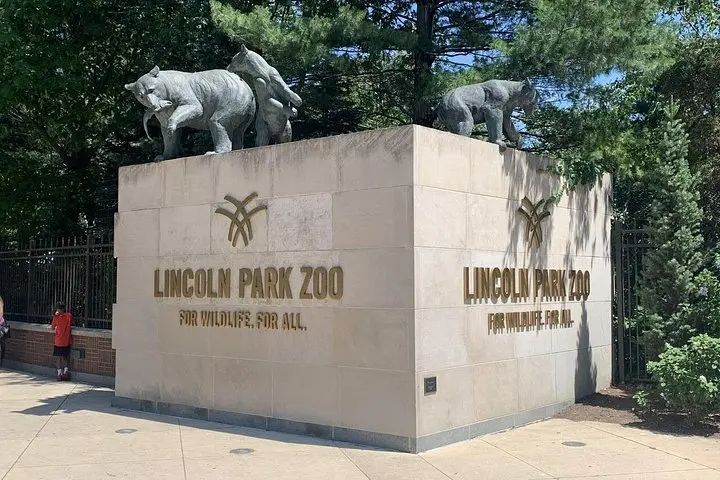


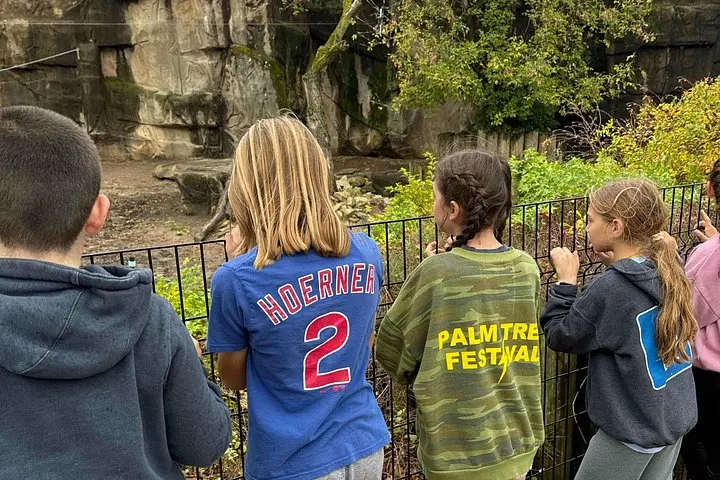
Morning light slices between elms and the zoo’s stone gateways as families, students, and solo explorers spill into the 35-acre Lincoln Park Zoo. The scavenger hunt unfurls across pathways where waterfowl assert the slow rules of the boardwalk and the Farm-in-the-Zoo nudges curious hands toward stubborn goats. The experience feels like a playful map of the city’s natural side—compact, human-scale, and unapologetically public.
Morning light slices between elms and the zoo’s stone gateways as families, students, and solo explorers spill into the 35-acre Lincoln Park Zoo. The scavenger hunt unfurls across pathways where waterfowl assert the slow rules of the boardwalk and the Farm-in-the-Zoo nudges curious hands toward stubborn goats. The experience feels like a playful map of the city’s natural side—compact, human-scale, and unapologetically public.
Lincoln Park Zoo is one of America’s older urban zoological institutions, dating to the late 19th century; its free-admission model and century-long civic role shaped Chicago’s approach to accessible conservation. Geologically the site sits on glacially smoothed lake plain just inland from Lake Michigan, so expect mostly flat, paved terrain with short boardwalks and small hills near the Nature Boardwalk.
Culturally the zoo mixes formal exhibits—Regenstein’s ape habitats, the Kovler Lion House—with community-facing features like the Farm-in-the-Zoo and seasonal ZooLights. The scavenger hunt moves you between these zones, pairing observation prompts with short interpretive history and animal facts.
Practical guidance: download the eATLAS app, enter the private code, and plan 30–60 minutes for a relaxed run-through. Wear comfortable shoes for pavement and boardwalks, bring a small water bottle, and use off-peak mornings to avoid crowds. Accessibility is strong across routes, and the self-guided format lets you pause at any exhibit for feeding schedules, keeper talks, or to let a child inspect a tactile display. Bring a camera, keep conversations low around sensitive exhibits, and treat enclosures as places to watch—not touch. This is exploration with a civic heartbeat: educational, fast-moving, and easy to tailor to any group size.