THE ADVENTURE COLLECTIVE® · Independent discovery and booking for outdoor travel

A half-day expedition on the Matanuska River that delivers sustained Class III–IV whitewater beneath towering ranges. This Lions Head run pairs technical boulder gardens with glacier-fed scenery and guided instruction for paddlers ready for an adrenaline-packed stretch of Alaska river.
A half-day expedition on the Matanuska River that delivers sustained Class III–IV whitewater beneath towering ranges. This Lions Head run pairs technical boulder gardens with glacier-fed scenery and guided instruction for paddlers ready for an adrenaline-packed stretch of Alaska river.
Morning light slices between the Chugach and Talkeetna ranges as your raft noses into the froth of the Matanuska's Lions Head run. Glacier-melt currents shove the boat forward, and a chorus of waves and boulders announces each rapid.
Verified experiences and guided adventures in the surrounding area.
Operated by NOVA Alaska Guides, Whitewater Rafting & Glacier Tours · Palmer, Alaska
Morning light slices between the Chugach and Talkeetna ranges as your raft noses into the froth of the Matanuska's Lions Head run. Glacier-melt currents shove the boat forward, and a chorus of waves and boulders announces each rapid.
The Lions Head section has been run commercially since the 1970s; NOVA started guiding here in 1975 and helped codify this stretch as a gateway to Alaskan whitewater. Geologically the river is a glacial conveyor: silt-laden meltwater, moraine-carved channels and volcanic rock outcrops—including the Lion’s Head plug—shape a narrow corridor of concentrated hydraulics and boulder gardens. Local culture mixes Alaska outdoorsmanship with seasonal road crews and ranching communities in the Mat-Su Valley; guides here often share stories of early prospectors and glacial floods.
Expect a half-day trip with continuous Class III and IV rapids framed by jagged peaks and sweeping moraine ridgelines. The run begins on lower-volume Caribou Creek—good for practice—before the South Fork swells into its main boulder fields. You’ll wear a drysuit over warm layers, a PFD and helmet; guides paddle commands and manage rigging on every drop. Physically, be ready for sustained paddling bursts and quick core engagement while bracing against bracing cold water. Plan for variable weather, leave time for shuttle logistics on the Glenn Highway, and stow electronics in sealed dry bags. Bring layered wool or fleece, a sturdy pair of river shoes, and a sense of focus—the river demands attention and rewards it with high-adrenaline running and wide, raw mountain scenery. Allow time afterward for glacier views.
This trip is not recommended for travelers under 12 or over 67, and has weight limits (typically 100–250 lbs); confirm specifics with the operator when booking.
You will likely get wet; NOVA provides a drysuit, PFD, river boots and helmet, but you should bring warm base layers (wool/fleece) and tall socks.
Guides are trained for swiftwater rescue; follow commands, try to float on your back with feet downstream, and let the guide retrieve you or direct self-rescue to an eddy.
Check-in is at Mile 96.5 on the Glenn Highway at the Hick's Creek bridge and Trailhead Rd; the operator provides shuttle transport to the river put-in.
NOVA Alaska Guides, Whitewater Rafting & Glacier Tours operates guided outdoor trips and adventures with an emphasis on safety, stewardship, and memorable experiences.
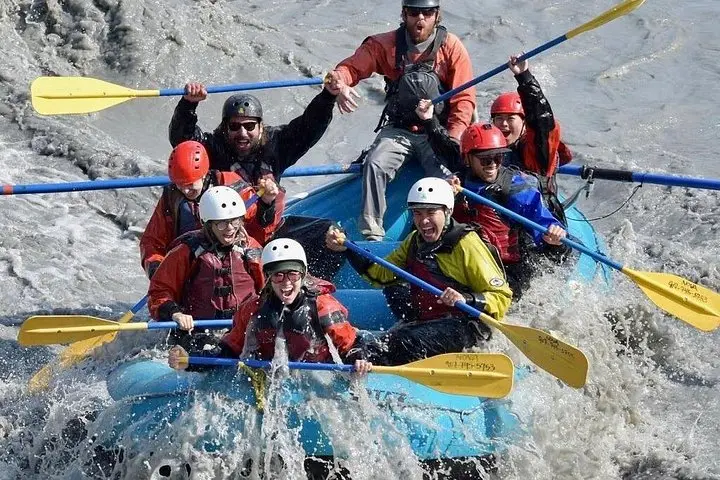
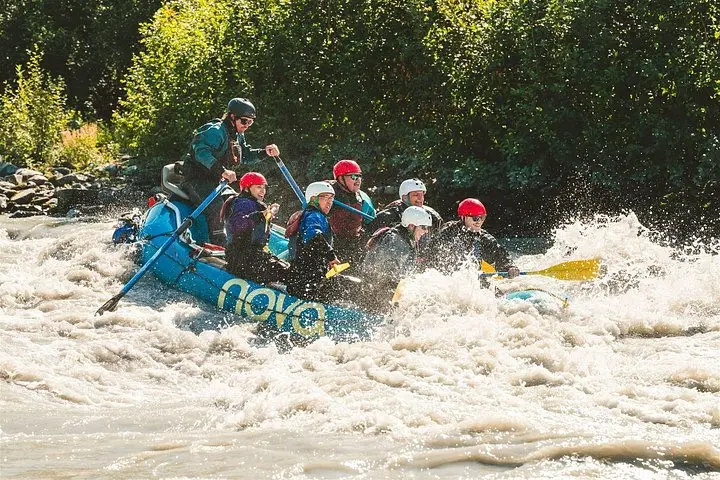
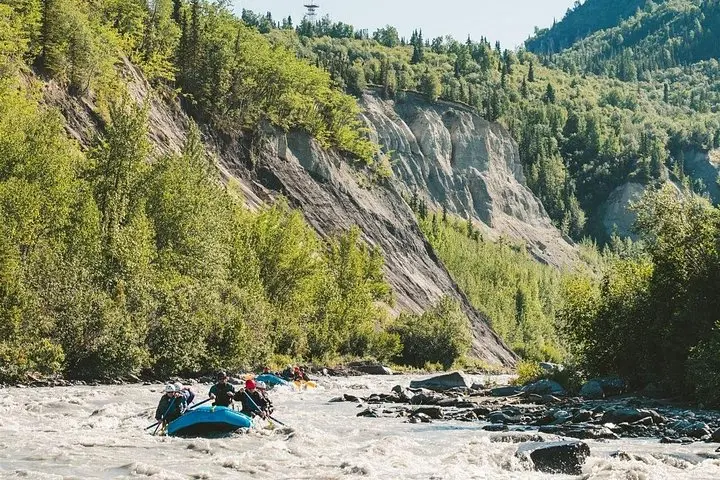
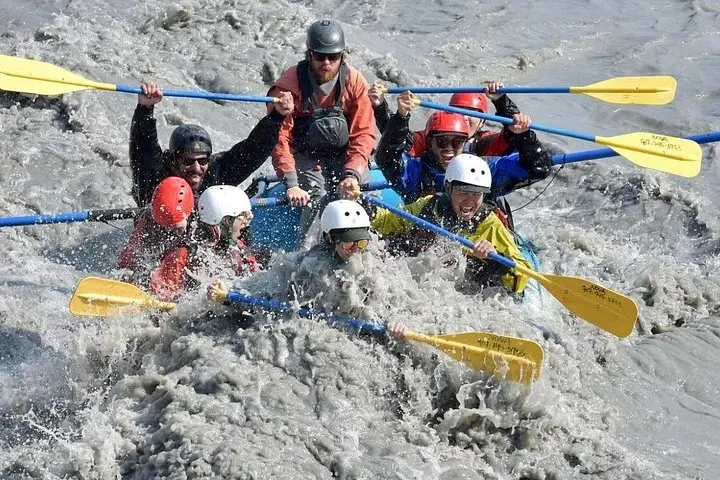
Morning light slices between the Chugach and Talkeetna ranges as your raft noses into the froth of the Matanuska's Lions Head run. Glacier-melt currents shove the boat forward, and a chorus of waves and boulders announces each rapid.
Morning light slices between the Chugach and Talkeetna ranges as your raft noses into the froth of the Matanuska's Lions Head run. Glacier-melt currents shove the boat forward, and a chorus of waves and boulders announces each rapid.
The Lions Head section has been run commercially since the 1970s; NOVA started guiding here in 1975 and helped codify this stretch as a gateway to Alaskan whitewater. Geologically the river is a glacial conveyor: silt-laden meltwater, moraine-carved channels and volcanic rock outcrops—including the Lion’s Head plug—shape a narrow corridor of concentrated hydraulics and boulder gardens. Local culture mixes Alaska outdoorsmanship with seasonal road crews and ranching communities in the Mat-Su Valley; guides here often share stories of early prospectors and glacial floods.
Expect a half-day trip with continuous Class III and IV rapids framed by jagged peaks and sweeping moraine ridgelines. The run begins on lower-volume Caribou Creek—good for practice—before the South Fork swells into its main boulder fields. You’ll wear a drysuit over warm layers, a PFD and helmet; guides paddle commands and manage rigging on every drop. Physically, be ready for sustained paddling bursts and quick core engagement while bracing against bracing cold water. Plan for variable weather, leave time for shuttle logistics on the Glenn Highway, and stow electronics in sealed dry bags. Bring layered wool or fleece, a sturdy pair of river shoes, and a sense of focus—the river demands attention and rewards it with high-adrenaline running and wide, raw mountain scenery. Allow time afterward for glacier views.