THE ADVENTURE COLLECTIVE® · Independent discovery and booking for outdoor travel

Explore two Roman cities frozen by Vesuvius with an expert archaeologist guiding a small group. This full-day tour from Naples or Sorrento pairs Pompeii’s public spaces with Herculaneum’s preserved interiors for a sharp, human view of ancient life.
Explore two Roman cities frozen by Vesuvius with an expert archaeologist guiding a small group. This full-day tour from Naples or Sorrento pairs Pompeii’s public spaces with Herculaneum’s preserved interiors for a sharp, human view of ancient life.
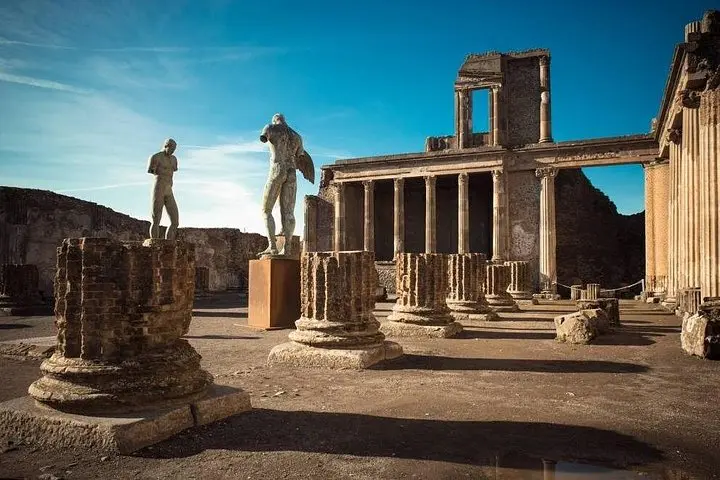
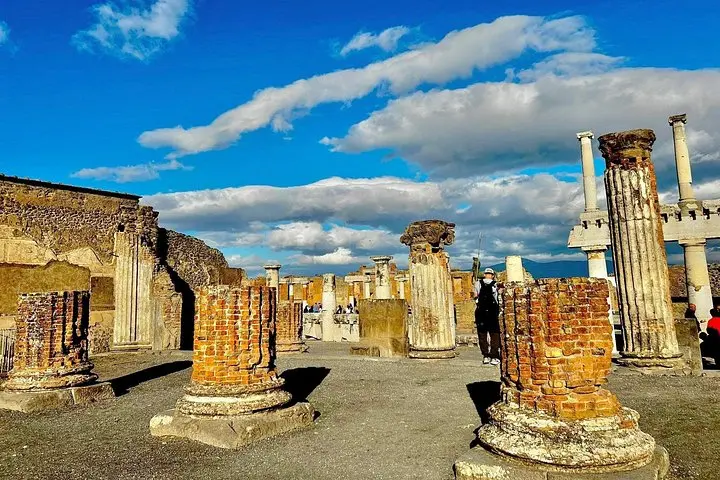
Walk through a Roman street that still holds footprints and shop thresholds and you feel the city breathe under your feet. Morning light across the Bay of Naples frames Mount Vesuvius as the coach winds from Naples or Sorrento; by the time the group steps into Pompeii, the volcanic ash that froze everyday life in 79 AD feels less like history and more like a pause the landscape kept for centuries.
Verified experiences and guided adventures in the surrounding area.
Operated by Mondo Guide Srl · Pompeii, Campania
Walk through a Roman street that still holds footprints and shop thresholds and you feel the city breathe under your feet. Morning light across the Bay of Naples frames Mount Vesuvius as the coach winds from Naples or Sorrento; by the time the group steps into Pompeii, the volcanic ash that froze everyday life in 79 AD feels less like history and more like a pause the landscape kept for centuries.
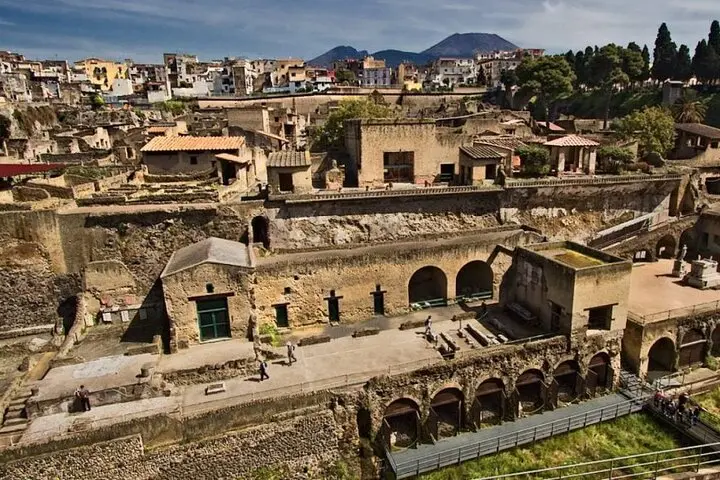
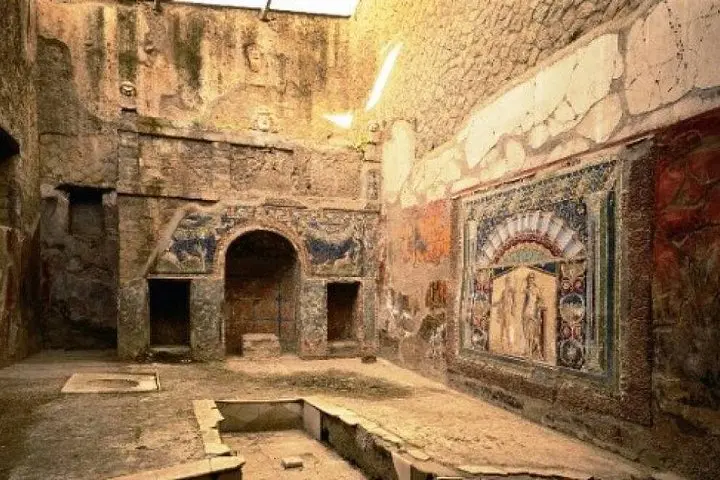
Pompeii and Herculaneum were both buried by Vesuvius, but the physics of eruption left two different archives: Pompeii’s ash preserved frescoed facades and public squares, while Herculaneum’s pyroclastic flows carbonized wooden beams, doors and household goods—giving an intimate look at Roman interiors. The guide’s narrative links archaeology to broader Roman culture: commerce on Via dell’Abbondanza, public baths, and patronage inscriptions that mapped civic life.
Expect cobbled streets, exposed mosaics, and shaded atria. The pace is steady—two-and-a-half hours in Pompeii, two hours in Herculaneum—with time for focused highlights: the House of the Faun, the men’s and women’s baths, and the compact domus of Herculaneum where charred timbers remain.
Practical side: wear sturdy shoes for uneven stone and bring a lightweight layer for coastal wind. There are restroom stops and a brief lunch window in local cafés; entrance fees and express-entry logistics are handled by the tour. Travelers aiming to avoid crowds should choose early departures from Naples or Sorrento. This is a day for observation—listen closely to the archaeologist; the ruins reward attention with stories that textbooks rarely tell.
Pick-up and meeting points are usually in central Naples or Sorrento depending on your booking; confirm the exact location and time on your voucher.
Yes—Herculaneum and Pompeii entry tickets and one-way transportation between the sites are included with the tour.
Children under 18 enter free with ID; strollers are possible but many pathways are cobbled—a carrier may be more practical in tight areas.
The tour notes 'physically easy' but uneven ground and steps are unavoidable; contact the operator in advance to discuss access needs.
Mondo Guide Srl operates guided outdoor trips and adventures with an emphasis on safety, stewardship, and memorable experiences.
Walk through a Roman street that still holds footprints and shop thresholds and you feel the city breathe under your feet. Morning light across the Bay of Naples frames Mount Vesuvius as the coach winds from Naples or Sorrento; by the time the group steps into Pompeii, the volcanic ash that froze everyday life in 79 AD feels less like history and more like a pause the landscape kept for centuries.
Walk through a Roman street that still holds footprints and shop thresholds and you feel the city breathe under your feet. Morning light across the Bay of Naples frames Mount Vesuvius as the coach winds from Naples or Sorrento; by the time the group steps into Pompeii, the volcanic ash that froze everyday life in 79 AD feels less like history and more like a pause the landscape kept for centuries.
Pompeii and Herculaneum were both buried by Vesuvius, but the physics of eruption left two different archives: Pompeii’s ash preserved frescoed facades and public squares, while Herculaneum’s pyroclastic flows carbonized wooden beams, doors and household goods—giving an intimate look at Roman interiors. The guide’s narrative links archaeology to broader Roman culture: commerce on Via dell’Abbondanza, public baths, and patronage inscriptions that mapped civic life.
Expect cobbled streets, exposed mosaics, and shaded atria. The pace is steady—two-and-a-half hours in Pompeii, two hours in Herculaneum—with time for focused highlights: the House of the Faun, the men’s and women’s baths, and the compact domus of Herculaneum where charred timbers remain.
Practical side: wear sturdy shoes for uneven stone and bring a lightweight layer for coastal wind. There are restroom stops and a brief lunch window in local cafés; entrance fees and express-entry logistics are handled by the tour. Travelers aiming to avoid crowds should choose early departures from Naples or Sorrento. This is a day for observation—listen closely to the archaeologist; the ruins reward attention with stories that textbooks rarely tell.