THE ADVENTURE COLLECTIVE® · Independent discovery and booking for outdoor travel

Spend a half-day from Ljubljana exploring Postojna Cave’s train ride and cavern galleries, then tour the dramatic cliffside Predjama Castle. Small groups (max 8) make this a focused, accessible introduction to Slovenia’s karst landscape.
Spend a half-day from Ljubljana exploring Postojna Cave’s train ride and cavern galleries, then tour the dramatic cliffside Predjama Castle. Small groups (max 8) make this a focused, accessible introduction to Slovenia’s karst landscape.
You step off an air-conditioned minivan into cool, dim air — the cave’s mouth inhales you before the train whisks you into an underground world carved by karst and time.
Verified experiences and guided adventures in the surrounding area.
Operated by Gray Line Slovenia Explorer · Ljubljana, Inner Carniola
You step off an air-conditioned minivan into cool, dim air — the cave’s mouth inhales you before the train whisks you into an underground world carved by karst and time.
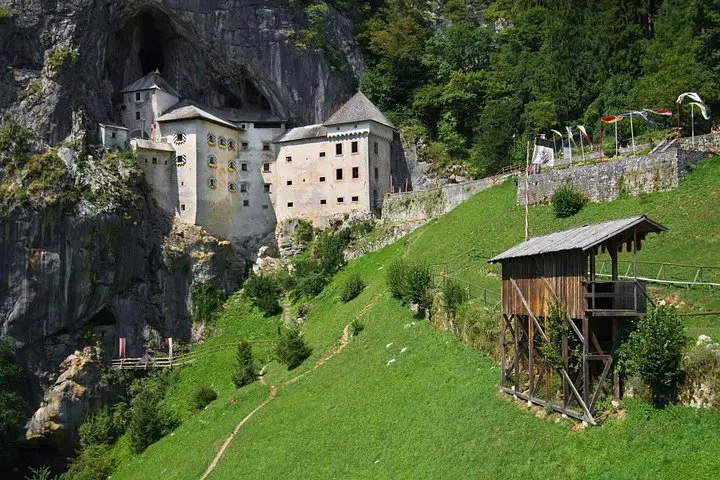
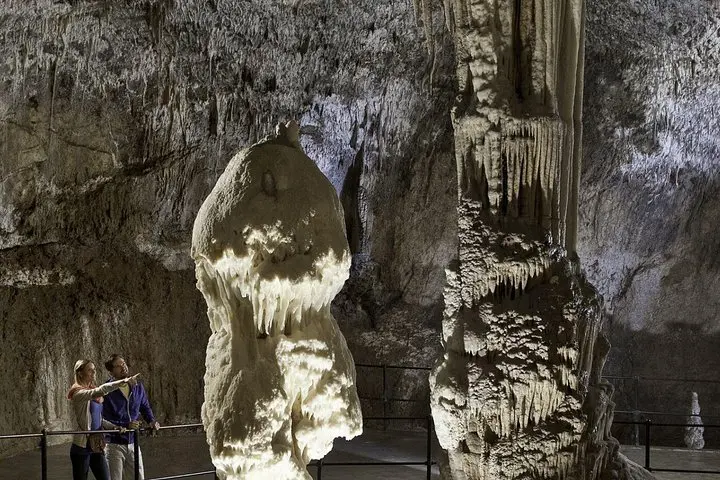
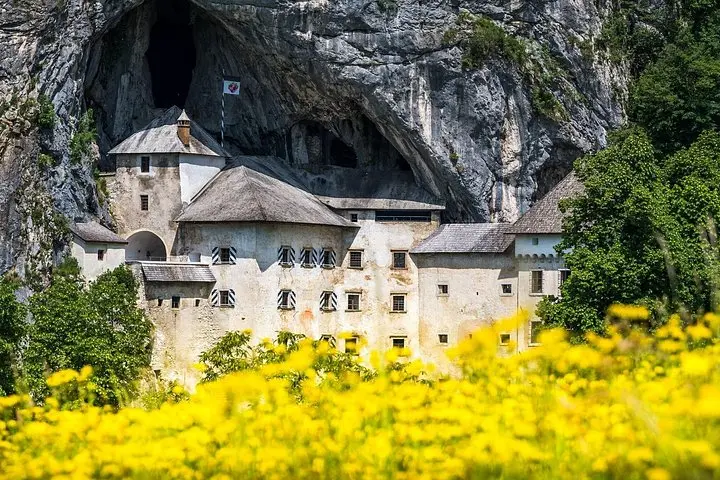
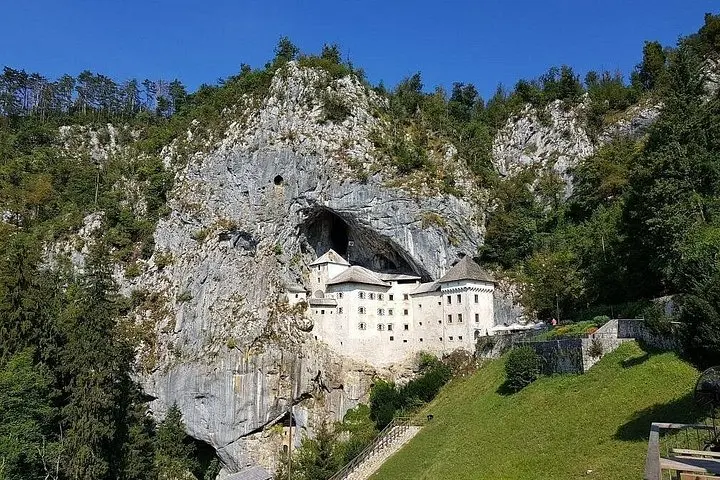
This half-day excursion pairs two strikingly different expressions of Slovenia’s karst landscape: Predjama Castle, clinging to a cliff where medieval stone meets natural voids, and Postojna Cave, a 21-km labyrinth of passages, galleries and chambers. Predjama tells human stories — of Erazem, daring sieges, and stairways cut against the rock — while Postojna illustrates the geology that made the castle’s dramatic site possible: soluble limestone, subterranean rivers and the slow work of dissolution that sculpts stalactites and stalagmites.
Culturally, the area sits in Inner Carniola, where Alpine and Mediterranean influences converge in food and local lore; guides often point out the proteus anguinus, the pale “human fish” adapted to the cave’s dark pools. Conservation here is active: access is managed to protect fragile speleothems and endemic fauna, and photography rules and pathways keep visitors from disturbing formations.
Practicalities: plan for roughly 5–6 hours including transport from Ljubljana, and expect many stairs and cool temperatures (around 9°C / 48°F) in the cave. Wear sturdy, closed shoes with good grip and bring a warm layer and water. Small-group size (max 8) means faster movement between sites but also limited availability — book early and confirm mobility needs in advance. The experience is part geology lesson, part history walk, and altogether a compact, accessible introduction to Slovenia’s underground.
The tour typically meets at a central Ljubljana location; confirmation includes exact meeting details—arrive 10–15 minutes early to check in.
Admission to Postojna Cave and Predjama Castle is usually handled at the sites; confirm with the operator when booking whether tickets are included or paid on-site.
Children with supervision can join, but the cave and castle have many stairs and uneven paths; the tour is not wheelchair accessible and requires moderate mobility.
Photography rules vary; casual photos are typically allowed but flash and tripods may be restricted to protect cave life and formations—follow the guide’s instructions.
Gray Line Slovenia Explorer operates guided outdoor trips and adventures with an emphasis on safety, stewardship, and memorable experiences.
You step off an air-conditioned minivan into cool, dim air — the cave’s mouth inhales you before the train whisks you into an underground world carved by karst and time.
You step off an air-conditioned minivan into cool, dim air — the cave’s mouth inhales you before the train whisks you into an underground world carved by karst and time.
This half-day excursion pairs two strikingly different expressions of Slovenia’s karst landscape: Predjama Castle, clinging to a cliff where medieval stone meets natural voids, and Postojna Cave, a 21-km labyrinth of passages, galleries and chambers. Predjama tells human stories — of Erazem, daring sieges, and stairways cut against the rock — while Postojna illustrates the geology that made the castle’s dramatic site possible: soluble limestone, subterranean rivers and the slow work of dissolution that sculpts stalactites and stalagmites.
Culturally, the area sits in Inner Carniola, where Alpine and Mediterranean influences converge in food and local lore; guides often point out the proteus anguinus, the pale “human fish” adapted to the cave’s dark pools. Conservation here is active: access is managed to protect fragile speleothems and endemic fauna, and photography rules and pathways keep visitors from disturbing formations.
Practicalities: plan for roughly 5–6 hours including transport from Ljubljana, and expect many stairs and cool temperatures (around 9°C / 48°F) in the cave. Wear sturdy, closed shoes with good grip and bring a warm layer and water. Small-group size (max 8) means faster movement between sites but also limited availability — book early and confirm mobility needs in advance. The experience is part geology lesson, part history walk, and altogether a compact, accessible introduction to Slovenia’s underground.